Roofing
Dark vs Light Shingles: Which Color Fits Your Omaha Home?
By Noah Spagnotti
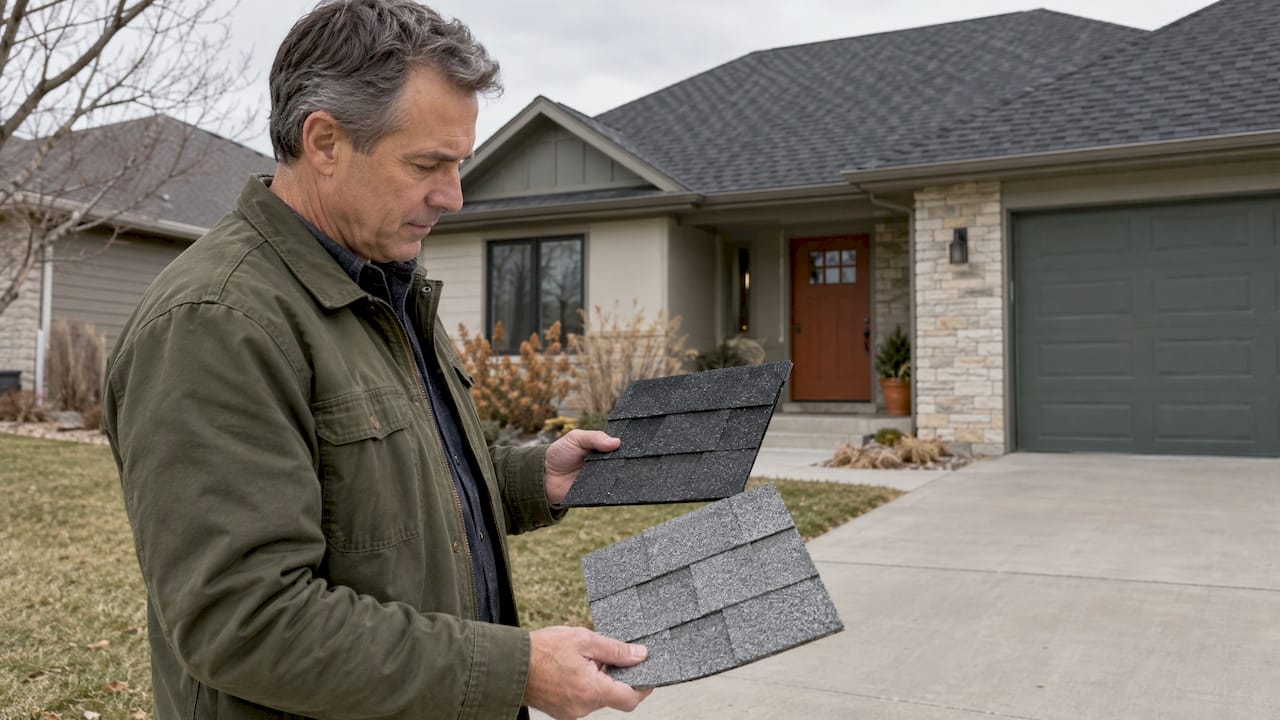
For most Omaha homes, shingle color is mainly a style decision with a modest energy effect. Dark shingles absorb more heat, which helps a little in cold months and costs a little in hot ones. Light shingles stay cooler, which pays off most in hot climates. Insulation, attic ventilation and the quality of the installation decide far more about how your roof performs and how long it lasts. Here is how to weigh color against everything else before you sign a roofing contract.
TL;DR
Dark shingles run hotter in the sun. Light shingles reflect more sunlight and stay cooler, and the gap matters most in hot climates.
In colder regions the cooling benefit of a light roof is small, and a dark roof can help during winter. Omaha has both hot summers and hard winters, so neither color wins by a wide margin.
Attic insulation and ventilation often affect comfort and energy bills more than shingle color does.
Light roofs show algae streaks and dirt more. Dark roofs make slight shade variation on a new roof easier to see. Both can be kept looking good.
Choose the color you like with your siding, brick and trim, then put your budget into insulation, ventilation and proper installation.
What actually changes when a shingle is dark or light
Color controls how much sunlight a shingle reflects and how much it absorbs. The U.S. Department of Energy explains that traditional dark roofing materials absorb sunlight, warm up in the sun and increase the need for air conditioning, while white or special cool-color roofs absorb less sunlight, stay cooler and pass less heat into the building.
The size of the effect is where people get misled. Some numbers from field research:
A Florida Solar Energy Center study of side-by-side homes found the attic under standard dark shingles reached 40°F above ambient at the peak summer hour, while highly reflective roofs were no warmer than the outside air. Light-colored shingles landed in between.
In that same study, the white (light-colored) shingle roof reduced annual cooling energy by 3% to 5%, roughly 110 to 210 kWh in its small test homes. Highly reflective white tile and metal roofs cut it by 18% to 26%.
An older Florida field study of nine occupied homes measured average air-conditioning savings of 19% after the roofs were coated white, with results ranging from 2% to 43% depending on insulation, duct location and air-conditioner sizing.
Those are Florida results. They show the direction of the effect, not what you will see in Nebraska.
Color and climate: where Omaha fits
The Building America Solution Center, a U.S. Department of Energy program, says cool roofs are clearly appropriate in the hottest U.S. climate zones. Benefits are generally marginal in the middle zones (though worthwhile for older, less-insulated homes), generally small in colder zones and can even be negative overall because of added winter heating. Omaha sits on the colder side of that spread, with winters that call for heating for months and summers that still get hot and humid.
That is why the answer is not "light roofs are always better." In winter, a darker roof gives up less of the sun's warmth, which is why a cool roof can add to heating needs in cold climates. In July and August, the same dark surface adds heat to the attic.
For an Omaha homeowner, that works out like this:
Factor | Darker shingles | Lighter shingles |
|---|---|---|
Summer attic heat | Run hotter in direct sun | Stay cooler |
Winter | May hold a bit more warmth | Reflect more, so little winter gain |
Typical look | Contrast with light siding, strong curb appeal | Softer, blends with many exteriors |
Shows dirt and stains | Less | More |
Shows shade variation on a new roof | More | Less |
Net energy effect in our climate | Small | Small |
Insulation and ventilation matter more than color
If you want to cut cooling and heating costs, start under the shingles. The Building America Solution Center notes that the better insulated a roof or attic is, the less the interior is influenced by temperature extremes at the roof surface. Poorly insulated homes see the larger gains from a cool roof. In other words, a well-insulated attic takes most of the sting out of a dark roof.
Ventilation is the other half. A multi-year field study of test roofs, published in the Buildings VIII conference proceedings hosted by Oak Ridge National Laboratory, found white shingles ran about 22.7% cooler than dark shingles in the most comparable case, while ventilation lowered shingle temperature by about 2.7%. Ventilation did lower the temperature at the top of the roof sheathing by about 9.7%. The same work found unvented cathedral-ceiling sheathing with fiberglass insulation ran 17.7% hotter at the eaves and 18.7% hotter at the ridge than the base case. A dark roof over a poorly vented assembly is the combination to avoid.
One more detail: roof color is especially consequential where ductwork runs through a hot attic, because a hot roof drives both ceiling heat transfer and heat gains to duct systems in the attic. If your furnace and air handler sit in the attic, mention it when you talk through color with your contractor.
Cool-color shingles: dark looks with less heat
You do not have to pick between the look you want and a reflective surface. National laboratory researchers developed cool-color roofing using solar-reflective pigments, which makes solar-reflective roofing available in dark or light colors. In a Lawrence Berkeley National Laboratory report, the attic air beneath a cool asphalt shingle measured about 3 K (roughly 5°F) cooler than beneath a conventional-pigment shingle, and daytime heat flow through the roof deck dropped by about 30% compared with the conventional shingle.
The Department of Energy's 2011 cool roof guide noted that cool asphalt shingles sold for up to $0.50 per square foot more than conventional ones at the time. Because shingle lines differ, ask which products in your preferred color carry reflective granules and what they cost on your actual roof size. The Cool Roof Rating Council keeps an independent rated roof products directory where you can check a product's measured solar reflectance.
How they look over time: dirt, stains and shading
This is where the two colors really separate.
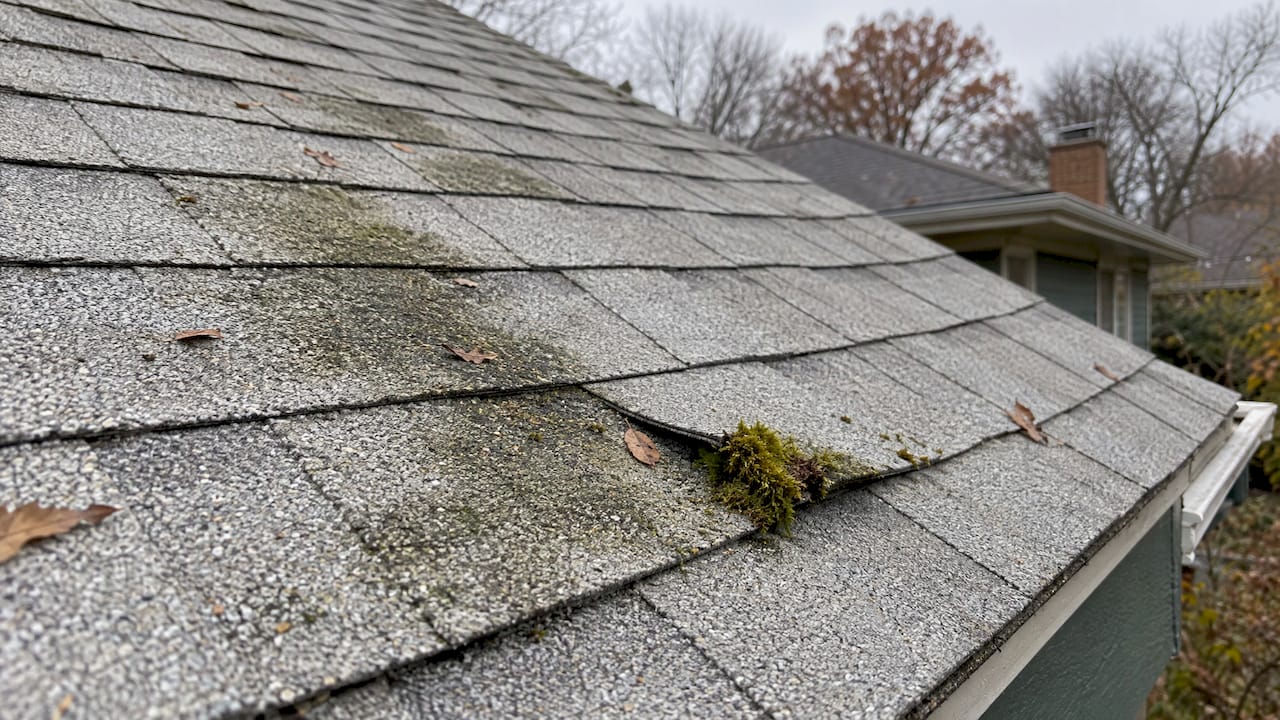
Light shingles tend to show dirt and stains more easily. The most common culprit is algae. According to the Asphalt Roofing Manufacturers Association, algae causes the dark streaks seen on many roofs, but there is no scientific evidence it damages asphalt shingles. Moss is a different matter: ARMA says it can lift or curl the leading edges of shingles, raising the risk of blow-off in wind, and in severe cases cause moisture damage to the deck or leaks.
Dark shingles hide algae streaks better, but on a newly installed roof they make slight shading differences more visible. An ARMA bulletin explains that color shading on new asphalt roofs may occur more frequently with black and other dark-colored shingles, because small reflectance differences are easier to see. It is a cosmetic effect of how shingles reflect light, and it is worth discussing before installation starts.
If you need to clean a roof of either color, be careful. ARMA warns never to use a pressure washer on an asphalt shingle roof because it will cause granule loss and very likely premature failure. For algae and moss it describes a 50:50 mix of laundry-strength liquid chlorine bleach and water, rinsed with low-pressure water, with care to protect plants and the person applying it. Granule loss is also something to watch as a roof ages, and our guide to spotting granule loss early explains what to look for. Avoid painting or coating installed shingles to change their color: ARMA strongly advises against field-applied coatings over asphalt shingles, since they can cause curling, loosen granules or trap moisture.
Does a light shingle last longer than a dark one?
The popular claim is that light shingles last longer because they stay cooler. Color is one factor, but it is not the only one: the shingle's construction, the underlayment, the ventilation and the installation all affect how long a roof lasts.
There is a real mechanism behind the light-shingle claim. InterNACHI, a home inspector training organization, lists roof color among the factors in shingle lifespan: darker roofs absorb more heat, which it says shortens shingle life by speeding the loss of volatiles and increasing thermal cycling. That is a reason to pair any dark roof with good attic ventilation, not a reason to avoid dark colors. The details below the shingle matter too, from underlayment to drip edge and flashing, because water getting past those parts ends a roof early regardless of color.
What it costs
Within a shingle line, color usually is not what drives the price. The cost drivers are the shingle product, roof size, pitch, tear-off and repairs to the deck. A Florida utility study summarized by the Building America Solution Center found that choosing white shingles over dark ones reduced measured space cooling by about 4% at no extra cost to the buyer or builder. Reflective-granule products are the exception, as noted above.
For planning, our roofing page lists starting replacement prices by shingle tier (see the estimate section below). Final pricing depends on roof size, materials, access, pitch, complexity and existing conditions. If you are still deciding whether to repair or replace, see how homeowners decide between repair and replacement, and if you are comparing product types before color, start with our guide to roofing shingle types.
How to choose your color in five steps
Look at the whole exterior. Brick, siding, trim, gutters and the front door all sit next to the roof. Match undertones (warm or cool) rather than just light or dark. If siding is part of the plan, look at our siding services at the same time, since the two should be chosen together.
Check your attic. Ask how much insulation you have, whether the attic is vented and whether ductwork runs through it. These answers tell you whether color will matter at all.
Decide how much maintenance you want. Light roofs call for watching for algae streaks. Dark roofs hide streaks better but make shade variation on a new roof easier to see.
Ask about cool-color options. If you love a dark palette, ask for reflective-granule shingles in that color and get the price difference in writing.
See a full-size sample in daylight. Small swatches mislead. Look at a sample on a roof or large board, in morning and afternoon light, next to your siding.
Check your neighborhood too. Some homeowner associations and covenants restrict roof colors, so check your HOA rules before ordering.
Our perspective
Shingle color is a reasonable place to start, but it is rarely what decides how a roof performs in Omaha. The energy difference between a charcoal roof and a light gray one is small next to what a well-insulated, well-vented attic does.
It helps to treat the roof as a system. The shingle, the underlayment, the drip edge, the flashing and the ventilation all deserve a conversation before work starts, because that is where roofs succeed or fail.
If you are stuck between two colors, look at full-size samples on a real roof next to your siding rather than choosing from a catalog page.
Get a roof estimate
Spagnotti Contracting handles roof replacement and repair across the Omaha metro area. Our roofing page lists starting prices: roof replacement at $5.50 per sq. ft. and up for standard architectural shingles, $6.00 per sq. ft. and up for Class 3 impact-resistant shingles and $6.50 per sq. ft. and up for Class 4 SBS-modified shingles, with a $7,500 minimum roof-replacement project. Small roof repairs are $595 and up per repair visit, and standard roof repairs are $995 and up. A roof leak assessment is $195, credited toward an approved roofing repair of $595 or more when scheduled within 30 days.
If you are not sure the roof needs replacing yet, start with the assessment. Browse all our residential services or contact us to schedule a consultation.
FAQ
Are dark shingles bad for a house in a hot summer?
Dark shingles absorb more sunlight and run hotter, so they add more heat to the attic in summer. How much that matters depends on your insulation, ventilation and whether ducts run through the attic. A well-insulated, well-ventilated attic reduces the effect, and cool-color dark shingles with reflective granules reduce it further.
Do light shingles make a house cooler?
They can, mostly in hot climates. In the Florida study, the white shingle roof trimmed annual cooling energy by 3% to 5%, while highly reflective white tile and metal roofs saved much more (Florida Solar Energy Center). In colder regions like Nebraska, the benefit is smaller and may be offset by less winter warmth (Building America Solution Center).
Which shingle color shows less dirt?
Dark shingles hide dirt and algae streaks better. Light shingles show them sooner, but ARMA says there is no scientific evidence algae damages asphalt shingles. Moss is more serious because it can lift shingle edges, so follow ARMA's cleaning guidance and never use a pressure washer (ARMA).
Can I change my shingle color later by painting?
The Asphalt Roofing Manufacturers Association advises against coating installed asphalt shingles, because coatings can cause curling, loosen granules or trap moisture. If you want a different color, it is best to choose it at replacement.
Does shingle color affect resale value?
Color affects curb appeal more than anything measurable, so we would not promise a specific resale effect. A color that complements your siding and brick and a roof in good condition are what buyers notice.
Sources
Comparative Evaluation of the Impact of Roofing Systems (Florida Solar Energy Center)
Roof solar reflectance and cooling energy use: field research (OSTI)
Cool Color Roofing Materials (Lawrence Berkeley National Laboratory)
Cool Roofs and Walls to Reduce Heat Gain (Building America Solution Center)
Variation in Color Appearance on Newly Installed Asphalt Shingle Roofs (ARMA)
Algae and Moss Prevention and Cleaning for Asphalt Roofing Systems (ARMA)
Mastering Roof Inspections: Asphalt Composition Shingles, Part 30 (InterNACHI)
Recommended
Dealing With Something Similar?
Every property is different, but if this sounds like what you’re seeing, we’re happy to take a look and help you figure out what’s actually going on.