Exterior Maintenance
2026 Siding Color Trends for Omaha: Warm Neutrals, Charcoal, and Sage
By Noah Spagnotti
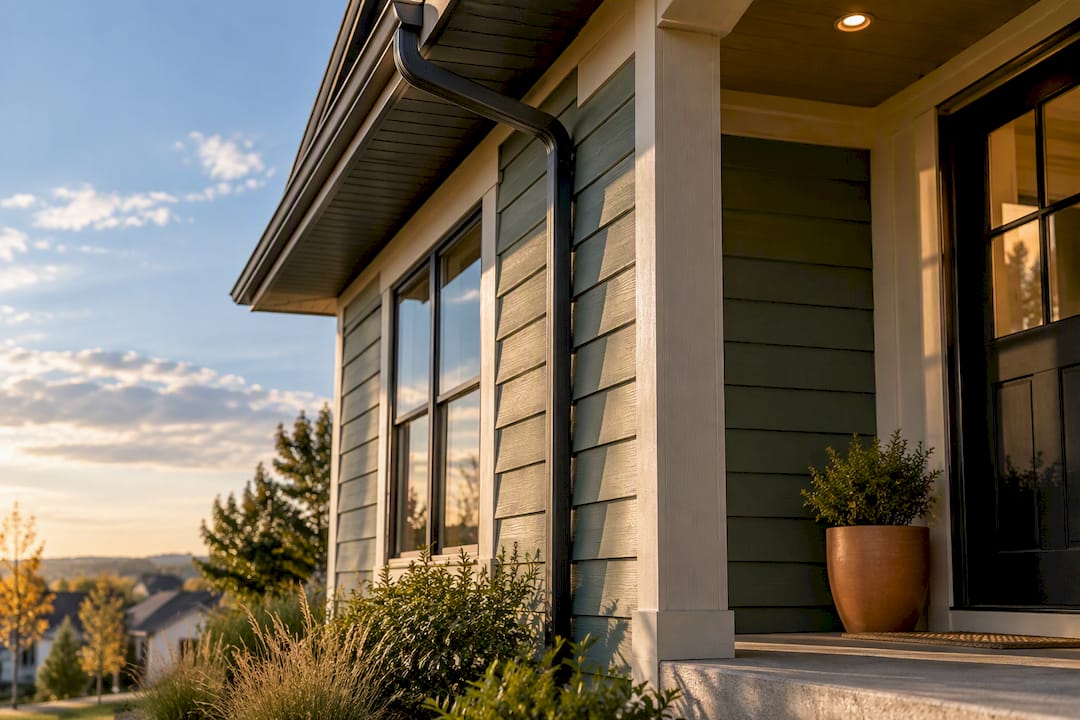
Warm neutrals and greige are the safe backbone of 2026 exteriors, but the real energy is in charcoal and near-black bodies, sage and olive greens, deep navy, and terracotta accents layered into two-tone palettes. The takeaway for anyone planning a project: lean nature-inspired and warm for the main body, then use a darker or richer hue for trim, doors, or a secondary volume. Brand tint data and designer coverage both point to this shift toward warmth and layered contrast over flat, single-tone schemes.
TL;DR:
Charcoal and near-black siding are gaining ground, and charcoal softens the traditional black look.
Sage and olive greens are rising in popularity, bringing a calming, nature-inspired look.
Match your siding undertone to your roof, stone, or brick before choosing color samples, as these elements are harder to change later.
Large, full-scale samples viewed at different times of day significantly reduce the risk of color mismatches once installed.
Combining warm neutrals with darker trim or accents creates layered, intentional palettes popular in 2026, but contrast should be carefully balanced to avoid looking accidental.
Table of Contents
Siding Color Trends 2026: The Families Leading the Pack
Two-Tone and Layered Palettes: How to Pair Colors Without It Looking Accidental
How Siding Material and Finish Change the Way Color Actually Looks
Matching Siding Color to Your Region, Climate, and Roof
How to Choose a Siding Color: A Step-By-Step Checklist
What a Local Contractor Sees on Real Siding Projects
How Siding Colors Got Here: A Quick Look Back
Coordinating Doors, Shutters, and Gutters With Your Siding
Sustainability's Growing Influence on Siding Color Choices
Where Siding Color Is Headed After 2026
Balancing Trend and Timelessness
Update Your Siding Color With Spagnotti Contracting
Where This Data Comes From
Sources
FAQ
Siding Color Trends 2026: The Families Leading the Pack
If you're trying to shortlist a color before you call anyone for quotes, start with these seven families.
Warm whites and creamy neutrals. Stark white is fading. Buyers and designers are gravitating toward warmer, creamier whites because they photograph better in natural light and pair with almost any trim or roof color, which matters if you're thinking about resale.
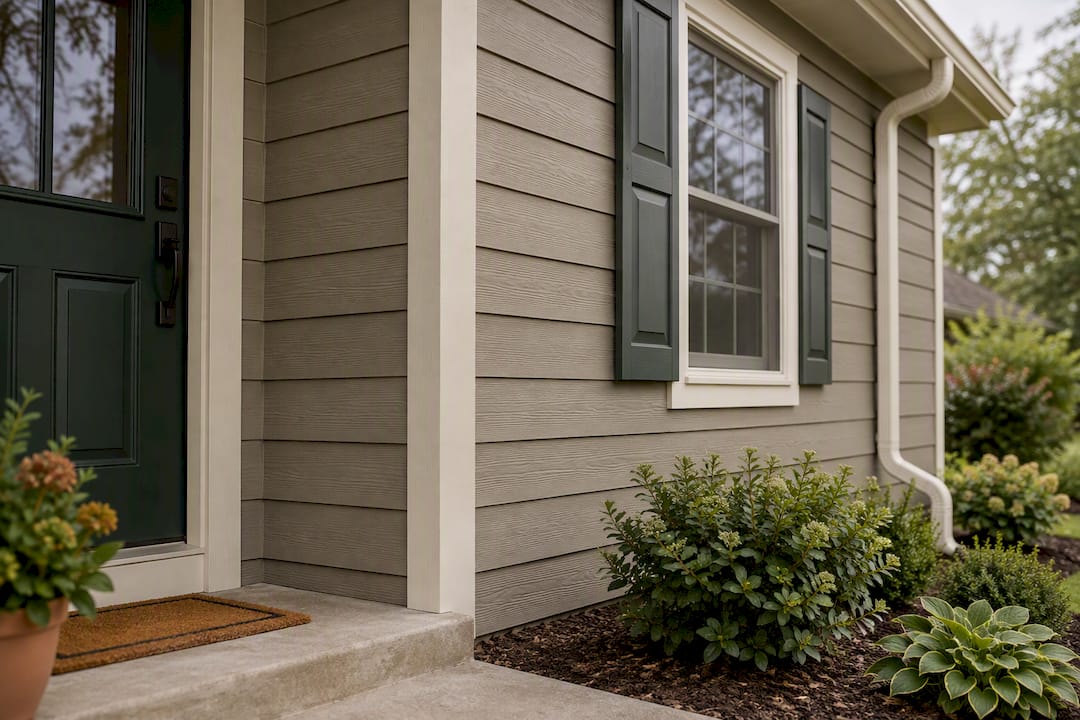
Greige and warm taupe. This is the new default neutral, replacing the cool blue-gray that dominated the last decade. It reads warmer in person and works with brick, stone, and wood accents without fighting them.
Charcoal and near-black. Pure black siding is giving way to charcoal, which has just enough warmth to avoid looking flat or harsh in photos.
Sage and olive greens. Muted, grayed-down greens are having a real moment. Designers describe it as calming and biophilic, meaning it borrows from nature palettes rather than manufactured-looking pigment.
Deep and navy blues. Coastal-leaning blues have moved well beyond beach houses. A deep navy body reads sophisticated on a Craftsman or a traditional two-story, and it holds up visually against both stone and brick foundations.
Terracotta and clay accents. This one's smaller in volume but growing fast, especially on stucco exteriors or as an accent on a secondary gable or entry feature. It's warm without tipping into orange, and it pairs naturally with warm neutrals.
Natural wood tones and dark stains. Real or engineered wood accents, often stained darker than the "natural cedar" look popular a decade ago, are showing up as contrast panels next to painted siding.
Valspar's own 2026 exterior color data backs several of these shifts directly: blues and greens are both climbing in tint volume, and the brand named Warm Eucalyptus as one of its standout 2026 colors, alongside a surprising surge in a sunny yellow tint called Sunglow. Neutrals and black still hold the largest overall tint share, but the growth curve belongs to color.
Two-Tone and Layered Palettes: How to Pair Colors Without It Looking Accidental
Two-tone exteriors dominate 2026 project photos, but there's a real difference between a pairing that looks planned and one that looks like the crew ran out of paint halfway through. Ply Gem's coverage of two-tone trends breaks this into two approaches worth understanding before you pick swatches.
Tonal layering. This means staying within one color family but shifting value, like a warm greige body with a slightly deeper taupe on the garage or a bumped-out second story. Low contrast, high cohesion. It's the safer route for resale-focused projects.
High-contrast pairing. This is where charcoal or navy body meets a lighter, warmer trim, or where a sage main volume gets a cream accent gable. It reads more dramatic and works best on homes with clear architectural breaks, like a front porch or a bumped-out entry.
Trim strategy matters more than people think. Stark white trim against a charcoal or navy body tends to look clinical and cold in real light. Designers consistently recommend cream or off-white trim instead, since it softens the contrast without losing definition.
Reserve the boldest color for a focal point, not the whole house. Terracotta on an entry door, sage on shutters, or a dark stain on a wood accent panel gives you the drama of a bold color without committing your entire facade to it.
Popular real-world combinations right now: sage body with cream trim and a warm wood door, clay accents against soft sand siding, and charcoal paired with a natural or dark-stained wood feature wall near the entry.
How Siding Material and Finish Change the Way Color Actually Looks
The same paint chip looks different depending on what it's applied to. Vinyl, fiber cement, engineered wood, and stucco all reflect light differently, and that affects how a color reads once it's actually installed.
LRV (light reflectance value) matters more than the color name. A low-LRV charcoal on fiber cement panels with visible shadow lines will look darker and more dramatic than the same paint code on smooth vinyl.
Stains are trending darker. Valspar's stain data shows shades like Darkest Night and October Brown gaining share, used mainly on wood accents to create contrast against painted siding. If you're weighing paint against stain for wood elements, it's worth comparing how paint and stain perform over time before locking in an accent color.
Matte finishes are winning over gloss for main siding bodies, since they photograph softer and hide minor surface irregularities better than a shiny finish.
Mid-tones fade more gracefully than deep saturates. Pigment stability varies by color family, and a true near-black or a saturated navy will show fading and chalking sooner than a mid-value charcoal or muted sage.
Pro Tip: Ask for the LRV number on any color you're seriously considering, not just the swatch name. Two colors with similar names can behave completely differently on your specific siding material.
Matching Siding Color to Your Region, Climate, and Roof
Light does strange things to paint color. A greige that looks warm and inviting under overcast Midwest skies can look flat and gray under intense sunbelt sun, and a charcoal that looks moody in the Pacific Northwest can look almost black under high-UV desert light.
Sunbelt regions tend to favor warm neutrals, terracotta, and clay tones that hold up visually against strong, direct light.
Pacific Northwest and coastal climates lean into deeper greens, navy, and charcoal, since overcast light tends to soften and cool down bold colors.
Mountain regions often pair darker bodies with natural wood accents to play off the surrounding landscape.
Midwest and Northeast homes are trending toward warm greige and sage, colors that read well across all four seasons rather than just summer light.
The smarter sequencing rule, though, is to pick your roof before your siding. Roof color is harder and more expensive to change, so your siding undertone should match it, not the other way around. And if you're set on a dark body in a hot, high-UV climate, color guidance often recommends high-SRI (solar reflectance index) formulations or textured finishes to manage surface heat, or simply stepping down to a mid-tone instead of true near-black.
How to Choose a Siding Color: A Step-By-Step Checklist
Picking a siding color isn't about falling in love with a swatch at the paint counter. It's about narrowing systematically so the color you land on still looks right eighteen months from now.
Study your home's architecture and neighborhood first. A Craftsman bungalow and a modern farmhouse call for different palettes, and a color that looks striking in isolation can clash badly with the block it sits on.
Shortlist two or three color families, not one final pick, before you order anything.
Order large sample panels, at least three feet by three feet, and view them against your actual siding material and trim. Small swatches and phone screens routinely misrepresent how a color reads at full scale.
Check the samples at three different times of day, morning, midday, and evening, and on at least two sides of the house if possible.
Match undertones to your roof, stone, or brick, since a mismatched undertone is the single most common reason a "good" color looks wrong once installed.
Weigh resale against personality. If you're planning to sell within a few years, lean toward warm neutrals for the main body and save bolder color for a door or accent. If you're staying long term, a sage, navy, or charcoal body has more staying power than trend cycles suggest.
Pro Tip: If your neighborhood has an HOA, get your top two color choices pre-approved before you order full-size samples. It saves a repaint cycle and a lot of frustration.
What a Local Contractor Sees on Real Siding Projects
Color decisions rarely happen in a vacuum. On most projects, siding color has to work around a roof that's staying put, gutters that may or may not get replaced, and trim that's already committed to a certain undertone. Getting the sequence right matters as much as the color itself. If a roof replacement is also on the table, it's worth coordinating roofing and siding timing so the two don't end up clashing.
Substrate prep affects the final look more than most homeowners expect, and trim positioning around windows and doors can shift how a color reads from the curb. A mockup on an actual wall section, not just a paint chip, catches problems before installation day.
Homeowners who request a color mockup on an actual section of their home, rather than relying on a swatch alone, consistently avoid the most common regret we hear: "it looked different once it was actually up."
Fade and recoat intervals also depend on the finish chosen, so it's worth asking upfront how a specific color and material combination is expected to hold up over the following five to ten years.
How Siding Colors Got Here: A Quick Look Back
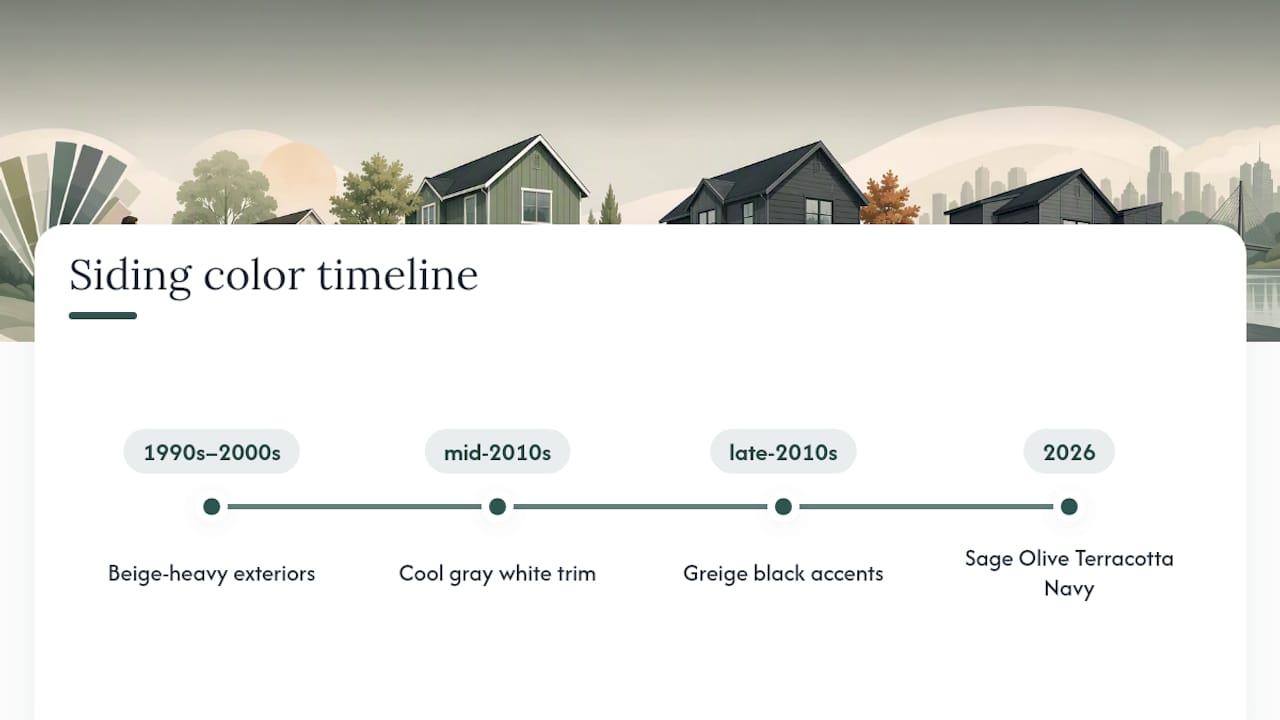
Ten years ago, siding trends were dominated by cool grays and pure white trim, a look that traced back to the farmhouse aesthetic that took over exterior design in the mid-2010s. That palette made sense at the time: it photographed cleanly, matched the minimalist interior trends of the era, and felt like a clean break from the beige-heavy exteriors of the 1990s and early 2000s.
By the late 2010s, that cool gray look had become so common it started to feel generic, and homeowners began pushing back with warmer alternatives. Greige emerged as a bridge color, warm enough to feel distinct from the gray wave but still neutral enough to satisfy resale-minded buyers. Black and near-black trim and accents followed, first as a small detail and eventually as full siding bodies on more architecturally bold homes.
What's happening in 2026 is really the next logical step in that same warming trend. Sage, olive, terracotta, and navy are the colors that emerge once a market gets comfortable with darker, richer tones and starts looking for personality beyond neutral safety. It's less a sudden shift and more the natural continuation of a decade-long move away from cold, flat palettes toward warmer, more layered ones.
Coordinating Doors, Shutters, and Gutters With Your Siding
Siding color rarely stands alone. The details around it, front doors, shutters, and gutters, either reinforce a palette or quietly undercut it, and 2026's trends give clear direction on both.
Front doors are leaning bold even when siding stays neutral. A warm greige or cream body pairs well with a terracotta, deep green, or navy door, giving a home personality without touching the main palette. If you're weighing door style alongside color, it's worth looking at how door style choices affect an entryway's overall look, since proportion and paneling matter as much as color once you're standing at the curb.
Shutters are trending toward matching or slightly darker versions of the siding body rather than the high-contrast black shutters of the past decade. On a sage or clay body, a shutter in a deeper tone of the same family reads more cohesive than a jarring black.
Gutters are the detail people forget until they're staring at a mismatched white gutter against a charcoal house. Matching gutters to trim, rather than to the roof, generally reads cleaner, and it's a conversation worth having before installation rather than after.
Sustainability's Growing Influence on Siding Color Choices
Environmental considerations are shaping siding color decisions more directly than most homeowners realize, and it's not just about the material itself. Color affects thermal performance, which affects energy use, which is pushing more buyers to think about pigment and reflectivity alongside aesthetics.
Lighter and mid-tone colors reflect more heat than deep saturates, which matters most in hot, high-UV regions where a near-black body can raise surface temperatures enough to stress certain siding materials over time. That's part of why high-SRI formulations, paints engineered to reflect more solar energy while still delivering a dark visual tone, are gaining traction as a way to get the charcoal look without the full thermal cost.
There's also a growing interest in fade-resistant pigments that reduce how often a home needs repainting. Fewer repaint cycles means less material waste and lower long-term cost, which is nudging some homeowners toward mid-tones over the most saturated trend colors, since deep saturates tend to fade and chalk faster.
Material choice plays into this too. Fiber cement and engineered wood siding often carry better long-term color stability than some vinyl products, particularly in darker tones, which is worth factoring in if a color choice is meant to last a decade or more rather than getting refreshed every few years.
Where Siding Color Is Headed After 2026
The current momentum toward warm neutrals, sage greens, and charcoal isn't a one-year blip. Nature-inspired colors tend to have longer trend cycles than the cooler, more architectural palettes that preceded them, mainly because they age well against landscaping and don't read as dated the way a trend-driven accent color can.
Expect deeper, more saturated greens to keep expanding beyond sage into richer forest and olive tones as homeowners get more comfortable with bold color on a full siding body rather than just an accent. Terracotta and clay are likely to move from stucco-specific accents into broader use on traditional siding materials as more manufacturers expand their color libraries to match demand.
Two-tone and tonal layering will likely become the default rather than the exception, especially as more manufacturers make it easier to order coordinated trim and body colors as matched systems rather than separate decisions. The next real shift to watch is deeper integration of thermal-performance data into color selection tools, since climate-driven color choices are only going to become more common as reflective and high-SRI formulations get cheaper and more widely available.
Balancing Trend and Timelessness
Chase warmth and nature-inspired tones for the body, save the boldest color for an accent, and never skip large sample panels viewed in your own light before committing.
— Noah
Update Your Siding Color With Spagnotti Contracting
Picking the right 2026 color is only half the project. Getting it installed cleanly, on schedule, and coordinated with your existing roof, trim, and gutters is where most DIY color plans run into trouble. A local contracting team handles both sides of that equation for homeowners: color-informed planning and licensed installation from the same team, so nothing gets lost between the mood board and the finished wall.
Every project starts with an on-site estimate, not a guess based on photos, and can include color mockups on an actual section of the home before any material gets ordered. From there, customers receive a project schedule and a point of contact managing prep, installation, and coordination with trim, gutters, or any roofing work happening alongside it. Pricing for siding installation runs $6 to $12 per square foot depending on material and scope, with repair estimates provided after an on-site assessment.
If you're ready to see your top color choices on your actual house before committing to anything, request a siding estimate and color mockup from Spagnotti Contracting.
Where This Data Comes From
Valspar's 2026 exterior color trend data, covering tint volume shifts and new color names.
Architectural Digest's 2026 exterior color coverage, with designer-recommended pairings.
NARI's roundup of 2026 exterior color trends, from the remodeling professional's perspective.
Sources
FAQ
What's the most popular exterior siding color for 2026?
Warm neutrals and black still hold the largest overall share of Valspar's tint volume, but greens and blues are the colors gaining ground, with sage and olive leading the green family and charcoal the go-to dark tone.
What are the trendiest exterior colors for 2026 overall?
The standout families are warm neutrals, charcoal and near-black, sage and olive greens, deep navy blues, and terracotta accents, often combined in two-tone layered schemes rather than used alone. Valspar's own trend data also flags a surprising rise in a joyful yellow tint alongside these core families.
Is black or charcoal siding still trending in 2026?
Charcoal has largely replaced pure black as the preferred dark siding tone, since it holds warmth and photographs softer than true black.
How do I know if a siding color will work with my roof?
Match the undertone of your siding to your roof, stone, or brick first, since roof color is far harder to change later. Order large sample panels and view them against your roof at different times of day before finalizing anything.
How much does it cost to update siding color in Omaha?
Full siding installation with a new color runs $6 to $12 per square foot through Spagnotti Contracting, depending on material and project scope. Siding repair pricing is quoted after an on-site assessment since it depends on the extent of the damage.
Recommended
Dealing With Something Similar?
Every property is different, but if this sounds like what you’re seeing, we’re happy to take a look and help you figure out what’s actually going on.