Roofing
Spot Granule Loss Early: Homeowners' DIY Checks, Contractor Criteria
By Noah Spagnotti
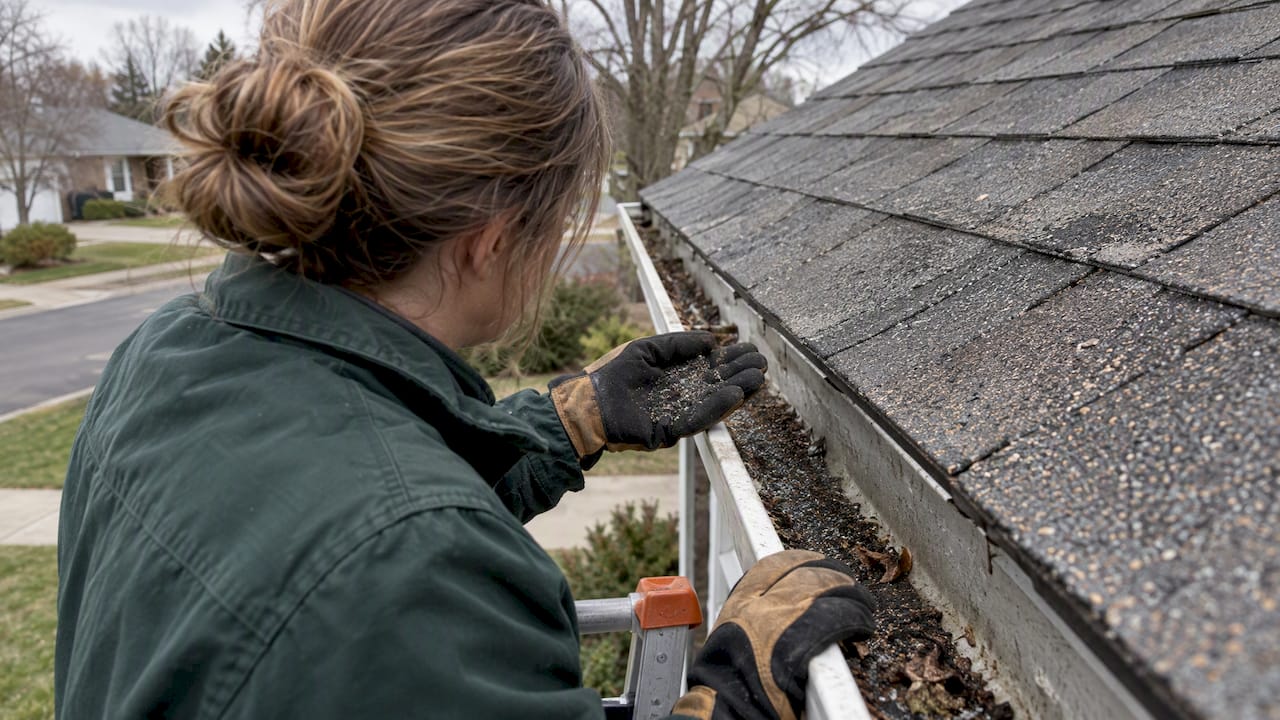
A small amount of even granule shedding is normal and nothing to worry about, but bald patches or heavy granule deposits in your gutters after a storm are not. Groups like IBHS and InterNACHI track this wear closely, and any sudden or uneven loss is a reason to inspect from the ground, check your gutters, photograph what you see, and call a professional if the damage looks widespread.
TL;DR:
Granule loss caused by aging and UV exposure is generally uniform and gradual, whereas storm impact results in localized patches paired with dents or bruising.
Inspecting from the ground with binoculars and reviewing gutter debris helps determine if granule shedding is normal or a sign of damage requiring professional assessment.
Bald patches exposing asphalt indicate deterioration that accelerates aging and may require roof replacement, while minor or non-uniform shedding is often cosmetic.
Temporary fixes like replacing individual shingles or sealing minor cracks are suitable only for small, isolated damage, not extensive granule loss across the roof.
Regular maintenance, including attic ventilation and gutter cleaning, can slow granule wear and extend the roof’s lifespan, but a professional inspection is essential for accurate diagnosis.
What roof granules are and why they matter
Asphalt shingles are coated in small mineral or ceramic granules embedded in the asphalt layer during manufacturing. That layer does more work than most homeowners realize.
Granules block ultraviolet rays that would otherwise break down the asphalt binder underneath.
They shield the shingle from photo-oxidation and the repeated heating and cooling that ages roofing material over time.
A fresh roof often sheds extra "hitchhiker" granules, loose ones left over from manufacturing, within the first few months.
That early shedding is expected, according to InterNACHI's inspection guidance, which notes that shingles commonly lose excess granules during a short curing period after installation. If you want a primer on how different shingle types hold up over time, our guide to choosing the right roofing shingle type covers the tradeoffs.
Common causes of granule loss
Granule loss has several distinct causes, and the pattern on your roof usually points to which one you're dealing with.
Normal aging and UV exposure: thermal cycling and sun exposure wear granules away gradually and fairly evenly across the whole roof.
Hail and storm impact: granules dislodge in localized patches, often paired with dents or bruising, and the timing lines up with a recent storm. IBHS field research has found that rain and rapid roof temperature swings, sometimes a significant drop in temperature within five minutes, can dislodge granules on their own.
Manufacturing, storage, or installation defects: loss shows up early in the shingle's life and tends to be uniform rather than patchy, a pattern Inspectapedia associates with defective product or improper handling before installation.
Mechanical abrasion and foot traffic: scuffing near chimneys, vents, or areas where someone has walked repeatedly creates localized bald spots unrelated to weather.
Matching the pattern you see to one of these four causes is usually the fastest way to figure out whether you're looking at ordinary wear or a problem worth flagging.
How to inspect and detect granule loss safely
Most of this inspection can happen without ever getting on a ladder.
Start from the ground with binoculars and take photos of any shiny, dark, or uneven patches on the shingle surface.
Check gutters, downspouts, and the ground near splash areas. A light dusting of granules is normal, but handfuls of granules after a single storm are not.
If you do go up a ladder, keep three points of contact, work in daylight, and never step directly on a slope you can't see clearly.
Stop and call a contractor if you notice soft spots, multiple bald patches, or any area where the black asphalt mat shows through.
Inside the attic, look for daylight coming through the roof decking, fine granule dust on insulation, or shingles that feel brittle when you can see their undersides. Any of these suggest the roof has aged past simple surface wear.
Pro Tip: Keep a dated folder of your roof photos every season so you can compare granule patterns over time instead of guessing whether loss is accelerating.
What granule loss means for roof life and when to repair or replace
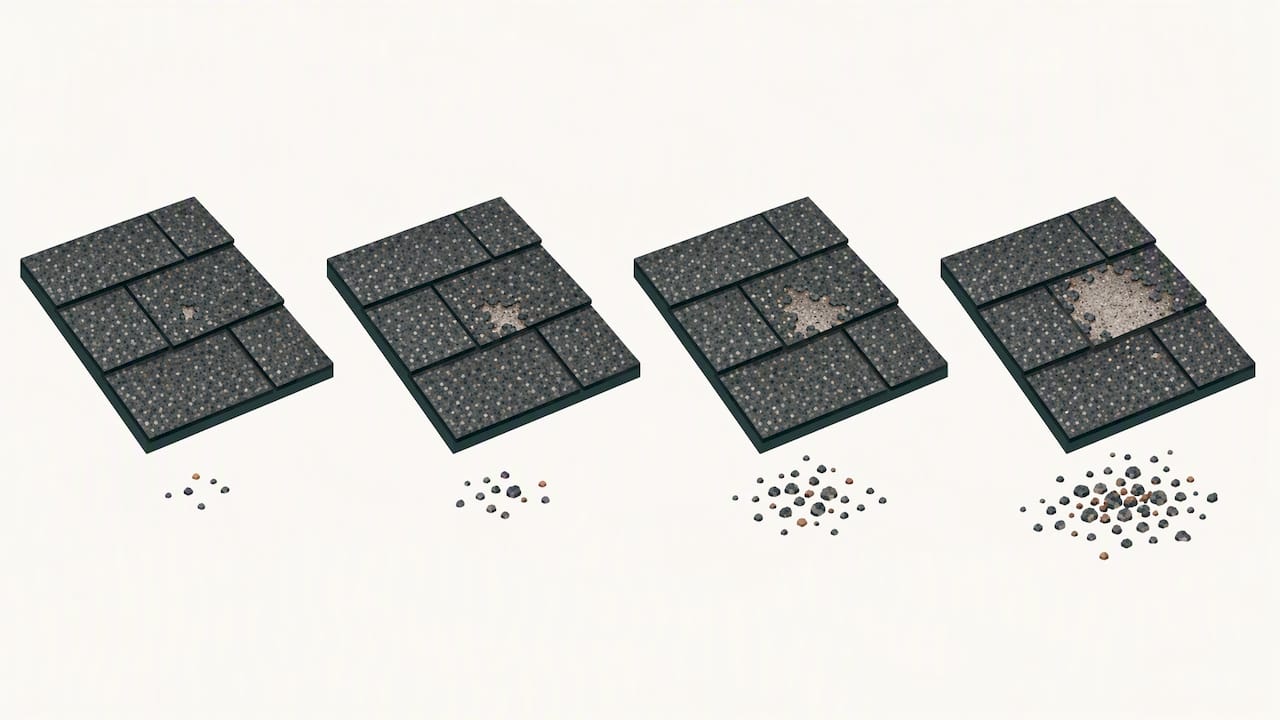
The line between cosmetic and serious comes down to whether the asphalt mat is exposed. Light, even shedding across an older roof is expected aging. Bald spots that reveal the black substrate underneath are not.
Cosmetic shedding: scattered granules in gutters, no visible dark patches on the roof.
Early warning: small dark spots a few inches wide, usually near ridges or edges.
Serious: dark patches larger than a dinner plate, or several spread across one roof plane.
Exposed asphalt ages faster. Once granules are gone, the shingle substrate underneath absorbs more UV radiation and water, which speeds up embrittlement and increases the risk of freeze-thaw cracking, according to Inspectapedia's granule loss guidance.
In IBHS impact testing using the UL 2218 steel-ball drop method, crushed or dislodged granules can show up, but a shingle only fails the standard if the back surface actually breaches. That distinction matters when you're deciding whether hail damage is cosmetic or structural, and it's one more reason a trained eye helps. For a deeper look at the decision itself, see our breakdown of repair versus replacement.
Temporary fixes and repairs homeowners can use
A few fixes are reasonable to attempt or request for small, isolated damage.
Replacement shingle swap: a single damaged shingle can often be pulled and replaced if the surrounding roof is sound.
Roofing cement patch: small cracks or lifted edges can be sealed temporarily, but this isn't a long-term fix for granule loss itself.
Full-slope assessment: once loss spans multiple shingles or shows up in more than one spot, patching stops being enough and you need a broader evaluation.
Document everything before you touch anything. Photograph gutter accumulation and any bald patches, and keep those photos for your own records so a contractor can compare them during an inspection.
If you spot an active leak alongside granule loss, our guide on handling a roof leak emergency walks through immediate steps while you wait for a professional.
Prevention and routine maintenance to slow granule loss
A few habits meaningfully extend the life of your granules and the shingles underneath them.
Maintain attic ventilation and insulation. Poor airflow raises roof deck temperatures and accelerates the thermal stress that drives granule loss.
Clean gutters regularly and note whether granule buildup is increasing season over season, not just present.
Trim overhanging branches and avoid walking the roof unless necessary. Abrasive debris and foot traffic both wear granules away faster than weather alone.
When it's time to replace, ask about impact-rated shingles and confirm they were stored and installed according to manufacturer specs, since storage defects are a known cause of premature loss.
How a contractor assesses granule loss
When we evaluate a roof for granule loss, we follow a consistent sequence: exterior photos of every slope, a gutter sample to check granule volume and color, pattern analysis to separate storm damage from aging, and an attic check for light penetration or decking damage.
We document whether the pattern points to storm impact, age-related wear, or an installation defect, since the cause shapes whether a targeted repair or a replacement is the right path.
We estimate remaining shingle life based on exposure severity, not just visible granule count.
Every assessment includes a clear, itemized estimate so you know what you're paying for and why, with project updates from the first visit through final walkthrough.
Document first, panic later
If there's one thing worth remembering, it's this: compare what you're seeing to normal shedding expectations before assuming the worst. Photograph the pattern, note whether it followed a storm, and get a professional opinion if bald patches appear. Short-term patches buy time, but don't let them substitute for a real replacement plan once a roof is aging out.
— Noah
Get a professional read on your roof
If you've spotted bald patches, heavy granule buildup in your gutters, or storm damage you can't quite assess from the ground, we can help you figure out what's actually going on with your roof.
Roof Leak Assessment for $195, a flat-fee way to get a clear answer before committing to repairs.
Roof Repair starting at $595 per visit for small repairs and $995 for standard repairs, for isolated granule loss or storm damage.
Roof Replacement starting at $5.50 per square foot for architectural shingles, with impact-rated options from $6.00 to $6.50+ per square foot, when a roof has aged past the point of patching.
Estimates typically include a detailed walkthrough of findings, what they mean for your roof's remaining life, and the options and their costs. Schedule an inspection with our roofing team and get a straight answer instead of guesswork.
FAQ
How do you fix granule loss on shingles?
Small, isolated granule loss can sometimes be addressed with a replacement shingle or a roofing cement patch, but these are short-term measures rather than a fix for the underlying wear. Once loss spans multiple shingles or exposes the asphalt mat, a professional inspection should determine whether repair or replacement makes more sense.
Is it normal for shingles to lose granules?
Yes, some granule loss is normal, especially right after installation when excess manufacturing granules wash off during an early curing period, according to InterNACHI. What's not normal is granule loss that continues or increases well beyond the first winter, or that creates visible bald patches.
How much granule loss is too much?
Scattered granules in your gutters are typically cosmetic, but dark patches larger than a few inches, especially ones that expose the black asphalt substrate underneath, signal accelerated wear. Inspectapedia notes that exposed substrate absorbs more water and UV, which speeds up deterioration.
Does granule loss mean I need a new roof?
Not necessarily. Isolated patches from foot traffic or minor storm impact often just need a targeted repair, while widespread bald spots or loss paired with brittleness usually mean the roof is nearing the end of its service life. A contractor assessment is the most reliable way to tell the two apart.
Sources
Natural Weathering and Hazard Exposure – Insurance Institute for Business & Home Safety
Mastering Roof Inspections: Asphalt Composition Shingles, Part 30 - InterNACHI
Recommended
Dealing With Something Similar?
Every property is different, but if this sounds like what you’re seeing, we’re happy to take a look and help you figure out what’s actually going on.