Roofing
Roof Repair vs. Replacement: How Homeowners Decide
By Noah Spagnotti
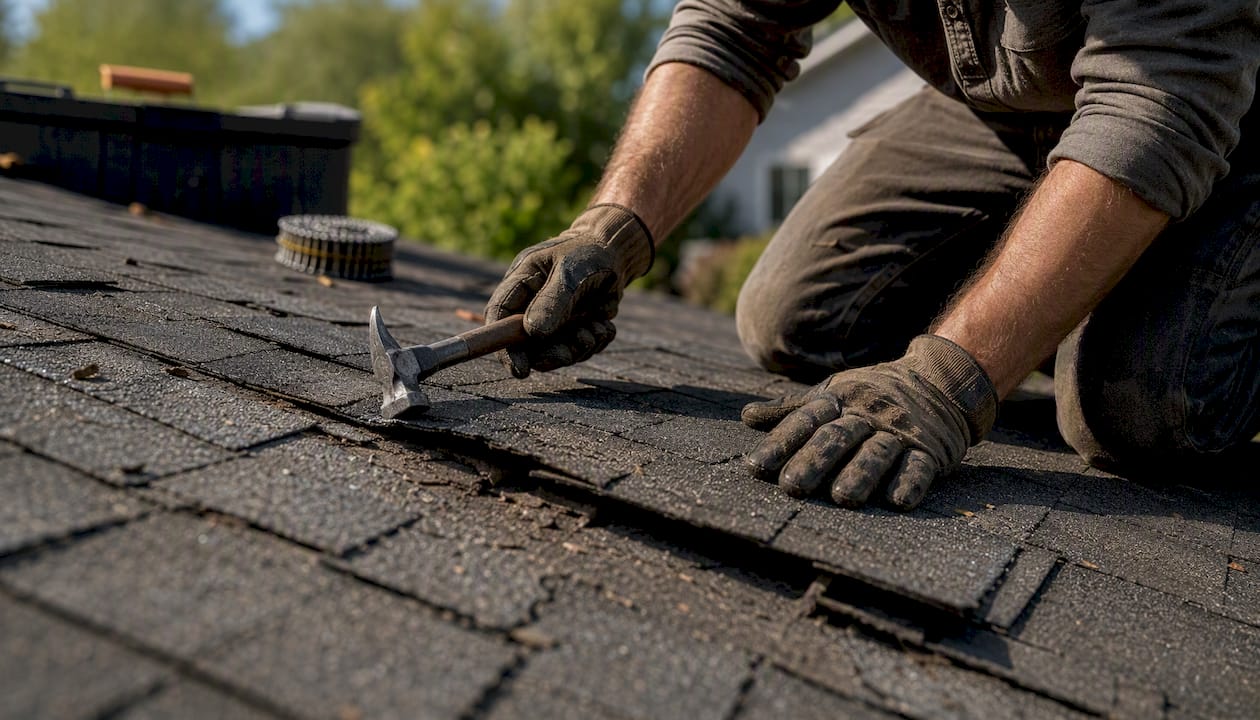
Repair when damage is localized and your roof has meaningful life left. Replace when damage is widespread, the deck is compromised, or your repair quote approaches about one-quarter of what a full replacement would cost. That single rule handles most situations. Here is how to apply it quickly:
Age check: Under 10 years old, repair is almost always the right call. Between 10 and 20 years, it depends on damage extent and material. Over 20 years, replacement is often the smarter long-term investment.
Damage threshold: If a substantial portion of your roof surface shows deterioration, the math usually favors replacement over repeated patching.
Cost threshold: Get both a repair estimate and a replacement estimate. If the repair quote exceeds 25% of the replacement quote, GAF recommends leaning toward replacement.
Active leaks: Any active leak needs a professional on-site within days, not weeks.
Attic or deck signs: Daylight visible through the decking or sagging boards push the decision firmly toward replacement.
Key Takeaways
The single most reliable test for roof repair vs.
Point | Details |
|---|---|
Age bands guide the first cut | Under 10 years: repair; 10–20 years: assess damage extent; over 20 years: replacement often wins. |
The 25–30% cost rule | If repair cost exceeds 25–30% of replacement cost, replacement is usually the better financial decision. |
Deck and attic signs are urgent | Daylight through decking or sagging boards means call a contractor immediately, not next season. |
Get both quotes in writing | Always request a repair scope and a replacement scope from each contractor to apply the cost threshold accurately. |
Spagnotti Contracting provides documented inspections | Omaha-area homeowners can request a written inspection and estimate covering both repair and replacement options. |
Table of Contents
What factors actually change the repair vs. replacement answer?
What warning signs should you look for during an inspection?
How much do repairs and replacements typically cost?
How does roofing material affect the repair-vs-replace decision?
When does replacement make more financial sense long-term?
How do you collect reliable estimates and choose a contractor?
What does a professional inspection actually cover?
Is repairing a roof better for the environment than replacing it?
Common myths about roof repair and replacement
A contractor’s perspective on what homeowners get wrong
Spagnotti Contracting handles the inspection, the estimate, and the work
Sources
What factors actually change the repair vs. replacement answer?
Several variables shift the math, and understanding them lets you compare contractor estimates on equal footing rather than just picking the lower number.
Roof age and remaining life by material. Asphalt shingles typically last 20–30 years. Metal roofs commonly reach 40–70 years. Clay or concrete tile runs 50+ years, and slate can exceed a century with proper maintenance. A 15-year-old asphalt roof with moderate damage sits in a gray zone; a 15-year-old metal roof with the same damage is almost certainly a repair.
Extent of damage. Localized damage — one slope, one penetration, one flashing — is a repair. The distinction matters because patching widespread deterioration is expensive and temporary.
Where moisture has traveled. Surface damage (cracked shingles, worn granules) is manageable. Moisture that has reached the deck or insulation changes everything. Wet decking rots, weakens the structure, and can void manufacturer warranties on new shingles installed over it. A contractor who skips a moisture check is cutting corners.
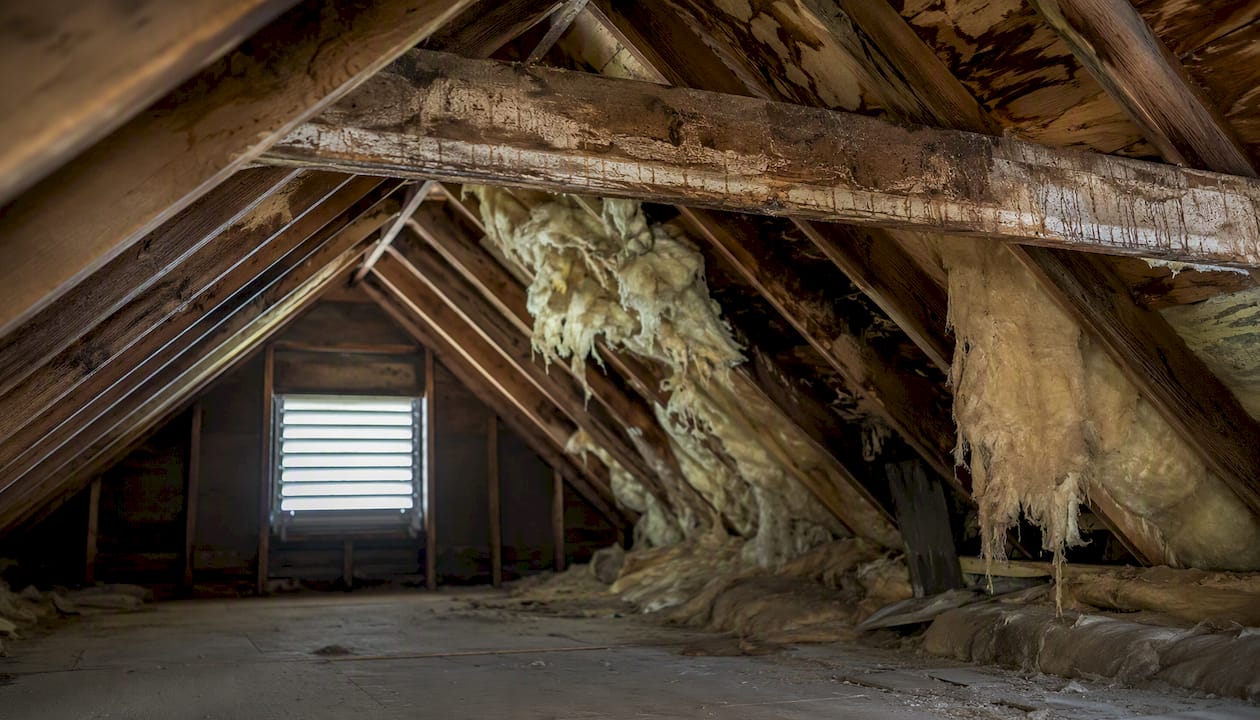
Repair history. A roof that has been patched twice in five years is telling you something. Repeated repairs on the same area signal systemic failure, not isolated bad luck. Factor in what you have already spent on repairs when running the cost math.
Cost-comparison math. Add your current repair quote to a realistic estimate of future repairs over the next five years. Compare that total to a replacement quote. If the cumulative repair path costs more, or comes close, replacement is the financially sound choice.
Insurance, permits, and code triggers. Some jurisdictions require a full permit and code-compliant upgrade when more than a certain percentage of the roof is replaced in a 12-month period. Check local code before committing to a repair-heavy strategy that could force a costlier upgrade later anyway.
What warning signs should you look for during an inspection?
Most homeowners can gather useful information before a contractor arrives. Stay safe: inspect from the ground with binoculars, or from inside the attic. Avoid walking on a roof you suspect is compromised.
From the attic:
Daylight visible through the decking boards (urgent replacement signal)
Sagging or bowed sheathing between rafters
Dark staining, mold, or wet insulation
Multiple damp spots in different areas of the attic ceiling
From the ground or a ladder at the eave:
Curling, cracking, or missing shingles across more than one area
Widespread granule loss (gutters full of granules, or bare patches visible on shingles)
Cracked or separated flashing at chimneys, skylights, or valleys
Moss or algae patterns that suggest persistent trapped moisture beneath the surface
Interior signs:
Water stains on ceilings or walls, especially after rain
Paint bubbling near exterior walls
Multiple leaks appearing in different rooms
The attic check is the fastest way to tell the difference. Daylight through the deck or sagging boards, however, are non-negotiable replacement signals.
Pro Tip: One or two isolated problems — a single missing shingle, one cracked flashing — are almost always a repair. The moment you find deterioration across multiple slopes or moisture damage inside the attic, call for a full inspection and ask specifically for a replacement scope alongside the repair quote.
How much do repairs and replacements typically cost?
Cost is where most homeowners make their decision, so get the numbers right before committing.
Home Depot’s national cost data puts typical repair jobs in the several hundred to low thousands of dollars range for common fixes like a shingle patch or minor flashing repair, with more complex repairs costing more. Full replacements commonly fall in the several thousands to mid-five figures range for an average home, with larger or higher-end jobs costing more.
Roofers quote in squares (one square = 100 square feet). A 2,000 square foot home has roughly 20 squares of roof surface, though pitch and complexity add to the actual material and labor count. Per-square replacement costs vary by material: asphalt shingles typically run lower per square than metal, tile, or slate.
Scope | Typical Cost Range | Typical Duration | Insurance Coverage Common? |
|---|---|---|---|
Single shingle or small patch | $150–$400 | A few hours | Rarely (wear and tear) |
Flashing repair or replacement | $300–$1,500 | Half day to full day | Sometimes (storm damage) |
Moderate repair (multiple areas) | $1,000–$3,000 | 1–2 days | Sometimes |
Full replacement, asphalt shingle | several thousands to mid-five figures | 2–5 working days | Often (storm or hail damage) |
Timeline factors that extend a job: steep pitch, multiple existing layers requiring tear-off, decking replacement, permit processing, and weather delays. A straightforward replacement on a simple gable roof can finish in two days. A complex hip roof with rotted decking and a permit requirement can run a full week.
One practical note on insurance: storm or hail damage claims often cover full replacement, and you pay a single deductible regardless of scope. If your damage is storm-related, always verify your coverage before agreeing to a repair-only route. The same deductible that buys a patch might buy a new roof.
How does roofing material affect the repair-vs-replace decision?
Material lifespan is one of the most underweighted factors in this decision. Two roofs of the same age can sit in completely different positions depending on what they are made of.
Asphalt shingles (20–30 year lifespan): The most common residential material. Once past the 20-year mark, even moderate damage often justifies replacement because remaining life is short and repair costs compound quickly.
Metal roofing (40–70 years): A 25-year-old metal roof with localized damage is a strong repair candidate. The remaining service life is substantial, and metal repairs are often straightforward if the panel system is still available.
Clay or concrete tile (50+ years): Tile is durable but heavy, and cracked tiles require matching for aesthetics. Widespread tile damage or underlayment failure (the membrane beneath the tile) usually means a full replacement because the underlayment is what actually waterproofs the system.
Slate (75–100+ years): Genuine slate is expensive to repair because it requires skilled labor and matching stone. But given its lifespan, a well-maintained slate roof in its first 50 years is almost always worth repairing rather than replacing.
When replacing, the material choice also affects long-term value. Owens Corning’s guidance on replacement highlights the importance of upgrading underlayment, flashing systems, and ventilation at the same time — not just the surface material. A higher-rated underlayment and proper drip edge add years to any new roof’s performance and are often required to activate manufacturer warranties.
Cool roofs and reflective materials are worth considering at replacement time, particularly in climates with hot summers. They can reduce cooling loads and may qualify for energy-efficiency incentives depending on your location.
When does replacement make more financial sense long-term?
Replacement is not always about immediate necessity. Sometimes the numbers favor it even when a repair would technically hold.
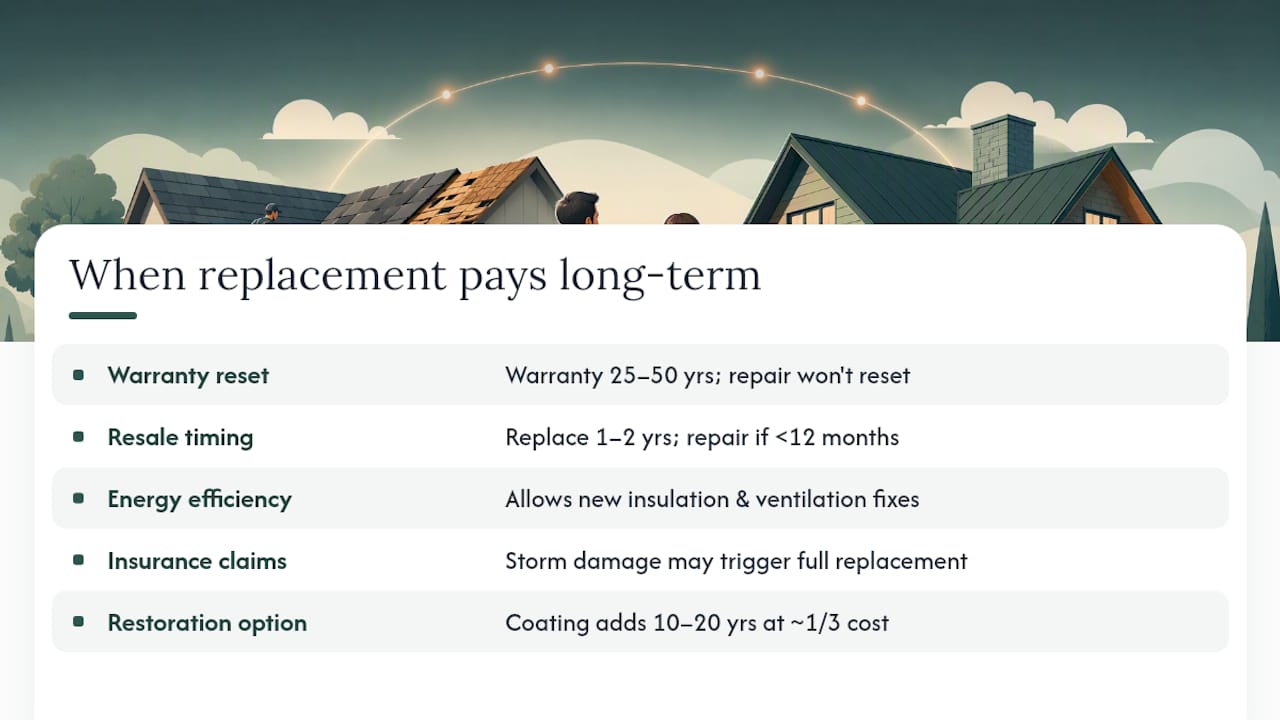
Warranty reset. A new roof comes with a manufacturer’s material warranty (often 25–50 years on premium asphalt, longer on metal) and a contractor workmanship warranty. A repaired roof carries no such reset. If your current roof is out of warranty, a repair adds cost without restoring coverage.
Resale timing. If you plan to sell within one to two years, a full replacement can improve curb appeal and remove a negotiating chip from buyers. That said, a repair is often the smarter move for a sale within 12 months — buyers benefit from the new roof, but you recoup only a portion of the cost in the sale price. The return on investment for a full replacement varies by market and material.
Energy efficiency. Rising energy bills can be a signal that your roof’s insulation or ventilation is failing, as HouzzWire notes. A planned replacement lets you address ventilation and insulation at the same time, which a patch cannot.
Insurance claims. When storm damage is widespread, your insurer may cover a full replacement for the same deductible you would pay for a partial repair. Always check your policy and get an adjuster’s assessment before committing to repairs on a storm-damaged roof. Fortified Home’s homeowner resources emphasize documenting damage early and thoroughly — photos, dates, and written contractor assessments — to support a claim and avoid disputes.
The restoration middle ground. If your deck is sound but the surface is worn, a coating or restoration system can add 10–20 years of service life at roughly one-third the cost of a full tear-off replacement. This option is frequently overlooked. It works when moisture has not entered the assembly and the underlying structure is solid.
How do you collect reliable estimates and choose a contractor?
Get at least three written estimates.
Questions to ask every contractor:
What materials will you use, and what is the manufacturer warranty on those materials?
What underlayment and flashing system are included?
Will you inspect and address ventilation and drip edge?
Who handles disposal of old materials, and is that included in the quote?
What is the timeline, and what happens if you find rotted decking?
Do you pull permits, and is that cost included?
Can you provide proof of liability insurance and licensing?
What does your workmanship warranty cover, and for how long?
Red flags to walk away from:
No written scope of work — verbal promises are unenforceable.
High-pressure urgency (“I can only hold this price today”).
Demand for more than 10–15% upfront in cash before work begins.
Vague warranty language (“we stand behind our work” with no written terms).
No permit pulled for a job that clearly requires one.
Pro Tip: Estimate variability in roofing is real — two bids on the same home can differ by thousands of dollars. The gap usually comes from underlayment grade, flashing quality, and whether decking replacement is included. Always compare line-item scopes, not just the bottom-line number. A lower bid that excludes decking repair or uses a thinner underlayment is not actually cheaper.
What does a professional inspection actually cover?
A thorough inspection goes well beyond a contractor walking the roof for five minutes. Here is what a detailed inspection should include and what documentation you should receive.
What Spagnotti Contracting inspects:
Shingle condition across all slopes (cracking, curling, granule loss, missing tabs)
Underlayment condition where visible at eaves and penetrations
All flashing: step flashing at walls, valley flashing, chimney flashing, and skylight seals
Attic interior: daylight through deck, moisture readings, insulation condition, ventilation adequacy
Deck condition: soft spots, rot, delamination of sheathing panels
Drip edge and gutter attachment points
Ridge cap and hip condition
What you should receive in writing:
Dated photos of every problem area, including attic shots
A moisture map or written description of where moisture was detected
An estimated percentage of roof area affected
A clear recommendation: repair, restoration, or replacement
A line-item scope for any recommended work
This documentation matters for two reasons. First, it protects you from being sold a replacement you do not need. Second, it supports an insurance claim if storm damage is involved. A contractor who hands you a single-page quote with no photos and no scope breakdown is not doing a real inspection.
Pro Tip: Insist on photos taken from inside the attic and ask for a written estimate of the percentage of roof area affected. Those two items are the fastest way to verify whether a replacement recommendation is justified or whether a targeted repair will do the job.
Is repairing a roof better for the environment than replacing it?
Usually, yes — but not always. Repair preserves existing materials and avoids the landfill impact of a full tear-off. Asphalt shingles are one of the largest contributors to construction waste in the U.S., and a full replacement on an average home generates significant material volume that largely ends up in landfills.
That said, a repair that extends a failing roof by only two or three years before replacement is needed anyway produces waste twice. If a roof is genuinely near the end of its service life, replacing it once with a longer-lasting material — metal, tile, or high-durability asphalt — is often the more sustainable choice over the full lifecycle.
When replacing, ask your contractor about shingle recycling programs. Some manufacturers and regional recyclers accept old asphalt shingles for use in road paving aggregate, which keeps material out of landfills. The restoration option (coatings) is the most material-efficient path when the deck is sound, since it adds service life without generating tear-off waste.
Common myths about roof repair and replacement
“A new roof adds full replacement value to a home sale.” It improves curb appeal and removes a buyer objection, but the return on investment is partial, not dollar-for-dollar.
“You can always just add a second layer of shingles.” Some jurisdictions allow it, and it saves tear-off cost short-term. But a second layer adds weight, traps heat, shortens the new shingles’ life, and hides deck problems. Most quality contractors recommend against it.
“Moss means the roof is ruined.” Moss and algae are surface issues. They indicate moisture retention and should be treated, but they do not automatically mean structural failure. Algae-resistant shingles or a zinc strip treatment can address the problem without replacement.
“If it’s not leaking, it’s fine.” Interior leaks are a late-stage symptom. Granule loss, cracked flashing, and worn underlayment all allow water infiltration long before you see a ceiling stain. By the time you spot a leak inside, the deck may already have moisture damage.
“Any contractor can handle any roof.” Material-specific expertise matters. Tile and slate require different skills and tools than asphalt. Ask specifically about experience with your material type before signing anything.
A contractor’s perspective on what homeowners get wrong
The most expensive mistake homeowners make is waiting. A small flashing failure that costs $400 to fix becomes a $4,000 deck repair if water sits in the assembly through one winter. The second most expensive mistake is accepting a single bid. One estimate gives you a price; three estimates give you a market.
Cosmetic issues — algae streaks, a single missing shingle, minor granule loss — get homeowners anxious when they should not. Those are maintenance items, not emergencies. What actually warrants urgency is anything involving the deck: soft spots underfoot, visible sagging from the attic, or daylight where there should be none.
When a contractor nudges toward replacement on a roof under 15 years old with no deck damage, ask for the percentage of roof area affected in writing. If they cannot give you a number, get a second opinion. Legitimate replacement recommendations come with documentation. A contractor who relies on urgency and vague language instead of photos and measurements is not someone you want on your roof.
For homeowners weighing multiple exterior projects, the same assessment logic applies to siding. The repair vs. replacement decision for siding follows a similar framework: localized damage favors repair, widespread failure favors replacement.
Spagnotti Contracting handles the inspection, the estimate, and the work
Deciding between a repair and a replacement is easier when you have a contractor who will give you both options in writing and explain the math behind the recommendation.

Spagnotti Contracting serves homeowners across the Omaha metro area with roofing inspections, repairs, and full replacements — plus siding, gutters, and exterior work that often gets bundled with a roof project. Every inspection includes dated photos, a written damage assessment, and a clear scope for both repair and replacement so you can make the call with real numbers in hand. If your roof needs attention, request a written estimate through Spagnotti Contracting’s services page and get a documented inspection scheduled before the next weather event makes the decision for you.
Sources
Recommended
Dealing With Something Similar?
Every property is different, but if this sounds like what you’re seeing, we’re happy to take a look and help you figure out what’s actually going on.