Roofing
Which Roofing Shingle Type Is Right for Your Home?
By Noah Spagnotti
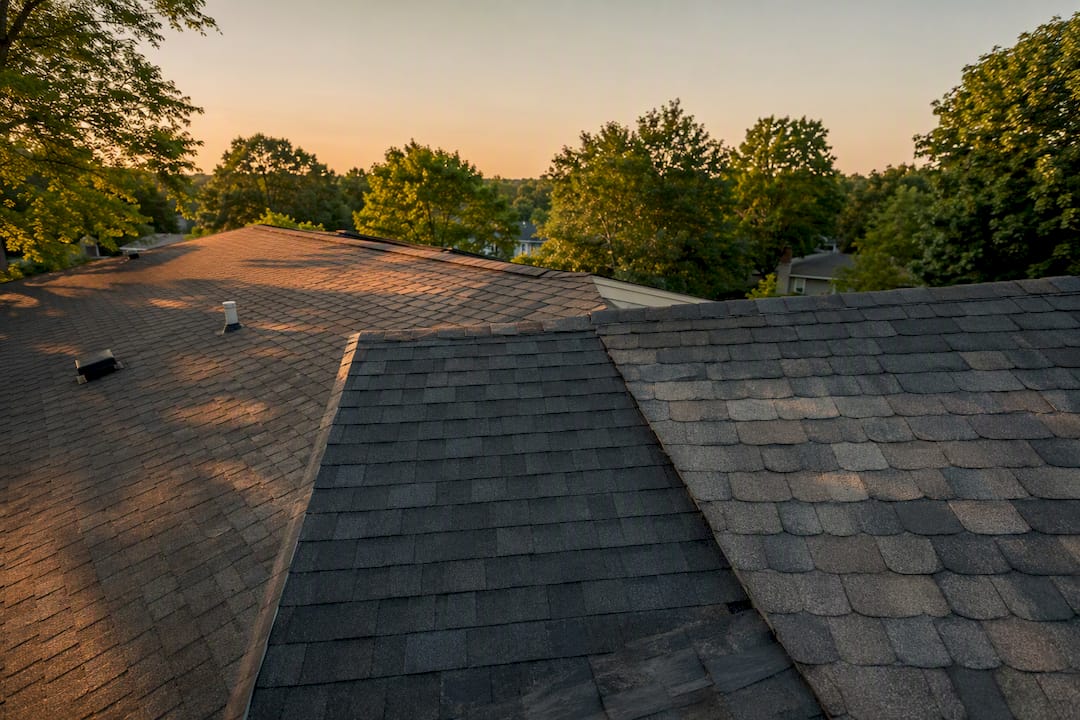
Architectural (dimensional) asphalt shingles are the best default for most homes, and it’s not close. They cost less than nearly every alternative, hold up 25 to 30 years when installed with the right underlayment and ventilation, and any licensed roofer in the country can install and warranty them without hunting for a specialty crew.
A few situations call for something else:
Roofs under a 2:12 pitch need a low-slope membrane system, not shingles at all
Historic homes often need wood shake or slate to keep architectural review boards happy
Homes with strong existing framing can support clay tile or slate for a century-long roof
Severe hail regions justify the upcharge for a Class 4 impact-rated shingle
Key Takeaways
Architectural asphalt shingles remain the strongest all-around choice for most homes, but pitch, structural capacity, and local climate hazards can override that default.
Point | Details |
|---|---|
Architectural asphalt is the default | Balances cost, 25 to 30 year lifespan, and wide contractor availability better than other options. |
Match material to structure | Heavy materials like slate and tile need a structural check before they get specified. |
Class 4 pays off in hail zones | UL 2218 Class 4 shingles resist cracking and can lower insurance premiums in some markets. |
System components decide longevity | Underlayment, ventilation, and flashing matter as much as the shingle you pick. |
Spagnotti Contracting documents the full system | Estimates include deck condition, ventilation plan, and matched materials to protect your warranty. |
Table of Contents
Roofing Shingles Types: The Asphalt Category Explained
What Other Roofing Materials Should You Consider?
What Do Impact, Fire, and Wind Ratings Actually Mean?
How Do You Choose the Right Shingle for Your House?
What Roofing System Components Actually Determine Longevity?
Roofing Shingle Cost and Lifespan at a Glance
What a Roofing Contractor Wishes Every Homeowner Knew
Ready to Get a Written Roofing Estimate?
Sources
Roofing Shingles Types: The Asphalt Category Explained
Asphalt dominates residential roofing shingle options for a reason: it splits into subtypes that cover almost every budget and style preference without forcing a homeowner into a different material altogether.
Three-tab shingles. Flat, single-layer fiberglass mat shingles cut into three tabs per strip. They’re the entry-level option, typically lasting a typical lifespan of about two decades, and they’re getting harder to find as manufacturers shift production toward laminated products.
Architectural (dimensional) shingles. Multiple laminated layers create a thicker, textured profile that mimics wood shake or slate from the street. This is the dominant residential choice today because it balances cost, curb appeal, and durability better than anything else in the category.
Designer or luxury shingles. Heavier, more elaborate laminations designed to closely replicate natural slate or cedar shake. Expect the highest asphalt price point and the longest warranties, often 50 years or lifetime, but also the heaviest bundle weight in the asphalt family.
Two specialty variations matter beyond that basic three-tier split. Impact-resistant shingles carry a UL 2218 Class 4 rating, meaning they’ve survived steel-ball drop testing that simulates severe hail without cracking the mat underneath. Cool roof shingles use reflective granules that lower attic heat gain, a detail that matters more in southern climates than northern ones.
Pro Tip: Ask your contractor whether your chosen shingle requires matching starter strips, ridge caps, and underlayment from the same manufacturer. Skipping this “system” requirement is the single most common reason homeowners lose out on the premium warranty they thought they were paying for.
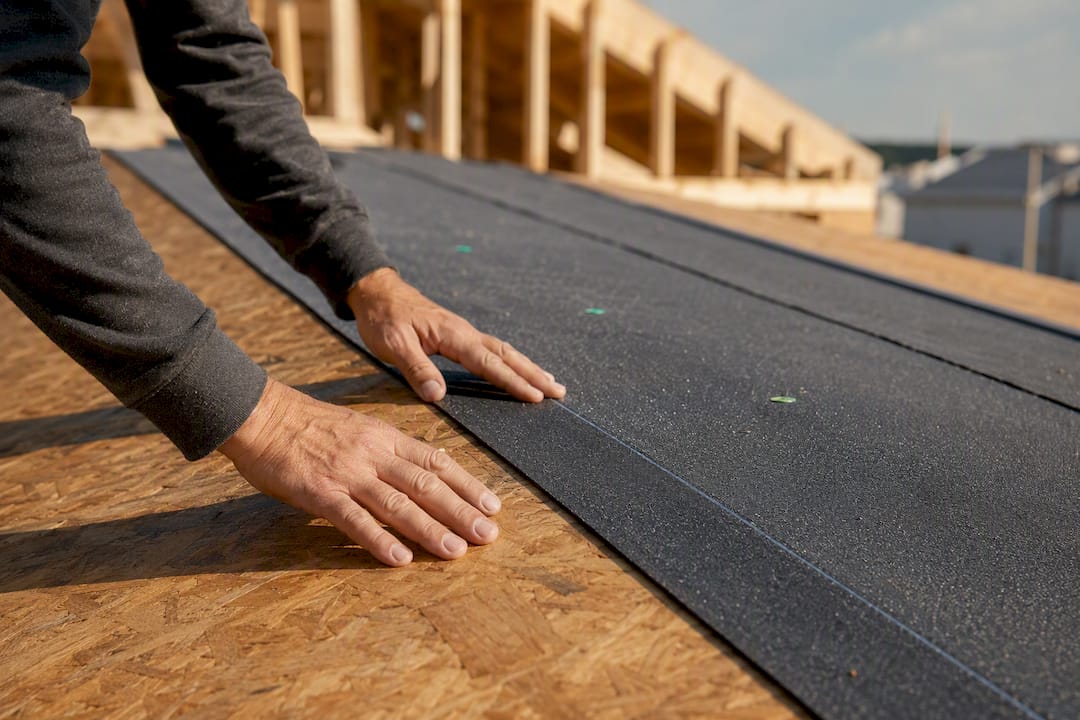
Cost climbs at each tier: three-tab sits at the bottom, architectural in the middle, designer at the top. Lifespan follows the same curve, though installation quality affects all three more than the tier itself does.
What Other Roofing Materials Should You Consider?
Asphalt isn’t the only game in town, and for some homes it shouldn’t be the first choice. Here’s how the other common materials stack up.
Metal panels and metal shingles. Standing seam panels run a long lifespan often several decades or more with minimal maintenance and shed snow well; metal shingles mimic asphalt or shake profiles at a lower cost than full panel systems but with more seams to maintain.
Slate. Natural slate can last well over a century, but it’s heavy enough that most homes need a structural engineer to confirm the framing can carry it before installation even gets quoted.
Clay and concrete tile. Popular in warm, dry climates for their look and fire resistance, tile roofs also demand reinforced framing and specialized installers, which pushes both material and labor costs up.
Wood shakes and shingles. Cedar shake gives a rustic look many homeowners love, but it needs regular treatment against rot and moss, and some fire-prone jurisdictions restrict or ban it outright under local code.
Composite and synthetic shingles. Engineered from polymer or rubber compounds, these replicate the look of slate or shake at a fraction of the weight, making them a practical option for homes that want the aesthetic without the structural upgrade.
Weight is the recurring theme across this list. Slate and clay tile can weigh several times what an architectural asphalt roof weighs per square foot, and Consumer Reports flags structural verification as a prerequisite, not an afterthought, before committing to either material.
What Do Impact, Fire, and Wind Ratings Actually Mean?
Ratings sound like fine print, but they translate directly into how your roof performs during the storm that actually tests it.
ANSI/UL 2218 impact classes run from 1 to 4, with Class 4 as the highest rating available. The test drops steel balls from increasing heights to simulate hail impact, and Class 4 shingles are built to resist cracking under that stress.
Fire ratings run Class A, B, and C, with Class A offering the strongest resistance. Most asphalt, metal, tile, and slate products qualify for Class A when installed as part of a rated system; untreated wood shake often does not, which is why some jurisdictions restrict it.
Wind ratings vary by manufacturer and typically require specific nailing patterns and sealant strips to hit the advertised speed rating, often 110 to 130 mph for architectural shingles.
In hail-prone regions, that Class 4 rating can do double duty: it holds up physically, and insurers in some markets reduce premiums for homes that install it. Ask your contractor whether your insurer offers that discount before you rule out the upcharge.
How Do You Choose the Right Shingle for Your House?
Work through these in order, and you’ll avoid the most expensive mistakes homeowners make when picking a roof.
Confirm your pitch and structural capacity first. Roofs under roughly 2:12 need a membrane system instead of shingles, moderate slopes (2:12 to 4:12) often require doubled underlayment for asphalt, and anything steeper opens up the full material menu, tile and slate included, once a structural check confirms the framing can bear the load.
Match the material to your climate and local hazards. Hail country favors Class 4 impact shingles or metal; coastal salt air favors metal or synthetic; wildfire zones often restrict untreated wood shake by code.
Weigh upfront cost against real lifespan. A cheaper three-tab roof replaced twice can cost more over 30 years than one architectural or metal installation done once.
Check the full system, not just the shingle. Underlayment, ice-and-water shield, attic ventilation, and flashing all need to match manufacturer specs to keep the warranty intact.
Get contractor answers in writing. Ask specifically about tear-off versus overlay, the ventilation plan, who pulls the permit, and the exact warranty terms tied to the materials being installed.
Pro Tip: If your reroof is scheduled for late fall or early winter, ask about polymer-modified Class 4 shingles. They stay pliable in colder temperatures, around 25°F, which extends the installation window without risking cracked shingles during a cold-weather install.
What Roofing System Components Actually Determine Longevity?
The shingle you pick matters less than what’s underneath it. Ventilation and water-shedding components decide whether a roof hits its rated lifespan or fails a decade early.
Underlayment creates the water barrier beneath the shingles, and ice-and-water shield is required or strongly advised along eaves, valleys, and roof penetrations in freeze-prone climates.
Attic ventilation keeps shingles from overheating from below, which extends their life and keeps the manufacturer’s warranty valid, since many warranties specify minimum airflow requirements.
Flashing around chimneys, valleys, and roof-to-wall transitions is where most leaks originate, often from corner-cutting during installation rather than shingle failure.
Tear-off versus overlay matters more than most homeowners realize. A full tear-off lets the crew inspect the deck for rot, and some manufacturer warranties are voided outright if shingles go over an existing layer instead.
Get a written explanation of each of these four items in your estimate. If a bid skips them, that’s a red flag worth asking about directly.
Roofing Shingle Cost and Lifespan at a Glance
What a Roofing Contractor Wishes Every Homeowner Knew
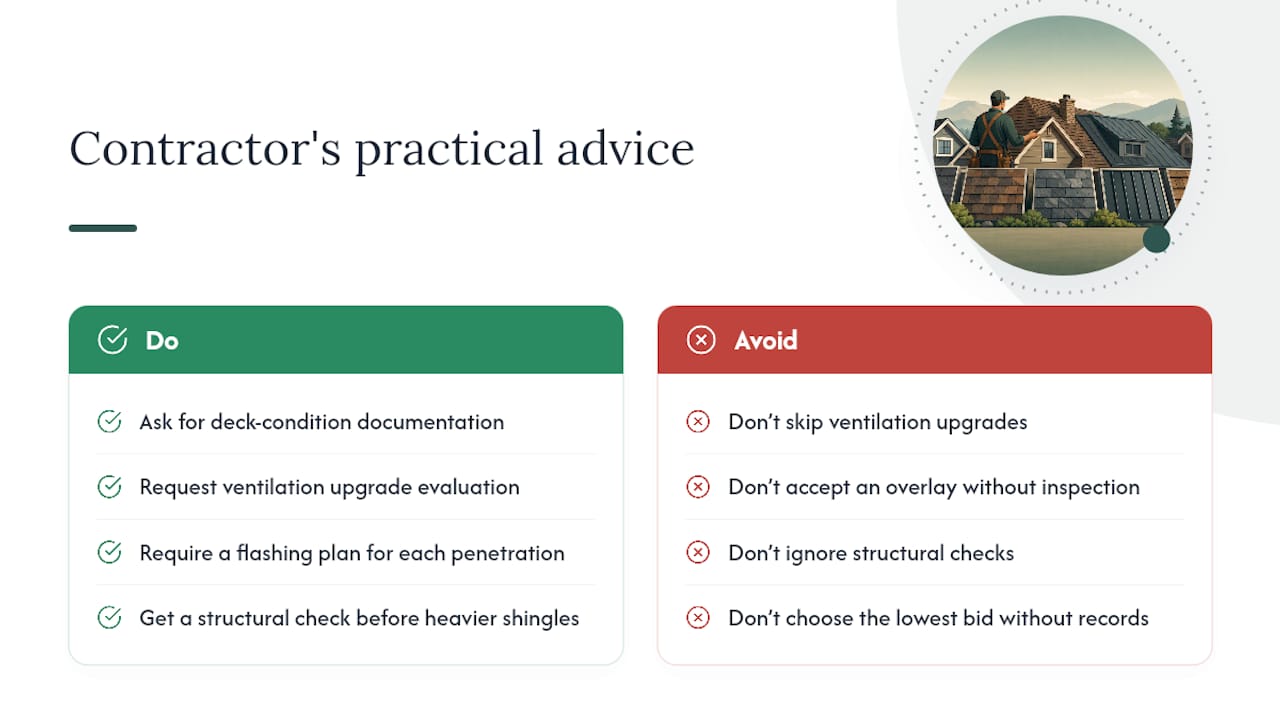
The mistakes we see most often aren’t about picking the “wrong” shingle. They’re about skipping ventilation upgrades to save a few hundred dollars, accepting an overlay bid without asking what’s under the old layer, or ignoring a structural check before committing to a heavier material.
During an estimate, we document deck condition, existing ventilation, the flashing plan around every penetration, and which materials actually fit your pitch and framing. That written record is what separates an accurate bid from a guess, and it’s why we push homeowners to weigh long-term value over whichever number looks lowest on paper.
— Noah
Ready to Get a Written Roofing Estimate?
Spagnotti Contracting handles the full scope: roof inspections, tear-off, full-system installation, and warranty coordination so the underlayment, ventilation, and shingle all come from a matched, documented system rather than mismatched parts.

When we put together your estimate, you’ll see exactly what we found on the deck, what ventilation changes we recommend, and which shingle options fit your pitch, climate, and budget, not a vague lump-sum number. That documentation is also what protects your manufacturer warranty down the road. If your project involves more than the roof, our carpentry and framing team can address structural questions before tile or slate gets specified, and our broader contracting services cover siding and gutters if you’re planning to tackle the whole exterior at once. Start with a roofing estimate and get a written scope you can actually compare against other bids.
Sources
Recommended
How to Tell If Your Siding Needs a Repair or a Full Replacement | Spagnotti Contracting
Should One Contractor Handle Multiple Parts of a Home Exterior Project? | Spagnotti Contracting
Roof Replacement & Repair in Omaha, NE | Spagnotti Contracting
What Should a Contractor Check Before Building or Replacing a Deck? | Spagnotti Contracting
Dealing With Something Similar?
Every property is different, but if this sounds like what you’re seeing, we’re happy to take a look and help you figure out what’s actually going on.