Windows & Doors
Window Condensation Inside: Causes, Fixes and When to Worry
By Noah Spagnotti

Moisture on the inside of your windows is usually a sign of high indoor humidity meeting cold glass, not a defective window. You can usually stop it by lowering humidity and keeping air moving across the glass. Fog or droplets trapped between the panes is different: that points to a failed seal, and only repair or replacement fixes it. Below, you'll find how to tell the two apart, what to do this week, and when the problem is bigger than a damp windowsill.
TL;DR
Condensation on the room side forms when humid indoor air touches glass that is colder than the air's dew point. The window is doing what glass does in cold weather.
Wipe the glass. If the moisture wipes away, it is surface condensation. If fog stays between the panes, the insulated glass seal has failed.
Run exhaust fans, vent the dryer outside, use a dehumidifier, and let air circulate across the glass.
Left alone, repeated moisture can peel paint, damage frames and feed mold. The EPA recommends drying wet materials within 24 to 48 hours.
Between-pane fog and persistent frame damage are jobs for a window professional, not a humidifier setting.
Why moisture forms on the inside of your windows
Air holds water vapor, and warm air holds more of it than cold air. When the glass surface is colder than the dew point of the room's air, vapor turns to liquid on the glass. The EPA explains it simply: in cold weather, moisture condenses on cold surfaces such as the inside of a window, because cooler air holds less moisture.
Two things drive it, and you can influence only one of them:
Indoor humidity. Cooking, showers, laundry, houseplants, a humidifier and even breathing all add water to the air.
Glass surface temperature. The colder it is outside, the colder the inner pane gets. Single-pane and older units run colder than newer insulated ones.
The industry's own homeowner guidance is consistent on this. According to the Fenestration and Glazing Industry Alliance, interior air with a lot of moisture contacting cooler glass or frame surfaces can cause condensation, and higher indoor relative humidity or lower surface temperatures make it more likely. The EPA puts it bluntly: excess moisture condenses on window glass because the glass is cold, and if excessive moisture collects on windows and other cold surfaces, your humidistat is set too high.
That is why fog tends to show up during cold snaps, often starting along the bottom edge of the glass.
Why newer, tighter homes see more of it
Energy-efficient construction keeps heat in, and it keeps moisture in too. The EPA notes that a tight, energy-efficient house holds more moisture inside, and that you may need to run a kitchen or bath fan sometimes or open a window briefly. If you recently replaced leaky old windows or added insulation and suddenly see more fog, that may be part of the reason. The air that used to escape through gaps now stays inside, carrying its water vapor with it.
Is it room-side condensation or a failed seal?
This is the first thing to settle, because the fixes are completely different. The test is quick, and This Old House describes it: wipe the glass. If the moisture comes off, it is surface condensation. If the fog remains between the panes, the seal may have failed. Fog on the outside surface of the glass is exterior condensation. The Fenestration and Glazing Industry Alliance notes it can happen on high-performing glass and is not a cause for concern.
What you see | Where it is | What it usually means | What to do |
|---|---|---|---|
Wipes away, mostly on cold mornings | Room-side glass surface | High indoor humidity meets cold glass | Lower humidity, improve airflow |
Wipes away, on the outside only | Exterior surface | Humid outdoor air meets cooler glass | Nothing, it usually clears as the glass warms |
Does not wipe away, hazy or beaded | Between the panes | Failed insulated glass seal | Have the unit assessed |
Permanent cloudy film, mineral spots | Between the panes | Long-term seal failure | Repair or replace the unit |
If you have double-pane windows, remember that the space between the panes is sealed on purpose. This Old House explains that fogging between the panes typically occurs when the seal fails, letting moisture collect inside the insulated glass unit. No amount of fan use will clear it.
How to stop window condensation inside your home
The goal is to bring indoor moisture down and to keep the glass from getting unnecessarily cold. Work through these in order, from cheapest to most involved.
Remove moisture where it is made
The EPA lists the basics: use exhaust fans in kitchens and bathrooms, vent clothes dryers outside, and use dehumidifiers. Practical habits that make those tools work:
Run the bathroom fan during every shower and for a while afterward, until the mirror is clear.
Use the range hood when you boil water or cook on the stove, and make sure it vents outdoors rather than recirculating.
Confirm the dryer duct actually terminates outside. A disconnected or leaking duct releases that moisture into the house instead.
Cover pots, and skip drying laundry on racks in the living space during cold snaps.
If your fans are weak or vent into an attic, the moisture ends up somewhere worse than the window. The EPA is specific that kitchen and bath fans should remove moisture to the outside, not into the attic. Attic venting matters here too, and our guide to roof ventilation types covers how a well-vented roof keeps moisture from building up above your ceilings.
Set a sensible winter humidity level
A cheap hygrometer from a hardware store tells you what you are dealing with. Target numbers vary by source. The EPA's mold guide recommends keeping indoor humidity below 60 percent, ideally between 30 and 50 percent. University of Minnesota Extension says 25% relative humidity in winter to 50% in summer is generally considered healthy for people and better for the house, and that in cold winter conditions humidity needs to be low to prevent condensation. If you run a humidifier, the EPA says to turn it off if you notice moisture on windows.
Dry air has its own downsides, so treat the number as a range to experiment with rather than a rule. If you see fog only during the coldest nights, lower the setting a few points for those nights.
Keep air moving across the glass
Stagnant air next to a cold pane is where condensation settles. Two small details matter:
Heavy drapes and closed blinds can hold cool air against the glass. Open them during the day so room air can reach the window.
The EPA recommends increasing air circulation with fans and by moving furniture away from walls and corners, and opening doors between rooms so circulating air carries heat to cold surfaces.
The EPA also suggests raising the temperature of cold surfaces where moisture condenses, for example with storm windows, and notes that an interior storm window works better than an exterior one.
Let some air out, briefly
Ventilation works in winter because cold outdoor air is dry once it warms up. University of Minnesota Extension says briefly opening windows can let moist indoor air escape and replace it with drier outdoor air. The EPA and FGIA both back air exchange and opening windows when practical. Keep it short: a few minutes in the kitchen or bathroom after high-moisture activity, not an hour with the heat running.
The NFRC condensation resistance rating
If you are shopping for new windows because yours fog constantly, look for the optional NFRC Condensation Resistance (CR) rating. The U.S. Department of Energy's window performance guideline says it ranges from 1 to 100, and higher numbers mean greater resistance to condensation. Because it is optional, not every label shows it. Ask the seller to confirm the number for the exact product line. Our guide to reading energy efficient window labels walks through the other ratings you will see next to it.
A higher CR rating helps, but it does not override physics. A resistant window in a very humid house can still fog on a bitter night.
Is window condensation harmful?
A thin film that clears by mid-morning is mostly a nuisance. Chronic moisture is not harmless:
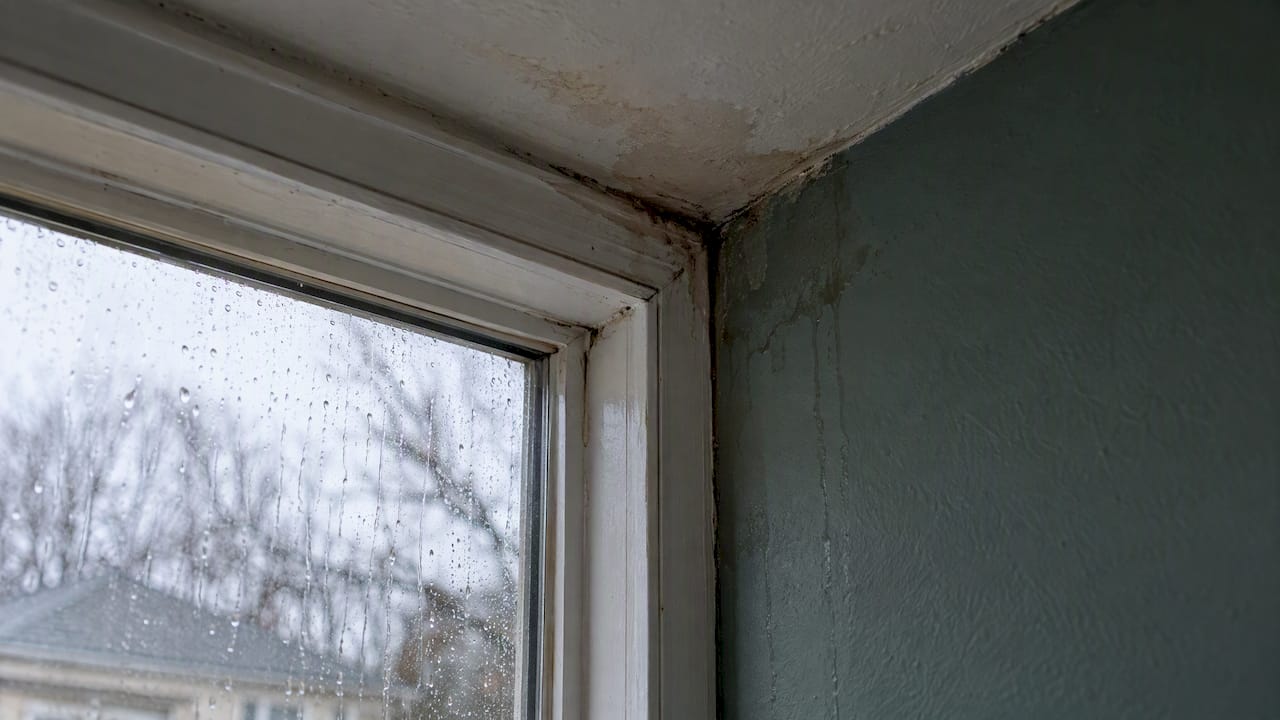
Paint and wood. University of Minnesota Extension lists window condensation in winter alongside mildew, mold and peeling, cracking or blistering paint as symptoms of excess moisture in a home.
Mold and health. The EPA's mold guide says mold can cause allergic reactions, asthma attacks, and irritation of the eyes, skin, nose, throat and lungs, and that moisture control is key to mold control.
Drying time. The EPA recommends drying wet building materials and furnishings within 24 to 48 hours to prevent mold growth. A sill that stays wet for days is outside that window.
Wipe standing water off sills and frames with a towel, especially on wood. If you see dark spots, soft wood, bubbling paint or musty smell around a window, stop treating it as a humidity issue alone. Someone should look at the frame and the wall around it. Any person with asthma or a mold allergy in the house should have a doctor's guidance on exposure, and large mold areas deserve a professional's assessment rather than a DIY scrub.
When the water is coming from outside
Sometimes what looks like condensation is a leak. Moisture that appears only after rain, stains running down from the top corners, or a wet stud wall points to flashing, siding or sealant failure instead of humidity. Our article on why water leaks around a window explains how to separate the two. If the siding around the window is the culprit, see how to tell whether siding needs repair or replacement.
Foggy double-pane windows: what can be done
Once the seal in an insulated glass unit fails, moist air gets in, and the desiccant that keeps the space dry is eventually overwhelmed. The visible result is fog, droplets or a permanent film.
ENERGY STAR's guidance on replacing windows says failed seals in double-pane windows can reduce insulating power, and the glass may become cloudy, harder to see through, or impossible to clean. It lists cloudy or moisture-filled double-pane windows as a reason to consider replacement.
Your realistic options:
Replace the sash. This Old House calls a new sash the easiest repair on windows where the sash, the glass unit plus the frame around it, can be swapped.
Replace the glass unit only. Installing a new insulated glass unit keeps the existing sash frame, which This Old House notes is a good option when the frame is still in good condition. It takes specialized tools and precise sealing, so it is usually a job for a glass shop or window specialist.
Replace the whole window. Better when the frame is rotted, the window is old and drafty, or several units are failing.
Do nothing for now. Reasonable if one window is slightly hazy and you are not bothered. This Old House notes fogging is not always urgent, but ENERGY STAR says a failed seal does cost insulating power.
Be wary of defogging offers. This Old House explains that defogging drills small holes, cleans and dries the space, and can make the glass look clear, but it does not repair the failed seal or restore the window's efficiency, so it is a short-term or cosmetic fix. If your windows are fairly new, check the manufacturer's paperwork for glass seal coverage before paying for a repair.
Our perspective: fix the moisture, then judge the window
Window condensation questions come up every winter, and it is easy to assume the window is defective. Often the glass is simply doing what cold glass does, and the house is holding more water vapor than it can handle. Sorting out the cause first keeps you from paying for a fix that does not address it.
A sensible order has three steps. First, confirm whether the moisture is room-side, between the panes or a leak from outside. Second, look at what feeds it: bath and kitchen venting, dryer ducts, attic ventilation and the condition of nearby siding and flashing. Third, only then decide what the window itself needs, from a new glass unit or sash to a full replacement.
A fan, a hygrometer and a few habit changes solve plenty of room-side condensation. A new window will not fix a humidity problem, and it can fog in a humid house too.
When replacement makes sense, and how we help in Omaha
Replacement is worth a serious look when several windows have failed seals, frames show rot or warping, or you can feel drafts on cold days. It also makes sense when a failed unit sits in a room you want to renovate anyway, since coordinating windows with drywall, paint or trim saves a second round of disruption.
Spagnotti Contracting replaces windows and doors across the Omaha metro. You can read about our window and door replacement service, see related drywall and painting work, or contact us with questions. We do not publish a window price list, because the work depends on the size, style and condition of each opening.
If you are also dealing with a damp basement or a roof that you suspect is feeding moisture into the house, our roofing page lists a $195 leak assessment, credited toward a roofing repair of $595 or more if booked within 30 days, and our guide to waterproofing before finishing a basement explains why moisture should be solved before anything new goes up.
A simple one-week plan
If your windows fog on the inside right now, try this sequence and track what happens:
Day 1. Buy or find a hygrometer and place it in the room with the worst windows. Write down the reading each morning.
Day 1. Wipe the glass to confirm the moisture is on the room side. Dry sills and frames.
Day 2. Open drapes and blinds during the day. Move furniture away from the glass. Turn on ceiling fans on low.
Day 2 to 3. Run bath and kitchen fans every time. Check that the dryer vent exits the house.
Day 3 to 7. If humidity is above your target range, reduce humidifier use or add a dehumidifier. Compare mornings.
If the glass stays clear except on the coldest nights, you have solved it. If humidity is in a good range and glass still fogs heavily, or you see between-pane haze, damaged paint or soft frames, it is time for a professional look.
FAQ
Why do my windows have condensation on the inside in winter?
Warm, humid indoor air meets a pane that is colder than the air's dew point, and the vapor turns to water. It is more likely when indoor humidity is high or outdoor temperatures drop. It usually means the house is holding moisture, not that the window is faulty.
Is it bad if my windows have condensation inside?
Occasional light condensation is common in cold weather. Frequent, heavy moisture can peel paint, damage frames and encourage mold, which the EPA links to allergic reactions and asthma attacks. Wipe it up and address the humidity.
How do I get rid of condensation between double-pane windows?
You generally cannot dry it out yourself, because it means the seal on the insulated glass unit has failed. The fix is to replace the sash, the glass unit or the whole window. A contractor can tell you which makes sense after inspecting the frame.
What humidity level stops window condensation?
There is no single number, because it depends on how cold it is outside and how well your windows insulate. The EPA suggests keeping indoor humidity below 60 percent, ideally 30 to 50 percent, and University of Minnesota Extension considers 25 percent healthy in winter. If the glass keeps fogging, the EPA says your humidistat is set too high.
Can cloudy window glass be fixed?
Cloudiness between the panes means the seal has failed, and ENERGY STAR lists it as a reason to consider replacement. Cloudy film on the room-side surface is usually dirt or mineral residue and cleans off. Wipe a small area to find out which one you have.
Sources
U.S. Department of Energy: energy-efficient window performance guideline
University of Minnesota Extension: controlling moisture problems in your home
Recommended
Dealing With Something Similar?
Every property is different, but if this sounds like what you’re seeing, we’re happy to take a look and help you figure out what’s actually going on.