Windows & Doors
Low-E Glass: What It Is and Whether Your Windows Need It
By Noah Spagnotti
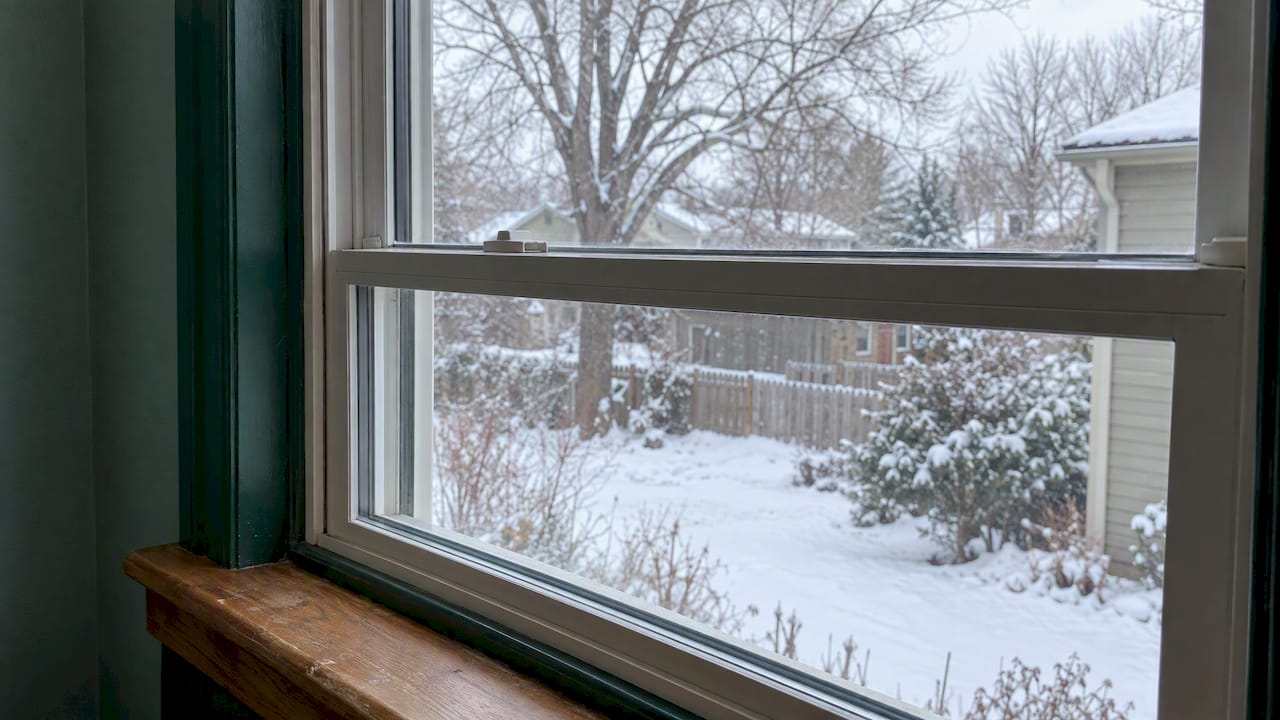
Low-E glass is ordinary window glass with a nearly invisible metallic coating that reflects heat instead of letting it pass through. In winter it helps keep warmth inside. In summer it helps keep solar heat out. Low-E is now standard on most new windows, but the version you pick still matters. This guide explains how it works, how it compares with clear glass, which coating types exist, and which numbers to check before you sign anything.
TL;DR
Low-E means "low emissivity": a microscopically thin coating that reflects radiant heat while still letting daylight through.
According to a Department of Energy guideline, clear glass emits about 84% of the radiant energy it can, while the best low-solar-gain Low-E coatings can get that as low as 4%.
Coatings are made two ways, soft-coat (sputtered) and hard-coat (pyrolytic), and come in high, moderate, and low solar heat gain versions.
Compare the whole-window U-factor and SHGC on the NFRC label, not just the words "Low-E" on a brochure.
Seal quality matters too: a failed seal lets the insulating gas escape and can lead to condensation between the panes that degrades the coating.
What low-E glass actually is
"Low-E" is short for low-emissivity. Emissivity describes how readily a surface gives off heat as radiation. A low-E coating is a transparent layer of metal, thinner than a human hair, applied to a glass surface. The NFRC consumer guide says low-E coatings reduce the energy loss associated with windows by as much as 40%. The U.S. Department of Energy describes these coatings as reflecting heat energy either into or out of the house, which improves insulation.
The technology is not new. Berkeley Lab developed low-E window coatings with industry, and in the 1990s helped create versions aimed at different climates. Once a novelty, low-E is now a market standard, so most new replacement windows you are quoted will include some form of it.
You cannot see the coating from across the room, and you do not need a special window shape or frame to use it. In most double-pane windows it faces the gap between the panes inside the sealed glass unit, where it is protected from cleaning and weather.
How the coating works in a home window
Heat moves through a window in three ways: conduction through the materials, convection in the air, and radiation, which is heat traveling as long-wave infrared energy. Gas fills and low-conductance spacers mainly address conduction and convection. The coating addresses radiation.
In winter, the warm surfaces in your living room radiate heat toward the cold glass. A low-E coating reflects much of that energy back into the room. In summer, the coating can be designed to reflect a share of the sun's heat before it enters. The same thin layer does both jobs, which is why the type of coating you choose should match your climate and which way the window faces.
There is a bonus beyond energy. The Department of Energy notes that low-E glass reflects ultraviolet light and can protect furnishings from UV-induced fading by as much as 75%. That will not stop a sunny floor from aging, but it can slow the fading of rugs, wood, and fabric.
Low-E vs. clear glass
The cleanest way to see the difference is emittance, the share of potential radiant energy a surface gives off. According to a Department of Energy measure guideline, clear glass has an emittance of 0.84, while low-solar-gain low-E coatings can reach 0.04, reflecting 96% of incident long-wave infrared radiation.
Feature | Clear glass | Low-E glass |
|---|---|---|
Long-wave radiant energy emitted | About 84% | As low as 4% |
Long-wave infrared reflected | About 16% | Up to 96% |
Visible light | Highest | Slightly reduced |
Winter heat retention | Lower | Better |
Summer heat control | Minimal | Depends on coating type |
Fading protection | Little | Reduces UV-induced fading |
The main trade-off is light. The same guideline notes that visible transmittance decreases somewhat when a low-E coating is added, and decreases substantially when a tint is added. If you can, look at a sample in your own room, at the time of day you use it most.
Hard-coat and soft-coat: the two main types
A review of window-glazing technologies describes two manufacturing methods: sputtered (soft-coat) and pyrolytic (hard-coat).
Soft-coat (sputtered): multiple thin layers of metal (usually silver), oxide, or nitride are deposited onto the glass by vapor sputtering.
Hard-coat (pyrolytic): a tin-oxide film is bonded to the glass while it is molten, producing a thicker coating than soft-coat.
When Berkeley Lab helped develop climate-specific coatings in the 1990s, it described a soft coating that blocks nearly all infrared light, suited to warmer climates, and a hard coating that lets some of the sun's short-wave infrared through, suited to cold climates.
For a replacement window, you will rarely see the coating itself, since the manufacturer decides how it is made. What you control is the performance it delivers, and that shows up in the ratings, not in the label "hard" or "soft."
Solar gain: high, moderate, or low
This choice has a big effect on comfort. Low-E coatings come in versions tailored to climate, and the Department of Energy guideline describes high, moderate, and low-solar-gain options.
High solar gain (SHGC above 0.40): reduces heat loss while still admitting the sun's warmth. These are best suited to heating-dominated climates, particularly south-facing windows in passive solar designs, though without shading they can overheat rooms in spring and fall.
Moderate solar gain (SHGC about 0.25 to 0.40): reduces heat loss while keeping high light transmittance, and suits climates with both heating and cooling concerns.
Low solar gain (SHGC below 0.25): blocks a large share of the sun's infrared heat while still admitting visible light, which reduces cooling loads.
The glazing review notes the flip side: a coating that cuts solar heat gain also gives up some of the free heat that would otherwise offset winter heating loads. The right answer depends on the whole house.
Omaha has cold winters and warm summers, so many homes need to balance both. Some product lines let you choose different glass for different sides of the house, with higher solar gain where winter sun is welcome and lower where summer sun is the problem. Ask whether that is an option for the windows you are considering.
Coating placement and glazing layout
Glass surfaces in a double-pane window are numbered from the outside in. Surface #1 is the exterior face, #2 is the inside face of the outer pane, #3 is the outside face of the inner pane, and #4 is the room-side face. The same Department of Energy guideline explains that where the coating sits does not change the U-factor, but it does affect SHGC. In heating-dominated climates, a coating on surface #3 is recommended to maximize winter solar gain; in cooling climates, surface #2 is generally best to reduce solar heat gain. Manufacturers sometimes choose a surface for other reasons, such as limiting thermal stress.
You do not need to specify this yourself. What you should do is compare the finished ratings of the whole window.
The ENERGY STAR program lists the parts that make up a window: the frame, the insulating glass unit, glass layers, spacer, gas fill, and low-E coatings. Each one affects the result, which is why whole-window ratings, not the glass alone, are the numbers to compare.
How to read the label
Two numbers carry most of the decision. Compare the whole-window U-factor and SHGC on NFRC labels, then pick values based on climate, orientation, and shading.
U-factor measures how readily the whole window lets heat flow through. Lower is better, and it matters most in heating-dominated climates.
SHGC (solar heat gain coefficient) is the fraction of the sun's heat that gets through. Lower blocks more heat; higher admits more.
Visible transmittance tells you how much daylight passes through. Higher is brighter.
These are whole-window figures, so they include the frame and spacer, not just the glass. That is why two windows with the same "Low-E" claim can perform differently. For a deeper walk-through of the label, see our guide to energy efficient windows and how to read the labels.
Trade-offs and things to check
Seal failure
The coating and gas fill live inside a sealed unit, so seal durability is critical. According to the NFRC consumer guide, seal failure leads to loss of the insulating gas and can let moisture condense between the panes, which can degrade low-E coatings. Well-fabricated units can retain gas at a loss rate of less than 1 percent per year. The same guide says most manufacturers warranty the insulating glass for anywhere from a limited period to the life of the window, with 10 to 20 years common, so read what a manufacturer's warranty covers on the glass unit specifically.
Fogging between the panes is the usual sign of a failed seal. If you see it, or you are not sure whether your windows are at the end of their useful life, our guide on when to replace windows covers the signs to look for.
Window film
Window film is often applied to the room-side glass surface, but the NFRC consumer guide warns that because film absorbs heat, it can raise the glass temperature and may cause thermal stress on the glass or the insulating seals, particularly on sunny but cold days. The guide suggests checking whether film would interfere with your window warranty, and having a film professional check the window's location, type, and condition first.
Storm windows
If you have older single-pane windows and are not ready to replace them, storm windows are an option. On a typical single-pane wood window, the NFRC guide says a regular storm window reduces heat loss from conduction and radiation by roughly one-third, and a low-E storm window by at least half. The same guide cautions that humid air caught between the storm and the window must be able to escape, or trapped moisture can condense and cause damage.
Water problems are not a glass problem
Low-E glass does nothing for a window that leaks around the frame. If you see staining or dampness, read why water leaks around a window and why it may not be the window before you spend money on new glass.
Our perspective
The phrase "Low-E" on a quote tells you very little, because nearly every new window includes it. The useful questions are which coating, what whole-window U-factor and SHGC, and how those numbers fit each side of your house.
Before comparing products, note which rooms run hot in summer, which feel drafty in winter, and which windows take strong afternoon sun. Then compare the NFRC ratings side by side, and make sure the written scope names the product and its ratings, not just a brand.
Installation matters as much as the glass. A well-rated window in a poorly sealed opening can still leak air and water. And sometimes new glass is not the best first spend: air sealing, fixing a roof or gutter problem that sends water toward a wall, or adding storm windows can come first.
Replacing windows in the Omaha area
If you decide the glass is worth upgrading, see our window and door replacement services in Omaha. We do not publish a window price list, because cost depends on size, style, frame material, and the number of openings. Mention the ratings you are considering when you contact us about your project.
If your project involves a basement, remember that egress windows have their own size rules. Our guide to Nebraska egress window requirements explains them, and our basement finishing services page covers the bigger project. And if street or neighborhood noise is a concern, glass thickness and construction matter more than the coating, so read our piece on window noise reduction and OITC ratings first.
Questions homeowners ask about low-E glass
What does low-E glass mean for windows?
It means the glass carries a thin, transparent metallic coating with low emissivity. The coating reflects heat energy back toward its source, so heat stays inside in winter and more of the sun's heat stays outside in summer. It also admits daylight, so the window still looks clear.
Is low-E glass better than clear glass?
For energy performance, yes. Clear glass emits about 84% of potential long-wave radiant energy, while the best low-E coatings can get that as low as 4%. The trade-off is a small drop in visible light, and the right solar gain level depends on your climate and which way the window faces.
Is a .27 U-factor good for windows?
Lower is better, but whether 0.27 is good depends on your climate and what you are comparing it to. For reference, a 0.25 U-factor works out to about R-4. ENERGY STAR sets U-factor and SHGC criteria by climate zone, so check the current criteria for your zone, compare whole-window NFRC ratings, and pair the U-factor with the SHGC that suits each side of your house.
Can you put film on low-E glass?
Sometimes, but it carries risk. Film can raise the glass temperature and cause thermal stress, and it may interfere with the window warranty. Check the warranty conditions and have a film professional look at the window type and condition first.
How long does low-E glass last?
A coating that faces the gap is protected inside the sealed unit, so its life largely depends on the seal. A failed seal lets gas escape and can let moisture condense between the panes, which can degrade the coating. Fogging between the panes is the usual warning sign. Insulating-glass warranties vary by manufacturer; the NFRC guide notes 10 to 20 years is common.
Sources
Guide to Energy-Efficient Windows, U.S. Department of Energy
Guidance on Window Durability, NFRC Consumer Guide to Windows
Residential Windows, Doors and Skylights Key Product Criteria, ENERGY STAR
Recommended
Dealing With Something Similar?
Every property is different, but if this sounds like what you’re seeing, we’re happy to take a look and help you figure out what’s actually going on.