Windows & Doors
Energy Efficient Windows: How to Read the Labels and Choose for Your Climate
By Noah Spagnotti
Energy-efficient windows combine low-E coatings, insulated glazing, inert gas fills, and insulated frames to slow heat transfer and keep rooms more comfortable year-round. For most homeowners, the smart move is choosing ENERGY STAR-certified windows rated for your specific climate zone. If full replacement isn't in the budget right now, ENERGY STAR-certified storm windows are a legitimate, lower-cost retrofit that still delivers real savings.
TL;DR:
ENERGY STAR Version 7.0 calls for a U-Factor of 0.22 or lower in the Northern zone, while warmer zones put more weight on SHGC.
Soft-coat low-E glass and argon fill are inexpensive features that significantly enhance window performance across different climate zones.
Proper installation, including sealing and shimming, is crucial to ensure rated energy efficiency and avoid drafts or water intrusion.
ENERGY STAR says certified windows lower household energy bills by an average of 12%, but cost-effectiveness depends heavily on climate, house size, and existing window condition.
Storm windows and weatherstripping are cost-effective retrofit options when full replacement is impractical or for preserving historic homes, provided frames are in good condition.
Table of Contents
What Do U-Factor, SHGC, and NFRC Labels Actually Mean?
Which Features and Materials Actually Move the Needle?
How Do You Pick the Right Window for Your Climate?
Why Does Installation Matter as Much as the Window Itself?
What Will You Actually Save, and What Does It Cost?
Are Storm Windows a Smart Alternative to Full Replacement?
How Does a Contractor Turn This Guide Into a Real Project?
What Homeowners Get Wrong About This Whole Process
Ready to Get Your Windows Assessed?
FAQ
What Do U-Factor, SHGC, and NFRC Labels Actually Mean?
Every window quote you get should come with numbers, not just adjectives like "premium" or "high-performance." Those numbers live on the NFRC label, and learning to read them is the single best way to stop a salesperson from talking around a mediocre product.
U-Factor measures how well a window insulates. Lower is always better for cutting heat loss, and the best ENERGY STAR-certified windows provide strong insulation for colder climates.
Solar Heat Gain Coefficient (SHGC) measures how much solar radiation passes through the glass as heat, on a scale of 0 to 1. Whether you want a low or high number depends entirely on climate and orientation, which the DOE's consumer guide to energy-efficient windows breaks down by region. Hot, sunny climates generally want a lower SHGC to block unwanted solar heat. Cold climates sometimes benefit from a slightly higher SHGC on south-facing glass to capture free winter heat.
Two more figures round out the label:
Visible Transmittance (VT): how much natural light passes through, on a 0 to 1 scale. Higher VT means a brighter room without necessarily sacrificing insulation.
Air Leakage (AL): a measure where lower values mean a tighter window and fewer drafts.
When you're comparing bids, ask every contractor for the exact NFRC-certified U-Factor and SHGC for the specific product they're quoting, not a general product-line average. The NFRC sets the testing standard, and ENERGY STAR certification confirms the product meets performance targets for your climate zone.
Which Features and Materials Actually Move the Needle?
Not every upgrade on a spec sheet earns its price tag. Some features matter enormously; others are marketing polish.
Low-E coatings come in two types. Soft-coat low-E is applied inside a sealed insulated glass unit and offers superior performance, which is why it's the standard in ENERGY STAR-qualified windows. Hard-coat low-E is baked onto the glass surface during manufacturing and tends to show up in storm windows or budget single-pane replacements. In cold climates, soft-coat low-E is typically placed on the inner surface of the sealed unit to hold onto winter heat.
Gas fills matter more than most homeowners expect. Argon gas between panes generally delivers a meaningful performance boost over ordinary air, since it's denser and conducts heat more slowly. Krypton performs even better in narrow gaps and is common in high-end triple-pane units, but it costs more to produce and fill.
Pane count changes the math:
Double-pane windows with low-E coatings and argon fill meet ENERGY STAR requirements in most of the country and cost less upfront.
Triple-pane windows push U-Factor even lower and help with sound dampening, but the added cost often only pays off in the coldest climate zones or in homes with unusually high heating bills.
Frame material affects performance too. Vinyl frames insulate well and resist moisture at a moderate price. Fiberglass frames insulate similarly to vinyl but hold paint and resist warping better over decades. Wood frames look great and insulate well but need more maintenance. Aluminum conducts heat rapidly and is the weakest performer unless it includes a thermal break, a strip of insulating material that interrupts the metal's path for heat.
Pro Tip: Insist on soft-coat low-E glass and argon fill as the baseline on any new installation. These two features cost relatively little to add during manufacturing but account for a large share of a window's real-world performance.
How Do You Pick the Right Window for Your Climate?
ENERGY STAR divides the country into climate zones and assigns each one specific U-Factor and SHGC targets, which you can check through the ENERGY STAR climate zone finder. A window certified for the Northern zone isn't necessarily certified for the South Central zone, even if it looks identical on the showroom floor.
Northern climates need the lowest U-Factor you can get: 0.22 or below under ENERGY STAR Version 7.0 (a few products qualify at 0.23 to 0.26 with a higher solar heat gain), because winter heat loss is the dominant cost. SHGC matters less here, though a moderately high SHGC on south-facing windows can help with passive solar heating.
North-Central and South-Central climates need a balance. ENERGY STAR sets a U-Factor of 0.25 or lower with SHGC of 0.40 or lower for North-Central, and a U-Factor of 0.28 or lower with SHGC of 0.23 or lower for South-Central.
Southern climates flip the priority. Cooling costs dominate the energy bill, so ENERGY STAR requires an SHGC of 0.23 or lower (with a U-Factor of 0.32 or lower), and SHGC matters more than shaving another point off U-Factor.
Orientation adjusts these rules on a house-by-house basis. South-facing glass in a hot climate benefits from the lowest SHGC you can find, since it takes the most direct sun. In cold climates, that same south-facing exposure can be a free heating source, so some homeowners choose a slightly higher SHGC there while keeping north-facing windows tighter on U-Factor.
When you're comparing quotes, ask the contractor to show you the ENERGY STAR certification tied to your specific climate zone, not just a generic "ENERGY STAR qualified" sticker. Certification is regional, and a window that qualifies in Minnesota may not qualify in Texas.
Why Does Installation Matter as Much as the Window Itself?
A window with an excellent U-Factor rating performs like a much worse product if it's installed with gaps around the frame. Air and moisture find every shortcut a crew leaves behind, and that undoes a lot of the engineering built into the glass.
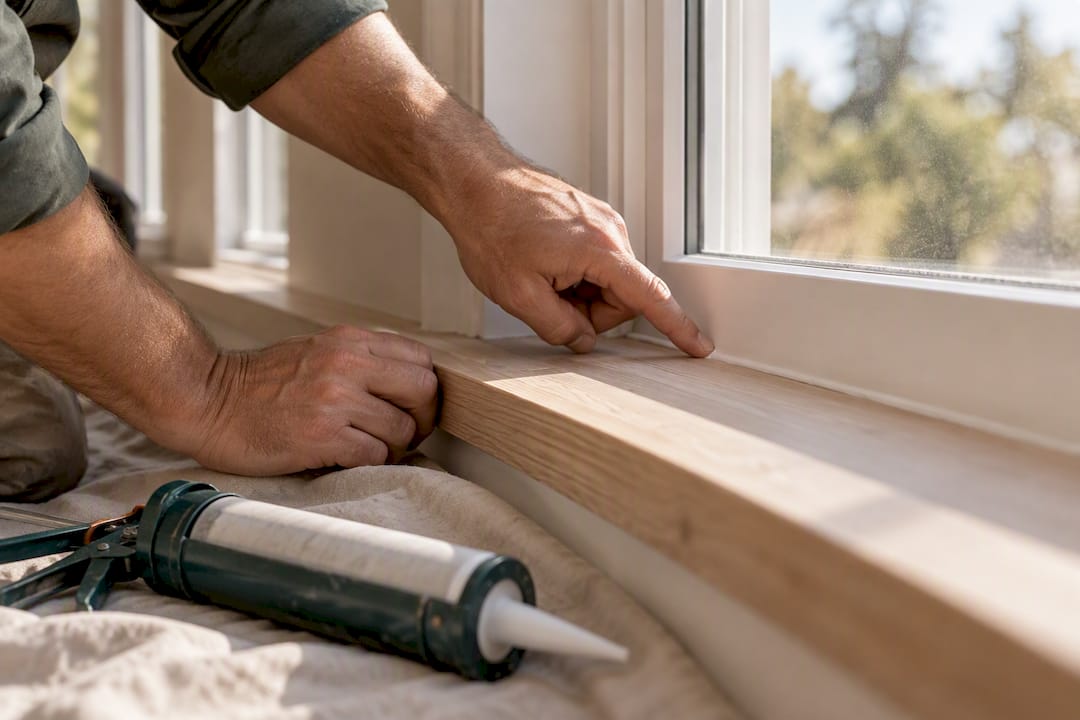
Correct installation means proper flashing to direct water away from the wall assembly, shims set precisely so the frame sits square and doesn't bind, and continuous air sealing around the entire perimeter. Skip any one of these steps and you risk drafts, condensation, or water intrusion that can rot framing over several seasons. If you've ever noticed water tracking down an interior wall after a storm, the window itself often isn't the culprit. Check out our breakdown on diagnosing water leaks around windows before assuming the glass is to blame.
Before signing anything, your written estimate should spell out:
The exact NFRC-certified U-Factor and SHGC for each window being installed.
A written installation warranty separate from the manufacturer's product warranty.
Cleanup and debris removal terms.
Lead-safe work practices if your home was built before 1978, per the EPA's Renovate Right guidance.
Pro Tip: If your home predates 1978, ask directly whether the crew is certified for lead-safe renovation. Disturbing old paint during window removal without proper containment creates a health hazard the EPA takes seriously, and a qualified contractor should bring it up before you do.
Walk the finished job before final payment. Check for smooth operation, no visible gaps at the frame, and caulking that's clean and continuous. For a broader look at how contractor bids should be structured, our guide on reading a contractor estimate versus a quote is worth a read before you sign.
What Will You Actually Save, and What Does It Cost?
ENERGY STAR says upgrading to certified windows lowers household energy bills by an average of 12%, and your actual number depends on your location and how many windows you replace. A drafty farmhouse with fifteen single-pane windows sees a very different number than a town house with six moderately efficient double-panes.
Replacement costs vary by size, frame material, and glazing, and most homeowners budget on a per-window and whole-project basis rather than a flat rate.
A few ways to bring the net cost down:
Search the ENERGY STAR Rebate Finder for utility and state programs in your area, since these change year to year and vary widely by location.
If your budget only covers a handful of windows this year, prioritize the ones with the worst drafts or visible fogging between panes first. That's where the fastest payback usually sits.
If you're not sure whether your existing windows have crossed the line from "fine" to "costing you money," our post on signs it's time to replace your windows walks through the specific red flags worth checking.
Are Storm Windows a Smart Alternative to Full Replacement?
Full replacement isn't always practical, whether because of budget, a historic-preservation restriction, or a rental property where the owner won't cover the cost. In those cases, retrofit options still move the needle.
Weatherstripping around sashes and repairing loose glazing putty are cheaper still and can meaningfully cut drafts on their own, even without a storm window added.
A simple rule of thumb: if your existing frames are structurally sound and you're dealing with single-pane glass, storm windows or weatherstripping usually deliver the fastest return. If frames are rotting, warped, or won't seal no matter how much caulk you add, you're looking at replacement territory instead. For homes with historic character or a landlord unwilling to fund replacement, retrofits are often the only realistic path forward, and they're a genuinely good one.
How Does a Contractor Turn This Guide Into a Real Project?
A proper assessment starts with a walk-through, checking for drafts, condensation between panes, and sill rot that signals water has been getting in for a while. That inspection determines which windows get prioritized first.
From there, the specification stage matters: writing the exact NFRC-certified U-Factor and SHGC targets into the estimate for your climate zone, not a vague "energy-efficient" line item. Licensed crews handle flashing, shimming, and air sealing as a matter of course, and any installation warranty terms should be in writing alongside the manufacturer's product warranty. If your home predates 1978, lead-safe practices should be addressed before demolition starts. That level of specificity is exactly what separates a smooth project from a callback six months later, and it's how Spagnotti Contracting's windows and doors service approaches window projects for Omaha-area homeowners.
What Homeowners Get Wrong About This Whole Process
Most advice on energy-efficient windows treats the purchase decision as the whole story. It isn't. The gap between a window's rated performance and its real-world performance almost always comes down to installation, and that gap gets glossed over in most buying guides because it's less interesting to write about than glazing technology.
Here's what I'd push back on: the obsession with triple-pane glass for homeowners in mixed or moderate climates. It's an expensive upgrade that often doesn't pay back faster than putting that same money toward properly sealed double-pane windows with soft-coat low-E and argon fill. Chasing the highest-spec product on the shelf isn't the same as making a smart investment for your specific house.
If you're working with a tight budget, prioritize differently than most guides suggest. Fix the windows with the worst air leakage first, verify the installer's process before you verify the product's SHGC number, and don't dismiss storm windows as a lesser option. They're a legitimate tool, not a consolation prize.
— Noah
Ready to Get Your Windows Assessed?
A professional contractor handles the whole window project from that first walk-through to final walkthrough, not just the installation day. That means an on-site assessment of your current windows, a written estimate with the exact NFRC-certified U-Factor and SHGC targets specified for your climate, and licensed crews handling flashing, shimming, and sealing so the product's rated performance actually shows up on your energy bill.

If you're weighing full replacement against a storm-window retrofit, or you just want a straight answer on which windows in your home are actually costing you money, request an estimate through Spagnotti Contracting's windows and doors service. You'll get an on-site visit, a written scope of work, and a realistic schedule before any crew shows up.
FAQ
What Is the Best U-Factor for Energy Efficient Windows?
It depends on your climate zone. Under ENERGY STAR Version 7.0, the U-Factor limit ranges from 0.22 or lower in the Northern zone to 0.32 or lower in the Southern zone. Check the ENERGY STAR climate zone map to confirm the target for your location.
How Much Do Energy Efficient Windows Actually Save?
ENERGY STAR says certified windows lower household energy bills by an average of 12%, though your savings depend on your home and location. Storm windows over single-pane glass can save around 20% on heating and cooling in some cases.
Are Storm Windows Worth It Instead of Full Replacement?
Yes, especially when your existing frames are structurally sound and budget or historic-preservation rules limit full replacement. EPA estimates ENERGY STAR-certified low-e storm windows can save about 20% on heating and cooling bills when installed over single-pane glass.
What Does Spagnotti Contracting Charge for Window Replacement?
Current pricing for window and door replacement isn't published online, since costs depend on window count, size, and frame material. Request a written estimate through Spagnotti Contracting's windows and doors page for a project-specific quote.
How Do I Know if My Windows Need Replacing Versus Repair?
Look for fogging between panes, visible frame rot, persistent drafts even after weatherstripping, and windows that won't stay open or closed on their own. A detailed breakdown of these warning signs is available in our guide on when to replace windows.
Recommended
Dealing With Something Similar?
Every property is different, but if this sounds like what you’re seeing, we’re happy to take a look and help you figure out what’s actually going on.