Roofing
Avoid Costly Roof Bills: Roofing Warranties Explained for Homeowners
By Noah Spagnotti
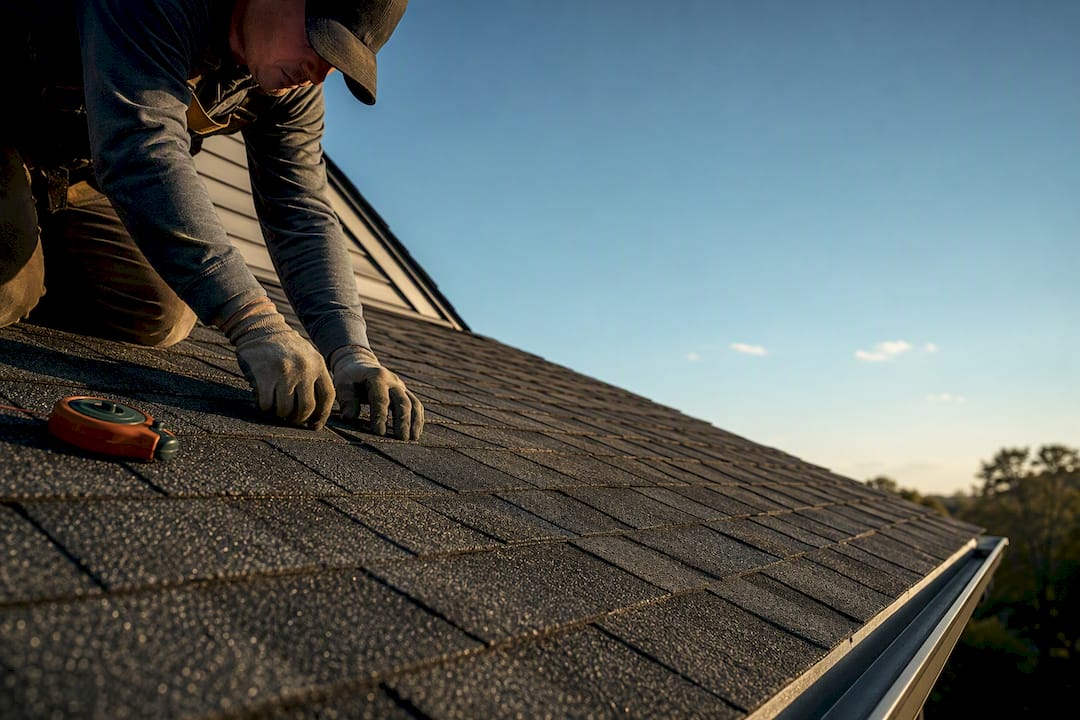
Every asphalt roof carries two separate warranties: a manufacturer material warranty and a contractor workmanship warranty, and they cover different problems entirely. Workmanship claims tend to surface in the first few years after installation, while manufacturer claims show up decades later as shingles age. The single most important thing you can do is confirm your installer registers the manufacturer warranty on time and puts the workmanship terms in writing before work begins.
TL;DR:
Manufacturer warranties typically cover material defects for 25 to 50 years, but their full value usually applies only for the first 5 to 10 years during the non-prorated period.
A top-tier system warranty requires matched components and a factory-certified installer, often including labor and tear-off coverage, unlike standard limited warranties.
Workmanship warranties mainly cover installation errors and usually last between 2 and 10 years, but their enforceability depends on the contractor’s registration and the warranty terms.
Voiding most roofing warranties results from issues such as inadequate attic ventilation, mixing components from different brands, or unauthorized repairs, which can be avoided with proper installation and maintenance.
Transferring a roof warranty to a new homeowner generally requires timely registration within 30 to 60 days of sale, with manufacturer warranties being more straightforward to transfer than workmanship warranties.
Table of Contents
What Are the Two Types of Roofing Warranties?
Manufacturer Warranty Tiers: Why "Lifetime" Doesn't Mean One Thing
What Does a Workmanship Warranty Actually Cover?
System Warranties: Getting the Manufacturer to Cover Labor
How Does Proration Affect Your Warranty Payout?
What Voids a Roofing Warranty?
Can You Transfer a Roof Warranty When You Sell Your House?
How Do You File a Roofing Warranty Claim?
Why Labor Coverage Matters More Than the Word "Lifetime"
Get Warranty Terms in Writing With Your Next Roofing Estimate
Where to Read the Exact Warranty Terms
Sources
FAQ
What Are the Two Types of Roofing Warranties?
The manufacturer warranty covers the shingles, felt, and other products themselves against defects like premature cracking or granule loss. It's issued by the company that made the materials, Owens Corning or GAF, for example, and typically runs for decades under a "limited lifetime" label. The workmanship warranty is a separate promise from your contractor covering installation mistakes, things like improper flashing or nailing patterns that cause leaks even when the shingles themselves are fine.
These two warranties are issued by different parties and cover different failure modes, which means a single leak could fall under either one depending on the cause.
Manufacturer warranty: covers material defects, issued by the shingle maker, often 25 to 50 years or "lifetime."
Workmanship warranty: covers installation errors, issued by your contractor, typically 2 to 10 years.
Real example: shingles curling at year 15 points to the manufacturer; a leak at the chimney flashing two months after install points to the installer.
Manufacturer Warranty Tiers: Why "Lifetime" Doesn't Mean One Thing
Manufacturers stack their warranties into tiers, and the gap between the bottom and top tier is bigger than most homeowners expect. The standard limited warranty comes automatically with any purchase and covers material defects only, no labor, no tear off cost. The enhanced or "system" tier requires you to use a certain number of matching components from the same manufacturer, ridge cap, underlayment, starter strip, and it typically adds a longer non-prorated period. The top-tier system warranty demands both matched components and a factory-certified installer, and in exchange it can include tear off and labor coverage during that non-prorated window.
Tiered coverage depends directly on installer certification and matched components, so the same shingle can carry wildly different protection depending on who installs it and what else goes on the roof.
Standard limited: material defects only, no certification required.
Enhanced/system: matched components required, longer non-prorated window.
Top-tier system: certified installer plus matched components, may include labor and tear off.
Pro Tip: Ask your contractor for their certification level in writing before signing anything. A "preferred" or "master elite" style credential from the manufacturer is what unlocks the top tier, and it's worth confirming rather than assuming.
What Does a Workmanship Warranty Actually Cover?
A workmanship warranty covers labor and installation quality, not the shingles themselves. If your roof leaks because a valley was flashed incorrectly or nails were driven at the wrong angle, that's a workmanship issue regardless of how good the shingles are.
Terms vary enormously from one contractor to the next, since there's no industry standard length or scope.
Durations commonly run 2 to 10 years, though some contractors offer longer terms on full replacements.
Get the exact scope and duration in your written contract, not just a verbal promise.
If the contractor goes out of business, the workmanship warranty usually becomes unenforceable unless it was backed by a manufacturer system warranty.
That last point is the real risk. A manufacturer-backed system warranty effectively steps in as the long-term guarantor of workmanship as long as the installation met the system's requirements, which removes your dependence on a small business staying open for the next decade.
System Warranties: Getting the Manufacturer to Cover Labor
A system warranty is how you get a manufacturer, not just your contractor, to stand behind labor costs. It requires all major roofing components (shingles, underlayment, ventilation products, starter and ridge) to come from one brand, plus a certified installer, plus timely registration after the job wraps.
In exchange, system warranties can include tear off and labor coverage during the non-prorated period, often the first 10 to 25 years depending on the product line. That's a meaningful upgrade over a standard limited warranty, which never pays for labor at any point.
Requires matched, same-brand components across the roofing system.
Requires a manufacturer-certified installer, not just any licensed roofer.
Delivers labor and tear off coverage during the non-prorated window, not just material replacement.
When you're comparing estimates, ask whether the quoted price includes the components needed to qualify for the system tier. A slightly higher bid that unlocks labor coverage can be worth more than a lower bid on standard limited terms alone. A related consideration comes up if you're adding rooftop solar later. Coordinating roof and solar work through one team helps you avoid voiding your roof warranty through unauthorized penetrations.
How Does Proration Affect Your Warranty Payout?
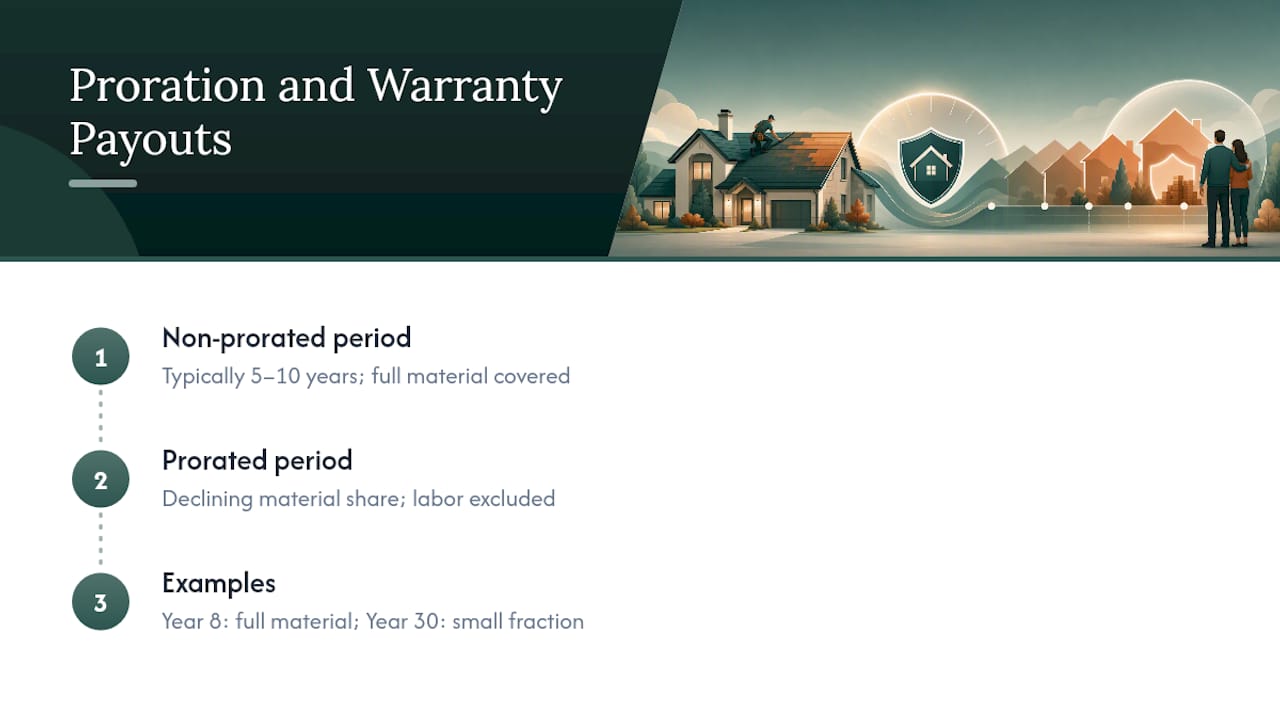
"Lifetime" almost always means a limited warranty with two distinct phases, not one flat guarantee. The first phase is the non-prorated period, commonly 5 to 10 years, during which a defect gets you full material replacement value. After that window closes, the payout shifts to a prorated formula: the manufacturer covers a declining percentage of material cost as the roof ages, and labor is typically excluded from that point forward entirely.
Here's what that looks like in practice. A shingle defect at year 8, still inside the non-prorated window, might get full material replacement. By year 30, the prorated share shrinks further, often to a small fraction of what a new roof actually costs.
What Voids a Roofing Warranty?
Manufacturers write warranties with specific conditions attached, and violating them is the fastest way to lose coverage you thought you had.
Inadequate attic ventilation. Roofs need balanced intake and exhaust airflow; insufficient ventilation traps heat and moisture that accelerates shingle failure and is a documented void trigger.
Mixing non-matching components. Using a competitor's ridge cap or underlayment on top of a different brand's shingles disqualifies system-tier coverage.
Installing over an existing layer (overlay). Most system warranties require a full tear off to the deck, not a roof over roof job.
Unauthorized repairs. Having a handyman or a different company patch the roof later can void the original warranty.
Pressure washing or coating shingles. This strips granules and is explicitly excluded on most manufacturer documents.
Missing the registration deadline. Failing to register within the required window can downgrade upgraded coverage back to standard limited.
Pro Tip: A common baseline for ventilation is 1 square foot of net free vent area for every 150 square feet of attic floor space, split between intake and exhaust (the residential code allows 1 per 300 in some cases). Ask your contractor to confirm your roof meets this before the job is signed off. You can read more on proper attic ventilation practices if you want the technical detail.
Can You Transfer a Roof Warranty When You Sell Your House?
Manufacturer warranties usually transfer to a new homeowner, but almost always just once, and only if you follow the registration window. Major manufacturers including GAF, Owens Corning, CertainTeed, IKO, Malarkey, and TAMKO generally require the transfer to be filed within 30 to 60 days of the sale closing, and some charge a modest administrative fee to process it.
Workmanship warranties are less consistent. Some contractors let them transfer, others end the coverage at resale.
Confirm the original registration date and any prior transfers before listing or buying a home.
Sellers should hand over the original warranty documents and installer contact information at closing.
Buyers should file the transfer paperwork immediately rather than assuming it happens automatically.
How Do You File a Roofing Warranty Claim?
When you spot roof damage, document it promptly and thoroughly; good records make any warranty claim easier to support.
Photograph the damage from multiple angles before touching anything, and avoid repairs that could interfere with the warrantor's inspection.
Identify the likely cause. A leak near a seam suggests workmanship; scattered shingle cracking across the whole roof suggests a material defect.
Contact your original installer first if you're unsure, since they can direct you to the manufacturer or handle it under their own workmanship terms.
Gather your paperwork: the original contract, warranty registration confirmation, and any prior inspection or repair records.
Escalate to the manufacturer directly if the contractor is unresponsive or out of business, using your registration number as proof of coverage.
Reviewing what actually caused the leak matters here too. Our roof leak emergency guide walks through the immediate steps that preserve your coverage instead of accidentally voiding it.
Why Labor Coverage Matters More Than the Word "Lifetime"
Most homeowners fixate on warranty length when they should be looking at what happens during the non-prorated window and whether labor is included at all. A 50-year warranty that excludes labor after year 10 protects you less than a 25-year system warranty that covers tear off and installation for two decades. When you're comparing estimates, ask each contractor for their installer certification level and exactly when labor coverage ends, that single question tells you more than any headline number on the brochure.
— Noah
Get Warranty Terms in Writing With Your Next Roofing Estimate
Whoever you hire, ask for the manufacturer warranty tier, the registration timeline, and any workmanship terms in writing before work starts, so you're not left scrambling if something goes wrong later.

If you're weighing repair against full replacement, our roofing services page lays out pricing: roof replacement from $5.50 to $6.50+ per square foot depending on shingle tier (with a $7,500 minimum), roof repair visits starting at $595 (standard repairs from $995), and a $195 leak assessment if you just need an honest diagnosis first.
Where to Read the Exact Warranty Terms
Marketing language rarely matches the fine print, so read the actual document for your shingle model before you sign anything.
Owens Corning's warranty overview for tier definitions and registration rules.
Roof Warranty Reality 2026 analysis for an independent breakdown of proration and transfer terms across brands.
Sources
FAQ
How Long Do Roofing Warranties Last?
Manufacturer material warranties often run 25 to 50 years or claim "lifetime" coverage, but the non-prorated period, where you get full value, usually lasts only 5 to 10 years. Workmanship warranties from the installer typically run 2 to 10 years and vary by contractor.
What's the Difference Between a Roofing Warranty and Homeowners Insurance?
A roofing warranty covers defects in materials or installation errors, while homeowners insurance covers sudden damage from storms, fire, or falling debris. They're issued by different parties and rarely overlap, so a warranty claim and an insurance claim follow completely separate processes.
Can I Transfer My Roof Warranty to a New Homeowner?
Most manufacturer warranties allow one transfer to a subsequent owner, usually if you file within 30 to 60 days of the sale. Workmanship warranty transferability depends entirely on the contractor's own terms, so check the original contract.
What Voids a Roofing Warranty Most Often?
Inadequate attic ventilation, mixing components from different manufacturers, and unauthorized repairs by another contractor are the most common triggers cited in manufacturer warranty documentation. Missing the registration deadline after installation can also downgrade or void upgraded system coverage.
Recommended
Dealing With Something Similar?
Every property is different, but if this sounds like what you’re seeing, we’re happy to take a look and help you figure out what’s actually going on.