General Contracting
Radiant Floor Heating: Types, Costs and Whether It's Worth It
By Noah Spagnotti
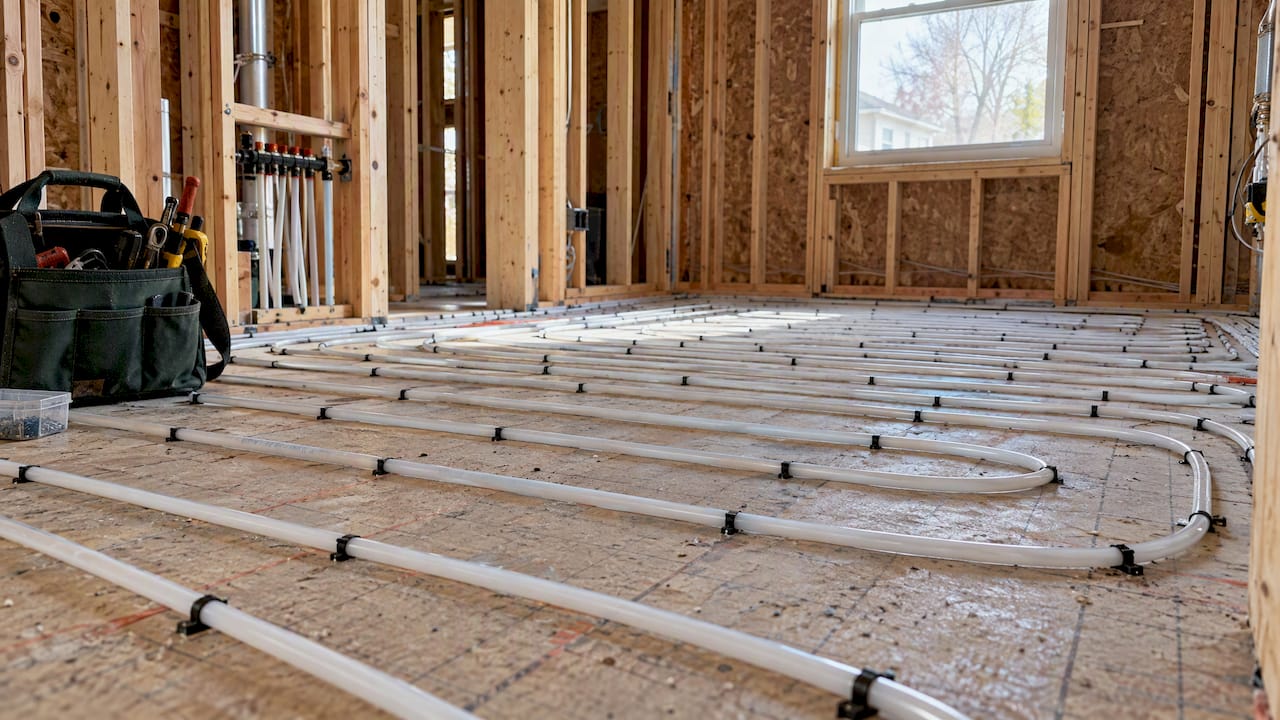
Radiant floor heating warms your home from the floor up, so the surface you walk on becomes the heat source. It comes in three types: air-heated, electric and hydronic (hot water). Forbes Home puts installed cost at roughly $6 to $24 per square foot, depending on the type, and the strongest case is usually a room you are already remodeling, like a bathroom. This guide covers how it works, what it costs to install and run, which floors suit it and how to decide.
TL;DR
Electric radiant floors suit single rooms such as bathrooms, kitchens and mudrooms. Hydronic (hot water) systems suit whole-home heating, and are easiest in new construction.
Forbes Home puts installed cost at roughly $6 to $24 per square foot, with flooring removal and replacement extra, and running costs at about $1.50 to $7 per day, depending on utility rates and usage.
Tile and stone carry heat best. Thick carpet works against the system, and solid wood needs care.
A heated bathroom floor is most worthwhile when you are already retiling or remodeling. It is a comfort upgrade, not a way to cut your energy bill.
How radiant floor heating works
A forced-air furnace pushes warm air through ducts. Radiant heating skips most of that. According to the U.S. Department of Energy, radiant heating delivers heat from a warm surface directly to the people and objects in the room through infrared radiation, and radiant floors also depend heavily on convection, as air warmed by the floor rises.
In practice, that means the heat sits where your feet are. Forbes Home lists even heating, no visible registers and no airflow among the advantages over forced air, and notes that radiant floors are mostly installed to make individual rooms such as bathrooms or kitchens more comfortable, rather than as a home's primary heat source.
The three types of radiant floor heating
The Department of Energy lists three types of radiant floor heat: air-heated, electric and hydronic. DOE notes that air-heated floors are not cost-effective in homes and are seldom installed, so in residential work you will mostly choose between the last two.
Electric radiant floors
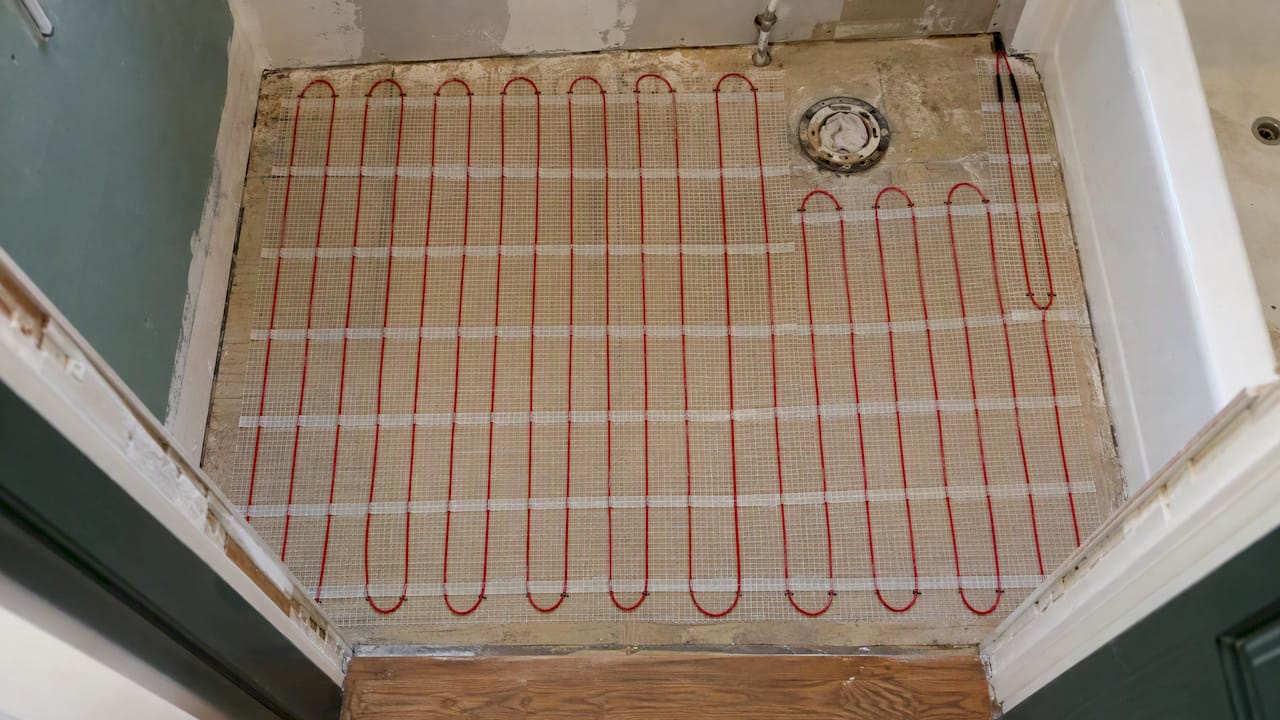
Electric systems use heating cables or thin mats under the finished floor. This Old House says they are typically easier to install than hydronic systems and popular for single-room applications or retrofits, and best suited to warming individual rooms like bathrooms or entryways rather than heating a whole home. Penn State's housing research center notes that electric radiant floors are typically used for floor warming, as a secondary system for specific areas, rather than to heat the space. That distinction should shape your goals: if you want warm tile on a winter morning, electric is the right tool. If you want it to carry a whole room's heat load, talk through the numbers first.
Hydronic (hot water) radiant floors
Hydronic systems pump heated water from a boiler through tubing laid under the floor. The Department of Energy calls hydronic systems the most popular and cost-effective radiant systems for heating-dominated climates, and lists gas- or oil-fired boilers, wood-fired boilers and solar water heaters among the ways to heat the water. DOE also notes that, because of the relatively high cost of electricity, electric radiant floors are usually cost-effective only with significant thermal mass or time-of-use rates.
The catch is timing. This Old House notes that new construction where tubing can be embedded in concrete is less expensive than retrofitting an existing home, since a retrofit takes extra labor and materials. For most existing homes, whole-house hydronic is a major project rather than an add-on.
Quick comparison
Electric | Hydronic | |
|---|---|---|
Best for | One room: bathroom, kitchen, mudroom | Whole home or large zones |
Best timing | Any remodel where the floor is coming up | New construction or a gut renovation |
Installed cost | About $8 to $24 per sq. ft. | About $6 to $22 per sq. ft. |
Heat source | Electricity | Boiler, water heater, solar and others |
Typical role | Floor warming, supplemental heat | Primary heat |
The cost ranges in the table combine figures from two Forbes Home guides, covered in the next section.
What radiant floor heating costs to install
Published figures vary, so treat them as a range, not a quote. One Forbes Home cost guide puts hydronic at $7 to $22 per square foot and electric at $8 to $15, and for a bathroom gives $6 to $20 for hydronic and $8 to $24 for electric. A second Forbes Home piece gives an installed range of roughly $6 to $24 per square foot. Removing and replacing the flooring is additional.
That last point is where budgets go wrong. The heating element is only part of the job. You also pay for:
Demolition of the existing floor, if it is coming up
Subfloor prep, and insulation or underlayment where needed
A thermostat with a floor sensor, and electrical work for it
The new finished floor on top
A worked example: a 60 sq. ft. bathroom
Take a bathroom with 60 square feet of floor. Using Forbes Home's $8 to $24 per square foot range for electric in a bathroom, the heating alone lands between $480 and $1,440, before demolition, the thermostat, electrical work and the new floor. Those numbers shift with the room's shape, tile choice and electrical access, so treat them as a planning range, not a quote.
What it costs to run
Forbes Home reports radiant-floor operation at about $1.50 to $7 per day, depending substantially on local electricity prices and usage. A bathroom mat that runs for a couple of morning hours sits at the low end. A whole-room electric system running all day in January sits at the high end.
Two things drive your bill:
How electric heat works. Electric-resistance systems convert all incoming electric energy to heat, so operating cost comes down to the system's wattage and what your utility charges per kilowatt-hour.
When you run it. Penn State's energy course notes that electric radiant floors are usually only cost-effective if your utility offers time-of-use rates, so a concrete floor's thermal mass can be charged with heat during off-peak hours.
If you are in Omaha Public Power District territory, check the current OPPD residential rate structure, which has a monthly service charge plus energy charges that differ between summer and the rest of the year. Rates change, so use the live page rather than a figure from an article.
Pros and cons of heated floors
What you gain
Warm feet on tile, which is the reason most people want it
Even, quiet heat with no air movement
No visible vents or registers, so furniture placement is freer
Relatively simple installation of electric mats in a room already being remodeled
What you give up
Higher upfront cost than a standard heating setup
Slow response: a floor takes time to warm, so most people use a timer
Repairs are harder, because the element sits under the finished floor
Whole-home hydronic retrofits are disruptive and expensive
Electric heat can raise your bill if you run it for long stretches
The honest summary: radiant floors are a comfort feature. Do not count on them to lower your energy bill, and be wary of anyone who promises that.
Which flooring works over radiant heat
Your finished floor changes how well the system performs, and it should be decided before you buy any heating product.
Ceramic and stone tile are the most common choice. Family Handyman says they hold and conduct heat best, while solid wood can develop gaps as it dries and shrinks, and laminate or vinyl floors usually carry temperature limits (flooring warranties often cap floor temperature at 85°F).
Carpet is the weak match. This Old House notes that you lose some heating efficiency with a carpet pad, and quotes an expert who says that if you feel you have to have thick-carpeted floors, radiant floor heat may not be for you.
Engineered wood, laminate and vinyl can work, but check the manufacturer's maximum surface temperature and whether the warranty allows radiant heat before you commit.
Insulation matters as well. This Old House notes that poor insulation can lead to heat loss and increased energy use, and the Department of Energy says systems installed under the subfloor need reflective insulation beneath the tubes to direct heat upward. That is especially relevant over a cold basement slab or an unheated crawl space.
If tile is on your list, our guide to bathroom tile options for floors, walls and showers walks through the materials. For other rooms, see our overview of flooring installation in Omaha.
Is a heated bathroom floor worth it?
Often yes, but only under the right conditions. The case is strongest when:
You are already remodeling the bathroom or replacing the tile, so the heating goes in with the new floor instead of requiring you to tear up a good one
The room has tile or stone, which feels cold in winter
You want comfort, not savings
The value is chiefly comfort and the convenience of a planned remodel, not guaranteed energy-bill savings. Adding warm floors to a bathroom that is otherwise finished is the weakest case, because you pay to remove and replace flooring that works.
For a sense of where it fits in a larger budget, here is what we publish for bathroom projects in the Omaha metro area:
Project | Published price |
|---|---|
Bathroom Refresh | $8,000 to $15,000 per total project |
Full Bathroom Remodel | $18,000 to $35,000 per total project |
Primary Suite / Walk-In Shower Remodel | $30,000 to $55,000 per total project |
Tub-to-Shower Conversion | About $12,000 to $18,000 per total project |
Those are project ranges; we don't publish a separate price for floor heating. Heating is one line within a remodel, which is the right way to think about it. If you are laying out a small room, our piece on small bathroom layouts that avoid rework covers the planning that should come before finishes.
Basements, kitchens and whole-house questions
Basements are a popular candidate, because concrete floors feel cold. Two cautions apply. First, moisture comes before comfort: any heating product is wasted over a damp slab. Our guides on insulating basement walls and basement subfloor options explain why water gets fixed first. Second, insulation under or over the slab decides how much of your heat goes into the room instead of the ground.
For a kitchen or entry, electric mats under tile follow the same logic as a bathroom. For whole-house heating, hydronic is the realistic radiant option, and it belongs in a new build or a deep renovation with a mechanical contractor designing the boiler or water-heater side.
A Fine Homebuilding article by a builder and residential building inspector observes that codes keep moving toward electric heat. For an existing home, though, compare running costs at your own utility rates.
Our perspective
Radiant floor heat is mostly a sequencing decision. It is relatively cheap to add when the floor is already open, and expensive and frustrating to add afterward.
Decide on floor heating at the planning stage, not halfway through tile. Choose the finished floor first, since it limits what heating you can use. Make sure the thermostat, floor sensor and any electrical work appear in the written scope, and be realistic about what you are buying: a warmer morning, not a smaller utility bill.
In a bathroom that is already finished and working, a heated floor is often hard to justify. Where the floor is coming up anyway, it can be a worthwhile comfort upgrade.
Planning a remodel in Omaha?
If you are redoing a bathroom or finishing a basement, floor heating is a decision to make early. See our bathroom remodeling services in Omaha or our basement finishing options, and mention heated floors when you contact us about your project. New circuits and thermostat wiring for floor heating are work for a licensed electrician.
How to decide: a short checklist
Is the floor coming up anyway? If yes, adding electric heat is a much smaller share of the job.
What is the finished floor? Tile and stone are ideal. Thick carpet is not.
Is it for comfort or for primary heat? Electric suits comfort. Primary heat points to hydronic and, usually, new construction.
What is underneath? Cold slab or crawl space means you need insulation.
What will it cost to run? Use your utility's current rates and a realistic schedule, not a full-day setting.
Can you get a written scope? Heating, sensor, electrical work and flooring should all appear as separate priced lines.
FAQ
How does radiant floor heating work?
It heats the floor itself, using electric cables or mats, or hot water in tubing. The warm floor radiates heat to people and objects, and the air it warms rises gently through the room. There are no vents blowing air, so the heat feels even.
How much does radiant floor heating cost per square foot?
Forbes Home gives an installed range of roughly $6 to $24 per square foot. Its cost guide puts hydronic at $7 to $22 and electric at $8 to $15 per square foot, with bathroom figures of $8 to $24 for electric. Flooring removal and replacement are extra, so your total depends heavily on the rest of the project.
Is a heated bathroom floor worth it?
It is worth it mainly when you are already remodeling or retiling, since the heating goes in with the new floor. You are paying for comfort: Forbes Home puts running costs at about $1.50 to $7 per day, so don't expect it to cut your bill. In an already finished bathroom, it is usually hard to justify.
What flooring works best with radiant heat?
Ceramic and stone tile hold and conduct heat best. Solid wood can develop gaps as it dries, and laminate or vinyl floors usually have floor-temperature limits. Thick carpet and pads cut heating efficiency and are a poor match.
Can I add radiant heat to an existing home?
Electric mats are easy to add to a single room when the floor is being replaced. Hydronic systems are less expensive in new construction, where tubing can be embedded in concrete; retrofitting takes more labor and materials, though it is possible.
Sources
Radiant floor handouts, Pennsylvania Housing Research Center
Electric vs. Hydronic Radiant Floor Heating, Family Handyman
Recommended
Dealing With Something Similar?
Every property is different, but if this sounds like what you’re seeing, we’re happy to take a look and help you figure out what’s actually going on.