General Contracting
Best Bathroom Tile Options for Floors, Walls, and Showers
By Noah Spagnotti
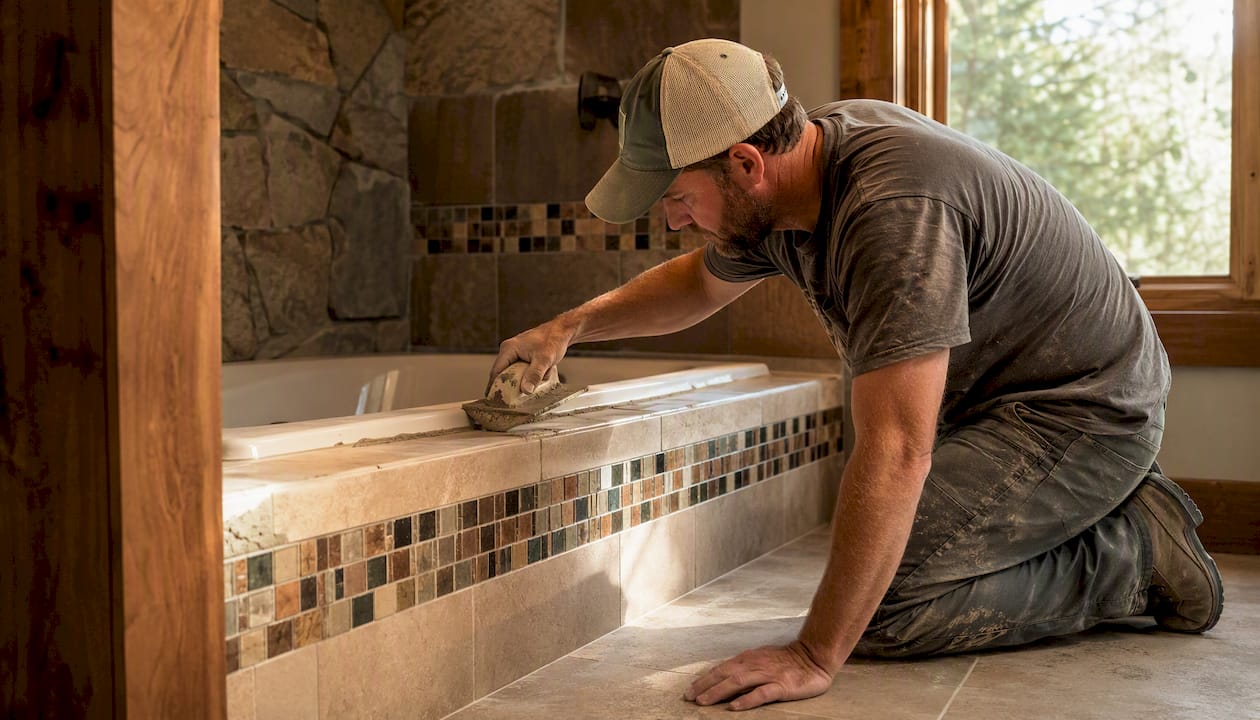
Porcelain wins for bathroom floors and large-format walls, small-format mosaics and penny rounds win for shower pans, ceramic wins on budget for walls, and natural stone wins on looks if you’re ready to seal it every year or two. That’s the short version. Porcelain’s water absorption rate sits at or below 0.5% in the US, which is why it dominates wet-area installs and why most contractors default to it before pitching anything fancier.
Before you order a single box, do three things:
Sample the tile in your actual bathroom, under your actual lighting, for at least a full day.
Check the tile’s PEI rating (durability) and DCOF rating (slip resistance) on the spec sheet, not just the marketing photo.
Lock in your drain type and shower slope plan with your installer before you fall in love with a tile size that won’t work with it.
Key Takeaways
Porcelain handles bathroom floors and large-format walls best, mosaics and penny rounds handle shower pans, and every material choice comes down to matching porosity and slip resistance to how wet that specific surface gets.
Point | Details |
|---|---|
Match material to wetness | Porcelain for wet floors and walls, natural stone for low-splash accents, ceramic for budget walls. |
Small tile on shower pans | Mosaics and penny rounds conform to slope and add traction that large tile can’t provide. |
Check DCOF before buying | Ask for a rating of 0.42 or higher on any floor or shower pan tile. |
Plan the drain before the tile | A linear drain enables larger pan tile; a center drain requires small-format mosaic. |
Budget for substrate prep | Large-format tile needs a flat substrate, which often costs more than buyers expect. |
Bring in a contractor early | Spagnotti Contracting’s bathroom remodeling team coordinates tile, drain, and waterproofing decisions from the start. |
Table of Contents
Bathroom Tile Options by Material: What Fits Where
How Tile Size and Shape Change the Room
Choosing Finishes That Won’t Turn Your Floor Into a Hazard
Getting the Shower Floor Right: Slope, Drainage, and Tile Size
Keeping Bathroom Tile Looking New: Cleaning and Sealing by Material
2026 Bathroom Tile Trends Worth Copying
A 5-Step Checklist for Picking Your Bathroom Tile
What a Realistic Bathroom Retile Actually Looks Like
Frequently Asked Questions
Sources
Bathroom Tile Options by Material: What Fits Where
Every material below shows up somewhere in real bathrooms, but they don’t perform the same way once water and bare feet enter the picture. Here’s how they actually stack up.
Porcelain is a dense, kiln-fired tile made from refined clay pressed at high pressure, and it’s the closest thing to a universal answer in this whole category. It comes in nearly every size and finish, from 12x24 planks to 48x110 slabs, and its low porosity means it barely absorbs water or stains. The tradeoff is that it’s harder to cut, so DIY installs get tricky fast. Best for: floors, shower walls, large-format anywhere. Cost: mid to high, $3 to $15+ per square foot, professional install recommended for anything over 12x24.
Ceramic is porcelain’s softer, cheaper cousin, made from red or white clay fired at lower temperatures. It’s more porous than porcelain, which makes it a poor fit for wet floors, but it’s easier to cut and far friendlier for a weekend DIY project on a wall. Best for: shower walls, backsplashes, powder room walls. Cost: low, often $1 to $8 per square foot.
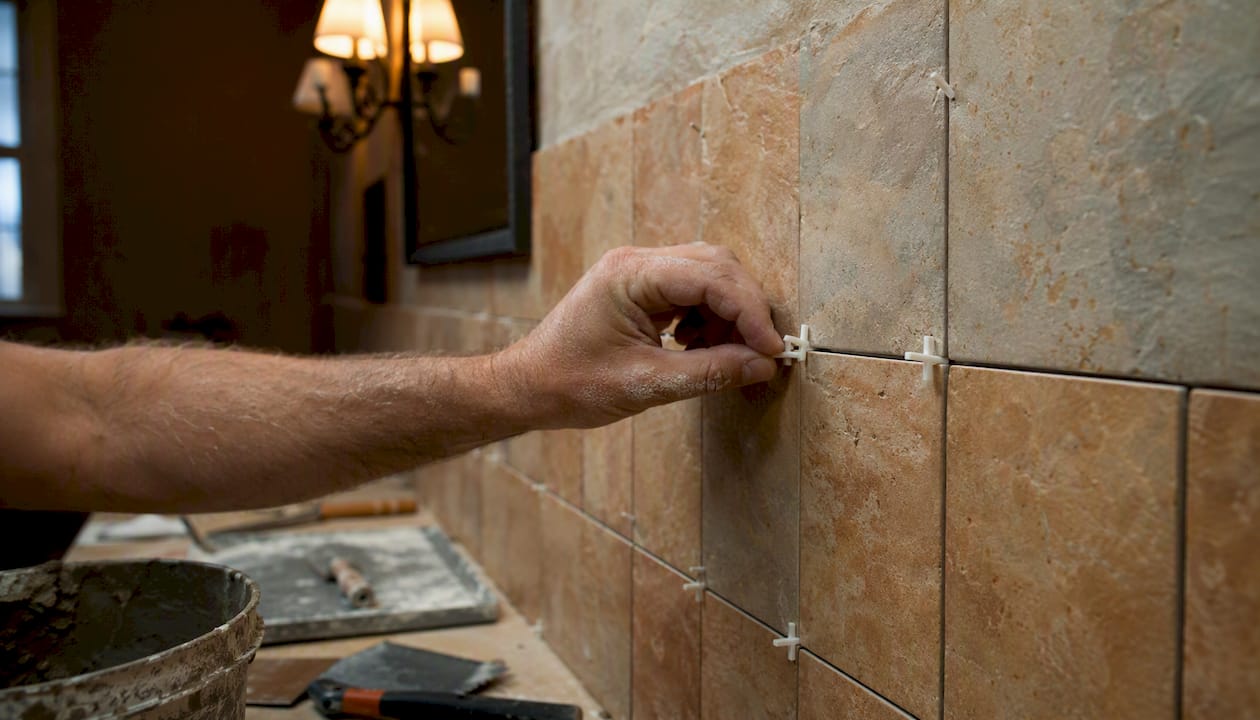
Natural stone (marble, travertine, slate, limestone) brings the visual weight nothing manufactured can quite fake, but every one of these materials is porous and needs a sealer at installation and again on a recurring schedule. Marble specifically etches when acidic cleaners touch it, so it demands more discipline than most homeowners expect going in. Best for: accent walls, feature floors in low-splash zones, vanity backsplashes. Cost: high, $7 to $30+ per square foot, plus ongoing sealing costs.
Slate deserves its own mention inside the stone family because its natural cleft texture gives it better traction than polished marble or honed limestone, making it one of the few natural stones that can reasonably go on a bathroom floor. It still needs sealing, and its color can vary wildly slab to slab.
Terrazzo (chips of marble, glass, or quartz set in cement or resin, then ground smooth) has come back hard in modern renovations for its speckled, almost confetti-like look. Poured terrazzo is durable and seamless, but tile-format terrazzo needs the same grout and sealing attention as stone.
Cement tile, sometimes called encaustic tile, is hand-poured with pigment pressed into the surface rather than glazed on top, which gives it that soft, matte, old-world pattern look. It is genuinely porous and needs sealing before grouting and periodically after, or it will stain the first time someone spills red wine or hair dye near it.
Zellige is hand-glazed Moroccan clay tile, and its whole appeal is its imperfection: every tile has slight variation in color, thickness, and glaze pooling. That handmade quality also means wider grout lines, an experienced installer, and a higher price tag than machine-made ceramic. Cost: high, often $15 to $30+ per square foot.
Glass tile brings light-reflecting shimmer that no other material matches, especially in small mosaic sheets. It’s nonporous and easy to clean, but it can be brittle underfoot and shows scratches on floors, so it’s almost always a wall or accent choice.
Terracotta and brick-look tile deliver warmth and an earthy, sun-baked look. Unsealed terracotta is highly porous and generally unsuitable for wet floors without heavy sealing, which makes it a better fit for a powder room or a dry-climate accent wall than a daily shower.
Pro Tip: Order a sample of any tile you’re seriously considering and set it in your bathroom against the actual vanity, fixtures, and lighting you’ll be using. Showroom lighting flatters almost everything, and a warm-toned porcelain that looked neutral under fluorescent bulbs can read yellow under your bathroom’s LEDs.
How Tile Size and Shape Change the Room
Large-format tile (think 24x48 or bigger) minimizes grout lines and gives walls that slab-like, high-end look that’s driven the biggest shift in residential bathroom design. But it demands a nearly perfectly flat substrate, since any bump or dip telegraphs through a big rigid tile in a way a small tile just absorbs.
Subway tile isn’t going anywhere, but the shape has evolved. Elongated 4x12 formats laid in a stacked, no-offset bond have replaced the classic 3x6 running bond as the modern default. Hexagons, picket shapes, and penny rounds remain the go-to for floors and pans where the small format gives you traction and lets the surface follow a slope.
Do sample your layout with painter’s tape on the actual wall before ordering.
Avoid large-format tile on an uneven or unbraced wall without leveling compound first.
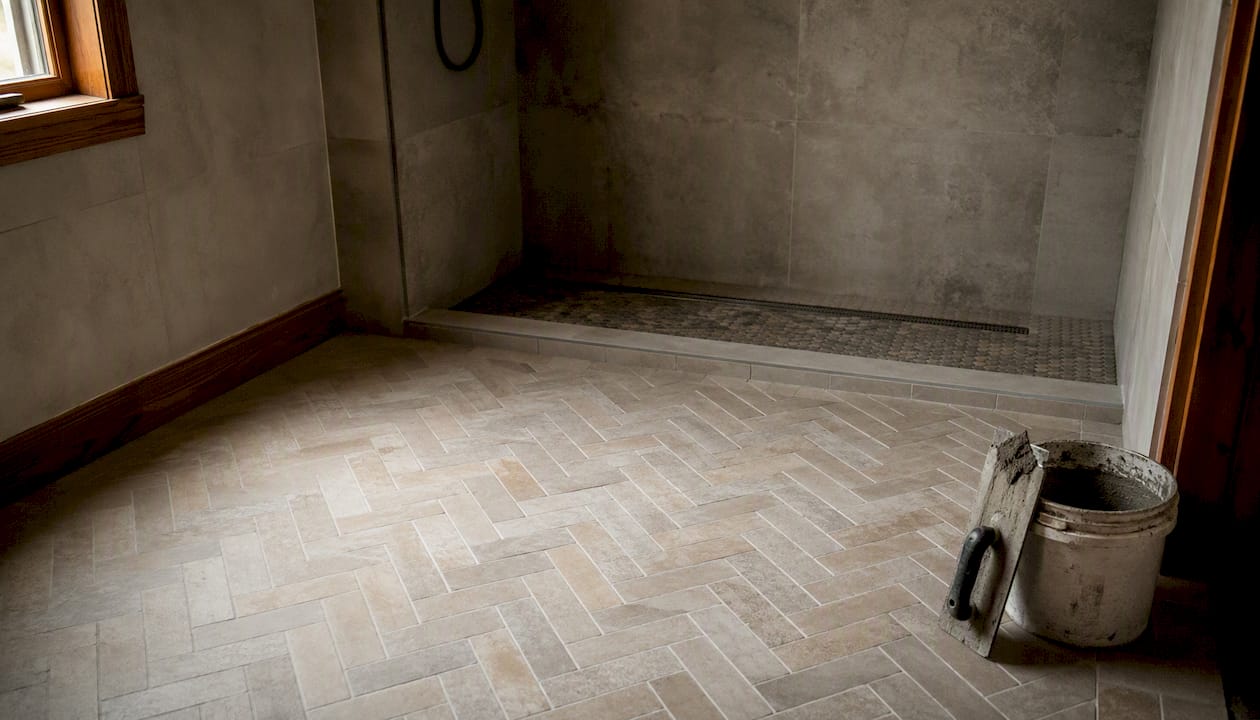
Do consider a herringbone layout for a plank tile if you want visual movement without switching materials.
Pro Tip: A thin grout line in a color close to the tile disappears and makes the room feel bigger; a contrasting grout in a wide joint turns the grid itself into the design statement. Pick one on purpose. It also affects cleaning: wider joints mean more grout to scrub.
Choosing Finishes That Won’t Turn Your Floor Into a Hazard
Gloss, matte, and honed aren’t just style choices; they’re safety choices too. Polished and gloss finishes bounce light beautifully and make a small bathroom feel brighter, but they’re also the slickest surface you can put underfoot when wet. Honed and textured finishes trade a little shine for grip.
Coefficient of friction, or COF, is the metric that actually measures slip resistance, and honed or matte finishes generally test better than glossy ones. For wet floors, ask your tile seller for the DCOF rating specifically. A rating of 0.42 or higher is the general threshold manufacturers use when declaring a tile suitable for wet floor use.
A practical split that works for most bathrooms:
Shower floor: textured mosaic, penny round, or porcelain rated DCOF 0.42+
Rest of the bathroom floor: honed or matte finish
Walls: gloss is fine, since walls rarely get wet enough underfoot to matter
If your household includes small kids or an older adult, don’t treat this as optional. A glossy floor that looks stunning in photos is a real fall risk once it’s wet, and that’s not a tradeoff worth making for the look.
Getting the Shower Floor Right: Slope, Drainage, and Tile Size
The shower pan is the one part of the bathroom where the wrong tile size isn’t just a style miss, it’s a functional failure. Small-format mosaics, penny rounds, and pebble tile are the standard choice because their dense grout lines let the surface follow the slope and give bare feet traction that a single large tile physically can’t.
Here’s the sequence a shower floor install actually needs to follow:
Set the slope (pitch) toward the drain, typically a quarter inch per foot.
Choose the drain type: a center drain requires a multi-plane slope that basically forces small tile, while a linear drain lets the pan slope in a single direction, opening the door to larger tile.
Install a waterproofing membrane over the substrate before any tile goes down.
Set tile with a thinset rated for wet areas, then grout with a sealed or epoxy grout.
Let everything cure fully before first use, typically 48 to 72 hours minimum.
Watch for these red flags: a contractor proposing large rigid floor tile with a center drain, or unsealed natural stone in a shower that runs steam regularly. Both invite cracking, pooling, or staining within a year.
Pro Tip: If you want that seamless, curbless, large-tile look on a shower floor, decide on a linear drain at the design stage, not after the tile is picked. Retrofitting a linear drain into an existing center-drain layout means redoing the whole pan.
Keeping Bathroom Tile Looking New: Cleaning and Sealing by Material
Porcelain and ceramic are the low-maintenance winners here: a pH-neutral cleaner and a regular wipe-down is genuinely all they need, since neither one absorbs water or stains easily. Natural stone is a different story entirely. Marble, limestone, travertine, and slate all need a penetrating sealer applied at installation and reapplied on a schedule, often annually in a wet bathroom, or the surface will etch and stain.
Cement and encaustic tile need that same sealing discipline, and terracotta needs it even more aggressively given how porous unglazed clay is. Grout, regardless of what tile sits on top of it, needs its own sealer, typically reapplied every one to two years in a shower.
Daily: wipe down glass and gloss surfaces to prevent water spotting.
Weekly: clean grout lines with a pH-neutral cleaner, never anything acidic on stone or cement.
Annually: reseal natural stone, cement tile, and grout lines in wet zones.
Pro Tip: Test any new cleaner on a spare tile or an inconspicuous corner first. Acidic cleaners that are perfectly safe on porcelain will etch marble on contact, and you won’t get that shine back without professional polishing. A professional grout cleaning and sealing service is worth the cost if your stone or cement tile hasn’t been resealed in over two years.
2026 Bathroom Tile Trends Worth Copying
Large-format porcelain walls remain the defining look of the year, largely because reducing grout lines to almost nothing reads as instantly more expensive and more modern than a busy grid of small tile ever will. Elongated subway in a stacked bond, matte and honed floor finishes, and earth-tone palettes (terracotta, warm gray, sage) round out the look homeowners keep asking for.
Three combos worth stealing:
Large-format marble-look porcelain walls paired with a penny-round mosaic shower pan.
A matte slate-look floor with a glossy subway half-wall above it for contrast.
A cement encaustic floor with a large, quiet neutral wall tile so the pattern gets to be the star.
If resale matters to you, lean toward the large-format porcelain and neutral palette combo. It photographs well, reads as high-end, and doesn’t lock the next owner into a bold pattern they didn’t choose.
A 5-Step Checklist for Picking Your Bathroom Tile
Define your priority per surface. Floor durability and slip resistance, wall style impact, pan traction.
Measure and sample. Bring home actual samples and view them in your bathroom’s real light.
Check the ratings. Ask for PEI (durability), water absorption percentage, and DCOF (slip resistance) on every tile you’re seriously considering.
Settle your drain strategy. Linear drain opens up larger pan tile; center drain means small-format only.
Get a written estimate and timeline. Confirm labor and material costs together, not as separate guesses.
Ask your installer directly: what DCOF do you recommend for this specific floor?
Ask what grout width and sealer they recommend for your chosen tile.
If you’re installing underfloor heating, confirm it early. Porcelain and natural stone both work well over radiant heat, but the tile and the heating mat need to be specified together so the installer doesn’t have to guess at thinset thickness.
What a Realistic Bathroom Retile Actually Looks Like
A standard bathroom retile typically runs one to two weeks from demo to final grout cure: a day or two for demo, one to two days for substrate prep and waterproofing, one to three days for tile setting depending on format, and 48 to 72 hours of cure time before the shower gets used again. Large-format tile and natural stone both add time, since both demand slower, more careful setting.
Material and labor together for a standard bathroom typically fall in a broad range depending on tile choice, room size, and whether you’re changing the drain type; natural stone, linear drains, and large-format prep all push costs upward compared to a straightforward ceramic wall job.
When you’re vetting a contractor, ask specifically about substrate prep method, which waterproofing membrane system they use, their drain plan, and whether they’ve installed your chosen tile type before. Red flags include a bid with no waterproofing line item at all, vague answers about substrate flatness, or a quote that comes in far below every other estimate you’ve gotten. That gap usually means something’s being skipped.
Pro Tip: Ask your contractor for the manufacturer’s written installation instructions for your specific tile, and confirm they’ll follow them. Manufacturers often specify thinset type, minimum substrate flatness, and cure times that generic installation guides skip entirely.
A Contractor’s View on Style Versus Function
Homeowners fall in love with a photo before they know whether the tile in it will hold up in their actual bathroom. Every project runs smoother when the contractor gets pulled in during tile selection, not after the order’s already placed. The lesson that surprises people most: substrate prep for large-format tile often costs more than the tile itself, and skipping it is the single fastest way to void the look you paid for within a year.
Let Spagnotti Contracting Handle the Part Tile Showrooms Can’t
A showroom can sell you porcelain. It can’t tell you whether your subfloor needs leveling, whether your drain plan supports the large-format look you want, or whether your contractor will actually follow the manufacturer’s install instructions. That’s the gap Spagnotti Contracting closes for homeowners across the Omaha metro: detailed planning up front, a clear project timeline, and a crew that handles waterproofing and substrate prep as carefully as the tile itself.

Our bathroom remodeling team manages everything from demo through final grout cure, and we coordinate drain type, slope, and tile size decisions before a single tile gets ordered. If you’re weighing large-format porcelain against a mosaic shower pan or trying to figure out whether your floor can handle underfloor heating, request an estimate and we’ll walk your space with you before you commit to anything.
Frequently Asked Questions
What is the best tile for a bathroom floor? Porcelain is the most reliable choice for bathroom floors because of its low water absorption and durability, though a matte or honed finish with a DCOF of 0.42 or higher matters as much as the material itself for slip resistance.
Is porcelain or ceramic tile better for bathrooms? Porcelain generally outperforms ceramic in wet, high-traffic areas because it’s denser and less porous, while ceramic works well for walls and backsplashes where DIY installation and lower cost matter more than water resistance.
What tile is best for a shower floor? Small-format mosaics, penny rounds, and hex mosaics are the standard because their dense grout lines follow the slope toward the drain and provide traction that large tile can’t match on a wet floor.
Do natural stone tiles need sealing in a bathroom? Yes. Marble, limestone, travertine, and slate are all porous and need a penetrating sealer at installation and on a recurring schedule, typically annually in a shower or wet zone.
Can large-format tile go on a shower floor? Only with a linear drain and a manufacturer declaration that the specific tile is rated for wet floor use at DCOF 0.42 or higher; a center drain requires the multi-plane slope that small tile handles far more easily.
Is bathroom tile compatible with underfloor heating? Yes, porcelain and natural stone both work well over radiant floor heating, but the tile and heating mat need to be specified together so your installer sets the correct thinset thickness and substrate buildup.
Sources
Always confirm final ratings and installation specs directly with your tile manufacturer and installer, since declared use ratings can vary by product line.
Recommended
Dealing With Something Similar?
Every property is different, but if this sounds like what you’re seeing, we’re happy to take a look and help you figure out what’s actually going on.