Roofing
First 24–72 Hours: How Homeowners Should Document Wind-Damaged Shingles
By Noah Spagnotti
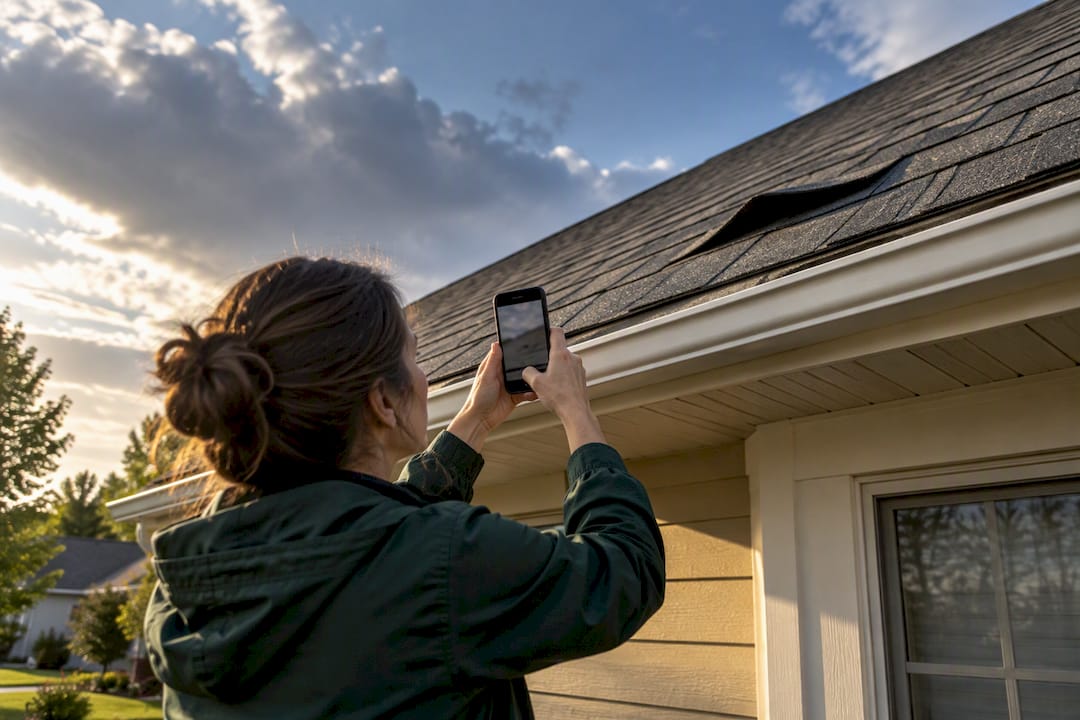
If you can see missing shingles, lifted tabs, creases, or bare patches where granules have washed away, you're likely looking at wind damage, and your first move is to stay off the roof, photograph everything from the ground, and get a professional inspection before starting repairs. The checklist below walks through the signs, the safety steps, and what to document in the first day or two.
TL;DR:
Wind damage often appears as lifted tabs, missing shingles, or granule loss concentrated at roof edges and ridges, matching the storm's direction.
Immediate actions include staying off the roof, documenting damage from the ground with photos, and arranging temporary protection before permanent repairs.
The extent of damage, roof age, and whether structural decking is exposed determine if repairs are sufficient or full replacement is necessary.
Upgrading to wind-rated shingles and proper installation techniques reduces future storm damage risk.
How to spot wind-damaged shingles: clear visual checklist
Wind damage rarely announces itself with a hole in the roof. It usually shows up as smaller, easy-to-miss changes that add up over a storm season.
Look for these signs from the ground or with binoculars:
Missing shingles or bald spots where the shingle tore away completely.
Lifted or loose tabs that no longer lie flat against the roof deck.
Creases or tears running across the shingle surface.
Exposed underlayment or felt paper showing through gaps.
Nail pops, where fastener heads push up through the shingle.
Concentrated granule loss, often visible as dark streaks in gutters or downspouts.
Shingles or shingle pieces scattered in the yard, driveway, or flower beds.
Wind damage concentrates in predictable places. Manufacturer guidance points to roof edges, eaves, and ridges as the most vulnerable spots because wind lifts shingles from the perimeter inward, and creased tabs and granule loss cluster in exactly those zones during storm events, according to GAF's guidance on wind-damaged shingles. A consistent pattern along one side of the roof, matching the direction the storm came from, is a strong clue that wind, not age, caused the problem.
That distinction matters because similar symptoms can come from ordinary wear. Curling edges, widespread granule loss across the whole roof, and brittle shingles that crack when touched often point to age or a poor original installation rather than a single storm. A roof nearing the end of its service life can look rough even without a windstorm, so the pattern and timing of the damage matter as much as its appearance.
Immediate steps after a windstorm: safety, mitigation, and documentation
The first 24 to 72 hours after a storm set the tone for both your safety and a clear record of what happened. Work through these steps in order:
Stay off the roof. Wind damage often loosens more than what's visible, and a damaged deck won't support your weight safely; call a professional for anything that requires climbing.
Photograph the damage from the ground: wide shots of each roof side, close-ups of missing or lifted shingles, interior ceiling stains, and any debris in the yard, all with a timestamp.
Arrange temporary protection. A licensed contractor can install a tarp or approved temporary covering to stop further water intrusion while you sort out permanent repairs.
Keep every receipt and written record connected to the storm, including mitigation costs and contractor communications.
Get a professional roof inspection before you schedule permanent repairs.
Documenting thoroughly gives you a clear record of the storm's effect on your home before weather or cleanup erases the evidence.
Repair vs replacement: how professionals decide after wind damage
Contractors weigh a handful of factors when deciding whether a wind-damaged roof needs spot repairs or a full tear-off.
Roof age: an older roof nearing the end of its expected life is more likely to need full replacement even for moderate damage.
Percent of roof affected: scattered missing shingles on one slope may be repairable, but damage spread across multiple planes usually isn't.
Granule loss severity: heavy, widespread loss compromises the shingle's protective layer even where shingles haven't blown off.
Exposed decking or sheathing: any point where the roof deck itself is visible signals a repair priority, not just a cosmetic issue.
Flashing and valley damage: these are common leak points, and damage here often pushes the decision toward replacement.
Large sections of missing shingles, exposed structural decking, or damage across several roof planes are the clearest signs that repair won't hold up. A complete contractor estimate should itemize materials and labor separately, note permit requirements, and give a realistic timeline. Our guide on repair versus replacement and our breakdown of what a proper estimate includes both go deeper into reading these documents.
Preventing future wind damage: maintenance and upgrade options
A roof that's properly maintained handles storms better than one left unchecked for years. A yearly inspection, ideally in spring or fall, catches loose flashing, cracked sealant, and early granule loss before a storm turns them into a bigger problem. Clearing gutters and trimming overhanging branches removes two common sources of wind-driven damage.
Pro Tip: Schedule your roof inspection before storm season starts, not after the first bad forecast.
For homeowners rebuilding or replacing a roof, a few upgrades reduce future risk:
Higher wind-rated shingles, rated for stronger sustained gusts than standard products.
Enhanced installation methods, including sealed roof decks and correct nailing patterns rather than the minimum required.
Reinforced ridge and edge details, since that's where wind damage concentrates most.
Beyond-code installation methods have shown improved wind performance in field and laboratory testing. Our overview of shingle types and durability covers which products carry the strongest wind ratings.
Why local experience with wind damage matters
Spagnotti Contracting handles roof inspections, repairs, replacements, and emergency tarping for homeowners across the Omaha metro area, and that repeated exposure to wind events shapes how the estimates get written. A licensed contractor's written scope separates materials from labor, includes photos of the damage, and lays out recommended next steps, so you have a clear document to work from rather than a verbal guess.
Local building codes and regulations on wind-damaged roofs
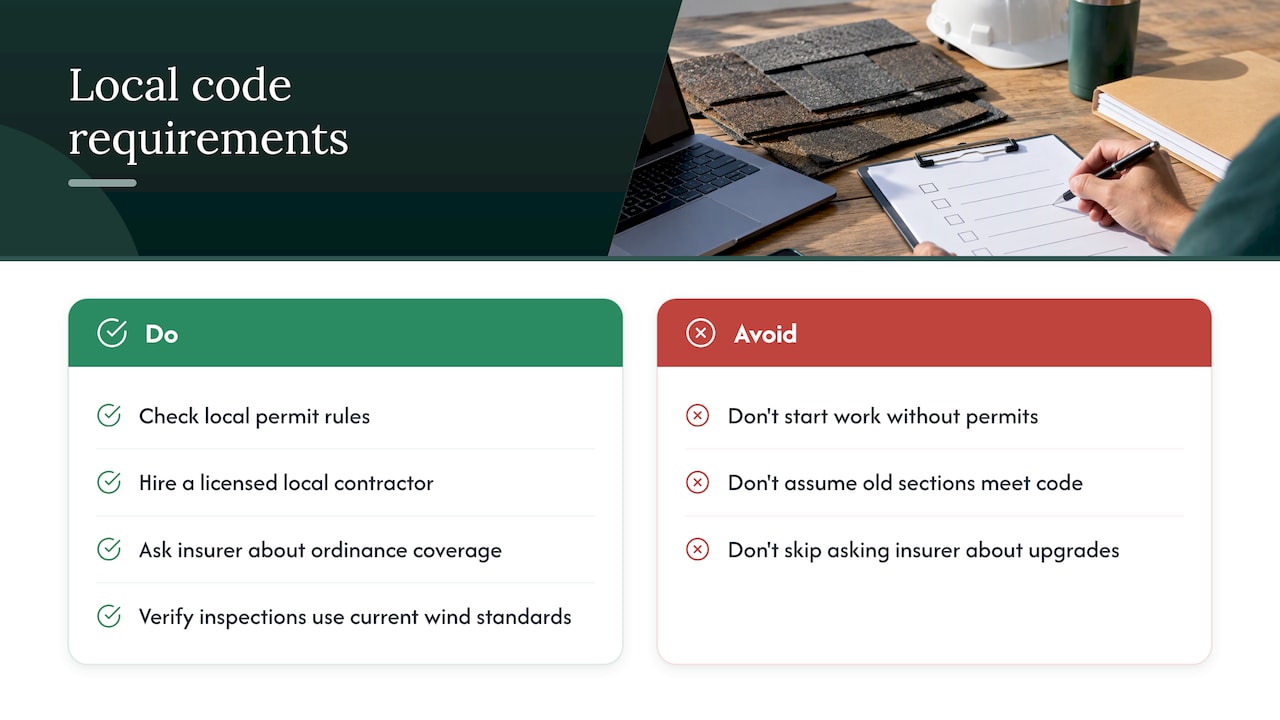
Building codes affect what you're allowed, and sometimes required, to do when repairing or replacing a wind-damaged roof. Most jurisdictions require a permit for roof replacement and often for repairs beyond a certain size, and inspectors check that new work meets current wind-resistance and fastening standards, not just the code in place when the original roof went on. That's one reason a roof that's repaired piecemeal over the years can end up with a mix of code-compliant and outdated sections.
A licensed local contractor should know the current permit requirements and inspection triggers for your area. If you're unsure whether your repair needs a permit, check with the City of Omaha Permits & Inspections before work starts, not after.
Author's note: common homeowner mistakes and practical shortcuts
The mistake I see most is homeowners climbing onto a damaged roof to "just take a look." That's how a bad storm becomes a bad fall. The second most common mistake is waiting days to document damage, by which point wind and rain have already erased some of the evidence.
What actually helps: photos within hours, receipts for anything you pay for, and a written estimate before you sign anything.
— Noah
How Spagnotti Contracting can help after wind damage
If you'd rather not manage inspections, paperwork, and repair timelines yourself, Spagnotti Contracting handles the full process: a roof leak assessment to identify where water is getting in, emergency tarping to stop further damage, and either targeted repair or full replacement depending on what the inspection shows.
Every project should start with a written estimate that separates materials, labor, and timeline, so you know what you're approving before work begins. Crews are licensed and insured, and you get a single point of contact from the initial inspection through the final walkthrough. If your shingles show signs of wind damage, request a roof inspection or repair estimate and get a clear plan before the next storm rolls through.
Sources
FAQ
Does insurance cover wind-blown roof shingles?
Coverage varies by policy and by the cause of the damage, so check your own homeowners policy or ask your insurer.
Are wind-damaged roof shingles worth replacing?
It depends on the extent of the damage and the roof's age: scattered missing shingles on one slope are often repairable, but exposed decking, damage across multiple roof planes, or a roof already nearing the end of its service life usually points toward full replacement. A contractor's written estimate, covered in more detail in our repair versus replacement guide, should lay out which situation applies to your roof.
Can unsealed shingles be damaged by wind?
Yes. Shingles rely on a sealant strip that bonds them together after installation, and shingles that haven't fully sealed, whether due to cold weather during installation or age, are more prone to lifting and tearing in wind. This is one reason correct installation and nailing patterns matter as much as the shingle product itself.
What should you do if your roof is damaged by wind?
Stay off the roof, photograph the damage from the ground, and arrange temporary protection like a tarp through a professional. Then get a written contractor estimate before agreeing to any permanent repairs.
Recommended
Dealing With Something Similar?
Every property is different, but if this sounds like what you’re seeing, we’re happy to take a look and help you figure out what’s actually going on.