Roofing
Cut Roofing Delays: New Roof Timeline (1–3 Days on Roof, 2–6 Weeks)
By Noah Spagnotti

Cut Roofing Delays: New Roof Timeline (1–3 Days on Roof, 2–6 Weeks)
Most asphalt-shingle replacements take just 1 to 3 days of actual on-roof work, but the full project runs about 2 to 6 weeks from first phone call to final inspection. Permits, HOA approval, and material lead times account for most of that gap, not the installation itself. Estimates typically follow this same phased structure so homeowners know what to expect each week.
TL;DR:
Most delays in roof replacement projects stem from permit processing, weather disruptions, and deck repairs discovered mid-tear-off, not the actual installation time.
Getting accurate project timelines depends heavily on early permit approvals and material availability, which can add several weeks or more to the schedule.
Homeowners can reduce delays by confirming permit handling, material lead times, and staging plans before work begins, ideally within the first week.
The actual roofing work typically takes 1 to 3 days for asphalt shingles, but project length varies greatly based on complexity and weather conditions.
Final inspection and walk-through are your last control points, where you should ensure warranties, permit signoff, and repairs are documented before final payment.
Table of Contents
New Roof Timeline at a Glance
What Happens Before the Crew Ever Shows Up
What Actually Happens on Installation Days
Verifying the Work Before You Pay the Final Invoice
The Variables That Actually Move Your Date
Scheduling Habits That Cut Real Risk
The Timeline Question Nobody Asks Early Enough
Get a Written Timeline Before You Sign Anything
Sources
New Roof Timeline at a Glance
Here’s the phase breakdown that determines how your calendar actually fills up:
Inspection and estimate: 1 to 3 days, depending on how fast you get contractors on the roof
Contractor selection and contract signing: 1 to 7 days, mostly on your schedule
Permits and material ordering: 1 to 6+ weeks depending on your jurisdiction and the material you pick
Scheduling queue: 1 to 4 weeks is typical, longer during storm season
Installation: 1 to 3 days for asphalt shingles, longer for other materials
Closeout and follow-up: a few days for the walkthrough, with warranty windows running months to years
Most delays cluster around three points: slow permit offices, weather interruptions, and rotted decking discovered mid tear off. You can blunt all three by clearing the driveway and yard before crews arrive, moving vehicles off the street, boarding pets somewhere quiet, and confirming a staging area for the dumpster and material drop with your contractor in advance.
What Happens Before the Crew Ever Shows Up
The pre-install stretch is where roofing project timelines actually get decided, not on the roof itself.
Getting a rough number takes minutes with a remote satellite measurement. Getting an accurate one takes an in-person inspection, where someone climbs up, checks the decking, counts penetrations, and looks for soft spots you can’t see from the ground. Skip the in-person step and you’re likely to see a change order later. Confirm the walk through happens before you sign anything.
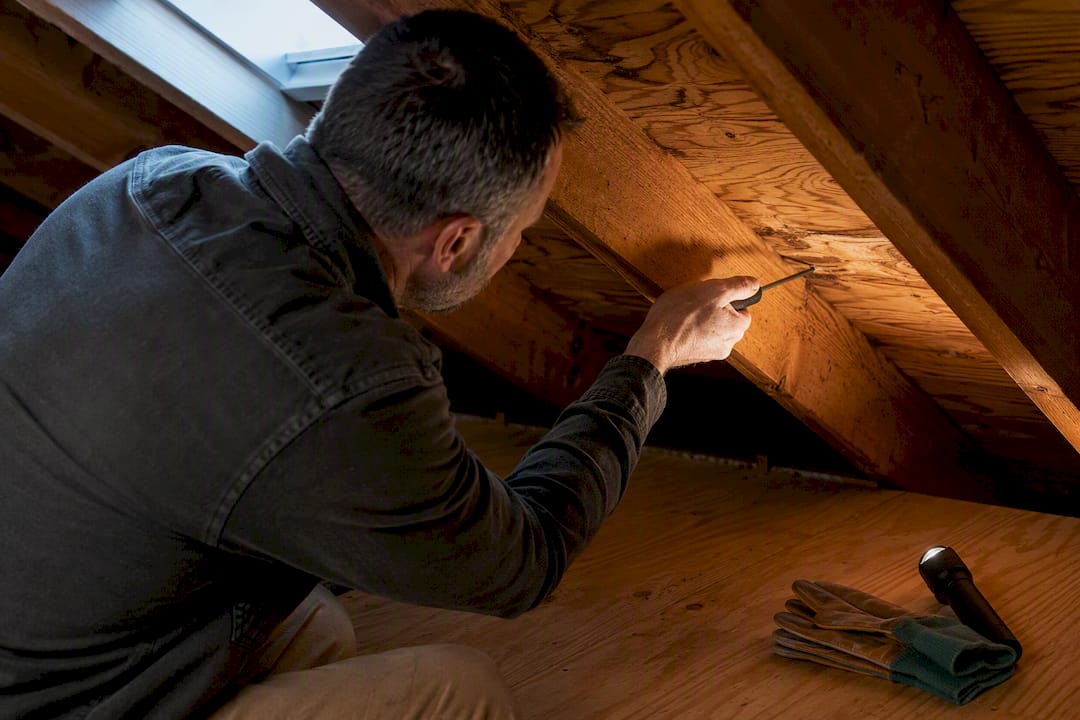
A solid written estimate should spell out exact scope (tear off to how many layers, underlayment type, flashing replacement), material allowances, a payment schedule tied to milestones, and a clear change-order process for anything found during tear off. If a contract is vague on any of those four, that’s your first delay warning sign.
Permits and HOA reviews are the biggest wild card. In many cities, permit processing runs anywhere from a few business days to several weeks, and busy departments can stretch that closer to six. Most established contractors pull the permit themselves as part of the contract, which is worth confirming up front.
Ask who pulls the permit and how long your specific city or county typically takes.
Confirm your HOA’s review window if one applies, since some boards meet only monthly.
Lock your material choice early. Asphalt shingles usually ship in 1 to 7 days, while metal panels and tile can run several weeks out.
Pro Tip: If your preferred shingle color is backordered, ask your contractor about a comparable in-stock grade from the same manufacturer. It’s often the fastest way to shave a week or two off the schedule without changing your budget.
What Actually Happens on Installation Days
Once materials are staged, the physical build follows a fairly predictable rhythm.
Day 0 (setup): Crews position the dumpster, lay tarps over landscaping, and protect siding and windows near the work zone.
Day 1 (tear off and inspection): Old shingles come off, often in a single day for an average size home. This is when decking problems surface. Rotted plywood needs photos and a documented change order before repairs proceed, and depending on how much is affected, that step can add anywhere from a few hours to multiple days.
Day 1 to 2 (deck repair and underlayment): Damaged sheathing gets replaced, then ice-and-water shield and synthetic underlayment go down as the roof’s actual weather barrier.
Day 2 to 3 (field installation): Shingles or panels go on course by course, followed by flashing at valleys and penetrations, ridge cap, and ventilation checks.
Final day (cleanup): Crews run a magnetic sweep for stray nails, clear gutters of debris, and walk the property with you before calling it done.
Material choice changes that window considerably:
Roofing Material | Typical Install Time |
|---|---|
Asphalt shingles | 1–3 days |
Standing-seam metal | 3–7 days |
Tile, cedar, or slate | 5 to 13 days |
Steep pitches slow every stage of this because OSHA fall protection requirements kick in for many roofing tasks, which means more time spent rigging safety gear before anyone starts working. It’s a good tradeoff for safety, but it’s worth knowing why a 10:12 pitch roof takes noticeably longer than a 4:12.
Verifying the Work Before You Pay the Final Invoice
The walkthrough is your last real checkpoint before money changes hands, so treat it seriously rather than a formality.
Check that flashing around chimneys, vents, and skylights is visible and properly sealed.
Look for shingles lying flat with no lifted edges or exposed nail heads.
Confirm attic or ridge vents are aligned and unobstructed.
Ask for your warranty documentation, the signed permit signoff, and a lien waiver if subcontractors were involved.
Hold back a small percentage of final payment until any punch-list items are fixed, and get a timeline in writing for that fix. Most warranty or settlement issues, if they show up at all, surface within the first 1 to 12 months, so keep your paperwork somewhere you’ll actually find it later.
The Variables That Actually Move Your Date
Generic timelines are a starting point, not your answer. Here’s how to adjust one for your actual house:
Size: Add roughly a day for every 1,000 square feet above a typical baseline roof.
Complexity: Steep pitches, multiple dormers, skylights, and lots of penetrations all slow crews down.
Crew size: An experienced 5 to 6 person crew can finish a typical 2,000 square foot asphalt roof in 1 to 2 days, while a two-person crew on the same house could take three or four.
Weather: Build in a 1 to 2 week buffer during storm season, especially in spring and early fall.
Permits: Backlogs of 1 to 6 weeks are common depending on your local building department.
Most schedule misses trace back to permits and weather, not the actual roofing work, according to the contractor guide from the Illinois Roofing Institute. Fast-tracking decking repair approvals is one of the few levers homeowners genuinely control, so ask upfront how change orders get documented and approved.
Scheduling Habits That Cut Real Risk
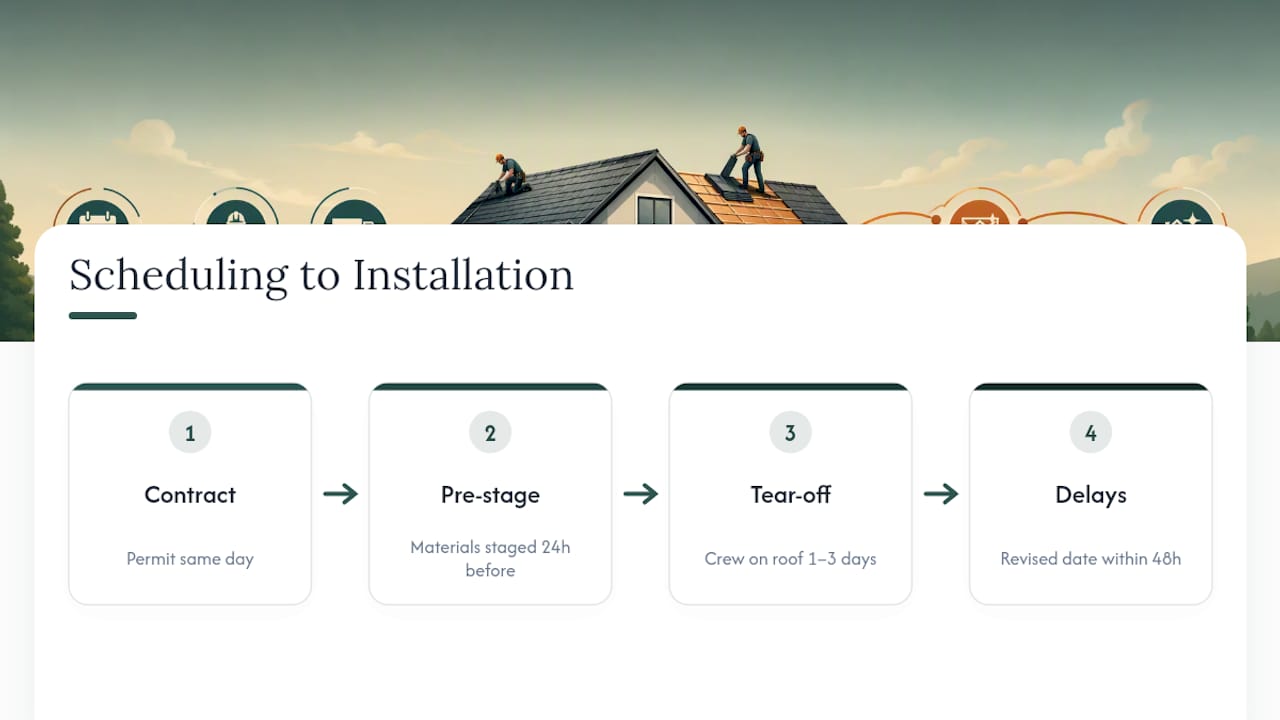
A handful of process details separate a smooth install from a stalled one. Pulling the permit the same day the contract is signed, rather than a week later, saves calendar time you can’t get back. Pre-staging materials 24 hours before tear off begins reduces same-day delivery delays and rarely costs extra if you coordinate it with your contractor ahead of time.
Ask any contractor you’re vetting for their expected crew size, their staging plan for materials and dumpster placement, and proof of insurance. A contractor who handles permitting internally, documents deck damage with photos before starting repairs, and gives you a written change-order process before day one is showing you exactly how they run a job site.
If weather pushes your install back, ask your contractor for a revised date within 48 hours rather than an open-ended “we’ll call you.” If a permit is stuck, call the building department directly. Contractors sometimes wait longer than a homeowner needs to.
The Timeline Question Nobody Asks Early Enough
Most homeowners fixate on how many days crews will be on the roof. That’s the wrong number to obsess over. The install itself is the most predictable part of the entire process, usually locked in within a day or two once work begins. The real variable, the one that actually determines whether you’re moved in for the holidays or still waiting in mid winter, is how fast permits clear and materials arrive.
Conventional advice tells homeowners to “get three quotes and pick the best price.” That’s incomplete. Ask each contractor a sharper question: who pulls your permit, and what’s their current backlog with your city? That single answer predicts your actual move-in date better than any per-square-foot price comparison.
If you take one thing from this: front-load your decisions. Pick your material, sign your contract, and confirm your permit process in the same week if you can. Everything downstream moves faster once those three boxes are checked, and everything stalls when they’re left loose.
— Noah
Get a Written Timeline Before You Sign Anything
A knowledgeable contractor can handle the aspects of a roof replacement that impact your calendar most: permits, material ordering, and crew scheduling, ideally coordinated by one project manager to ensure smooth communication.

If you’re planning a roof replacement, start with three steps: request a written estimate that details your timeline, ask how permits and change orders are handled, and request references or photos from recent projects in our roofing project gallery in Northwest Arkansas. If you have a quote from another contractor, review it carefully for clarity before you commit.
Sources
New Roof Installation 2026: Step-by-Step Process, Timeline & Total Cost
How to Determine a Roofing Project Timeline (Contractor Guide 2026)
Recommended
Dealing With Something Similar?
Every property is different, but if this sounds like what you’re seeing, we’re happy to take a look and help you figure out what’s actually going on.