Windows & Doors
STC 40 Window Noise Cuts, Read OITC Before You Buy, Omaha Homeowners
By Noah Spagnotti
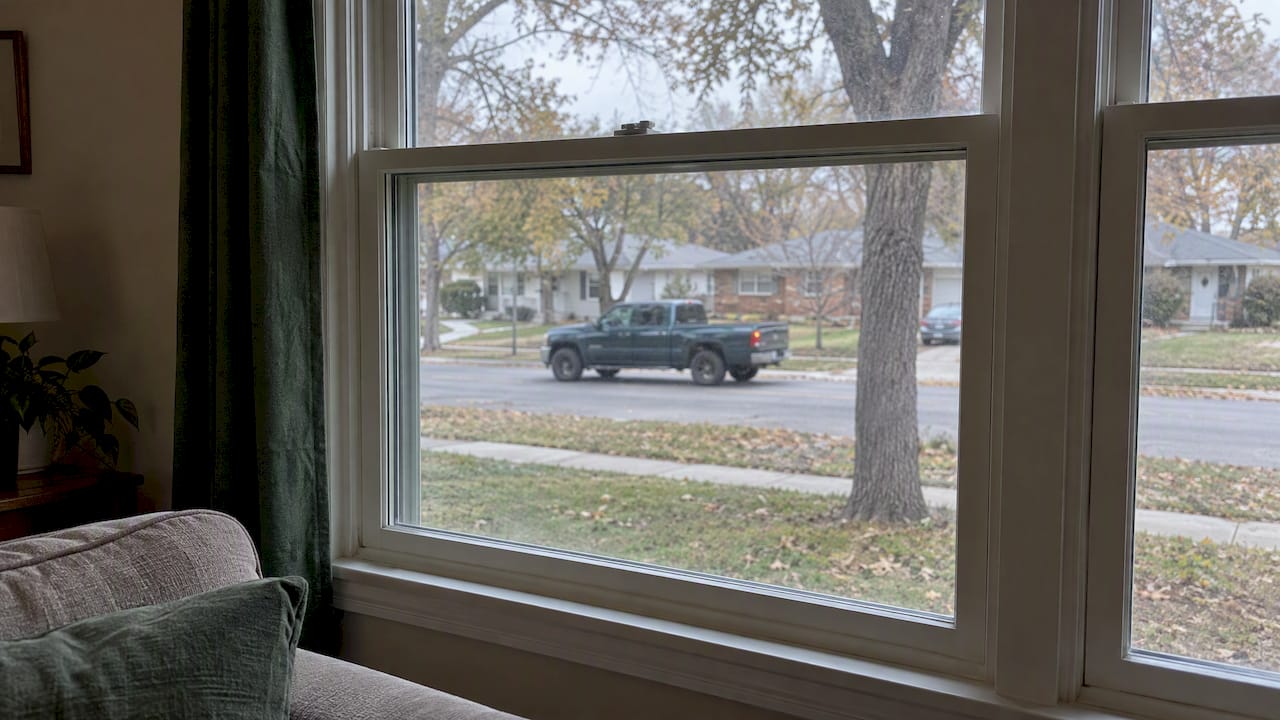
For most homeowners, the biggest noise cut comes from acoustic glazing or an operable acoustic storm window paired with airtight sealing around the frame. An operable acoustic storm window added to a tight prime window can push performance to about STC 40, compared with the 27 to 30 range typical of a basic window with a standard storm. Sealing is cheap and DIY friendly, while glazing upgrades usually call for a contractor. The sections below walk through both paths.
TL;DR:
Seal sash and frame gaps first; even premium glass can lose much of its benefit through air leaks, while caulk and weatherstripping are inexpensive.
For traffic or aircraft noise, compare OITC ratings rather than STC alone, and ask whether testing covered the complete installed assembly or glass only.
Laminated or asymmetric glazing can outperform uniform triple pane windows acoustically, especially against low frequency traffic, while triple panes more reliably improve heat retention.
A 10 dB reduction sounds roughly half as loud, and solutions can differ by up to 20 dB, so product choice and installation affect results.
For sound frames and moderate noise, try secondary glazing; prioritize bedrooms exposed to traffic, but consult an acoustical engineer near airports or rail lines.
Why windows are the weak link in a quiet house
Sound reaches your ears two ways: airborne (traffic, voices, barking dogs traveling through gaps and glass) and structureborne (vibration moving through the frame and wall into the room). Windows handle both poorly compared to a solid wall, because glass is thin, frames flex, and the seals around them degrade over time. Low frequencies from trucks, trains, and jet engines pass through more easily than higher-pitched sounds, which is why traffic noise feels so persistent even with windows "shut."
A home's Noise Level Reduction, or NLR, is simply the decibel difference between outside and inside when everything is closed. Without any added mitigation, a reasonably tight home typically delivers 27 to 30 dB of NLR, meaning a noticeable amount of street noise still gets through.
27 to 30 dB is the typical noise reduction a tight home achieves with no upgrades, according to municipal noise-insulation research. That gap is why sealing and glazing choices matter so much.
Three things determine how much sound gets in:
Glazing: thickness, number of panes, and the air or vacuum space between them.
Frame: material mass and how well it resists flexing and vibration.
Seals: weatherstripping, caulk, and gasket condition around the sash and frame.
Sealing gaps is the cheapest fix and often the first one worth doing, since even a small air gap can erase gains from expensive glass.
Replacement options: glass and frame choices that cut sound
When sealing alone isn't enough, replacement glazing targets the sound path directly. Laminated glass uses a flexible interlayer sandwiched between two panes, which damps vibration and tends to reduce noise more than a single pane of the same thickness. This "constrained-layer damping" effect is one reason laminated glass shows up in products aimed at traffic noise.

Asymmetric glazing, where the two panes in an insulated unit have different thicknesses, often outperforms matched-thickness stacks because it avoids the resonance that happens when identical panes vibrate at the same frequency. Pairing a thick pane with a thinner one spreads out the frequencies each pane resists best.
Triple-pane windows help with heat retention more reliably than with sound. Adding a third pane increases mass, but if the panes and air gaps are uniform, the acoustic gain can be marginal compared with a well-designed asymmetric double-pane or laminated unit.
Vacuum insulating glass, or VIG, removes the air between panes entirely, eliminating the medium that carries sound between them. It can outperform standard insulated glass at low frequencies, though manufacturing varies enough that field testing the finished product is worth asking about.
A few frame and installation factors matter just as much as the glass itself:
Frame mass and rigidity resist vibration better than thin, flexible profiles.
Multi-point sealing around the full perimeter closes gaps a single latch point misses.
Installation quality often decides the real-world result, since a poorly fitted frame can erase most of a lab-rated gain.
Retrofit solutions for existing windows
If replacing windows isn't in the budget yet, several retrofit routes deliver real gains without touching the original glass. Ranked roughly by cost and effort:
Weatherstripping and acoustic caulk: sealing gaps around the sash and frame is the lowest-cost, lowest-disruption fix and should come first regardless of what else you do.
Jamb liners: replacing worn liners restores a tighter seal on older double-hung windows and often solves rattling along with some noise leakage.
Interior acoustic inserts: a secondary pane mounted inside the existing frame, often removable, that adds an air gap and extra mass without replacing the original window.
Operable acoustic storm windows: similar to inserts but designed to open, these can raise a tight prime window to roughly STC 40 performance.
External storm windows or acoustic shutters: useful where interior space is tight or historic sightlines must stay unchanged from inside.
Secondary glazing preserves the original window while adding an air gap that hinders sound transmission, and it frequently delivers benefits close to full replacement at a lower cost. Heavy curtains or layered drapery won't solve a leaky frame, but they soften reflected sound and reduce the perceived harshness of a noisy room.
Pro Tip: Start with sealing on every window before spending on glass. An unsealed gap the width of a pencil can undo most of what a premium pane buys you.
Retrofit is usually enough when the window itself is in decent condition and the noise source is moderate, like local street traffic rather than a nearby highway or rail line.
How to read acoustic ratings without getting misled
Two ratings show up on window spec sheets: STC and OITC. STC, or Sound Transmission Class, is weighted toward mid-range frequencies like speech. OITC, or Outdoor Indoor Transmission Class, covers a wider band from 80 to 4,000 Hz, which includes the low frequencies common in traffic and aircraft noise.
For exterior and traffic noise, OITC is the number to check, not STC. A window can carry an impressive STC rating and still underperform against a truck rumbling by, because STC undervalues low-frequency content that OITC accounts for.
Lab ratings also differ from what you get in your actual house. Laboratory tests use controlled, airtight mounting that real-world installation rarely matches, so field performance tends to run lower than the spec sheet promises.
When comparing products, ask suppliers:
What OITC rating applies, not just STC.
Whether the rating comes from a lab test or field verification.
What assembly was tested (glass, frame, and installation, or glass alone).
What air gap size was used, since wider gaps generally improve secondary glazing performance.
Performance, costs, and timelines to expect
Expectations vary a lot by approach. Sealing and weatherstripping typically produce a small but real gain, often enough to notice in a quiet room but not enough to erase highway noise. Storm windows and interior inserts land in the moderate range, while full acoustic glazing replacement delivers the largest gains.
There can be up to a 20 decibel difference between the weakest and strongest window solutions, and a 10 dB drop is perceived as roughly cutting the loudness in half. That means moving from a basic single-pane window to a well-sealed acoustic unit can feel like a dramatic change, not a marginal one.
Costs generally scale with material and labor combined, since installation quality drives so much of the outcome:
Sealing and weatherstripping: materials are inexpensive; most of the cost is labor or DIY time.
Storm windows or interior inserts: moderate material cost, with installation labor adding meaningfully to the total.
Full window replacement with acoustic glazing: the largest material cost, with installation quality determining whether you get the rated performance at all.
Phasing by room makes sense for most budgets. Bedrooms facing a busy street or a bedroom closest to traffic noise are worth tackling first, since that's where noise most affects sleep, followed by home offices or living rooms used during the day.
Hiring checklist and red flags to watch for
Before signing a contract for window noise work, get these items in writing:
The specific glazing type and OITC rating, not just STC.
Whether the quoted rating is a lab figure or includes field verification.
Full details on sealing method and materials at the frame and jamb.
A written installation warranty separate from the product warranty.
Ask directly whether the OITC rating applies to the installed assembly or just the glass unit tested in isolation. Installation leakage is frequently the real limiter on actual noise reduction, so a rating without an installation plan tells you little.
Watch for vague claims like "soundproof" with no rating attached, contractors who can't explain the difference between STC and OITC, or anyone who treats airtightness as an afterthought. If you're dealing with a severe source like a nearby airport or active rail line, a formal acoustical assessment from an engineer is worth the cost before you commit to a specific product.
Pro Tip: Ask every bidder the same three questions (OITC rating, test conditions, and sealing method) so you can compare quotes on substance instead of price alone.
For a broader look at whether your current windows are worth saving at all, see our guide on signs it's time to replace your windows.
Common window noise tradeoffs we see on Omaha homes
Across window projects, the same pattern shows up again and again: homeowners assume a new window will fix noise on its own, but an old frame with rotted wood or a poor seal undercuts even good glass. We often find that fixing fit and airtightness first, then upgrading glazing, gets better results than jumping straight to the most expensive window on the shelf.
Rot and air leakage around a frame can also show up looking like a window problem when it's actually water intrusion from flashing or siding detail. Worth ruling out before blaming the glass.
— Noah
Get a window noise assessment from Spagnotti Contracting
Our team handles window and door replacement, reconditioning, and sealing work that can reduce noise at the window itself. An estimate includes a look at your current frame condition and seals, along with glass options, so you know whether retrofit or replacement makes more sense for your budget.
Window and door evaluation and replacement options
Frame reconditioning and seal repair where the existing window is sound
Project management throughout the project
Ready to see your options? Request an estimate for windows and doors and we'll walk the property with you.
FAQ
How can I reduce noise through windows?
Seal all gaps around the sash and frame first, since air leaks undo much of what glass alone can achieve. From there, an acoustic storm window, interior insert, or laminated glass replacement provides the larger gains.
How can I stop noise coming through my windows?
Start with weatherstripping and acoustic caulk around the frame, then add a storm window or interior insert if street noise is still noticeable. For persistent low-frequency noise like heavy traffic, laminated or asymmetric glazing tends to work better than simply adding thickness.
How can I soundproof my existing windows?
Adding an operable acoustic storm window to a tight, well-sealed prime window can raise performance to roughly STC 40, compared with 27 to 30 for a basic window and storm combination. Secondary glazing is a common way to get this gain without replacing the original window.
What is the cheapest way to soundproof a window?
Weatherstripping and acoustic caulk around the existing frame cost the least and are simple enough for most homeowners to do themselves. Heavy curtains add a smaller, complementary benefit by softening reflected sound, but they won't fix an actual air gap.
Sources
Designing for quiet: How fenestration impacts building acoustics - Construction Specifier
Tips for insulating your home against airport noise (Richfield MN)
Recommended
Dealing With Something Similar?
Every property is different, but if this sounds like what you’re seeing, we’re happy to take a look and help you figure out what’s actually going on.