Decks
Wobbly Deck Railing? Repair the Connection, Don’t Just Tighten Bolts
By Noah Spagnotti
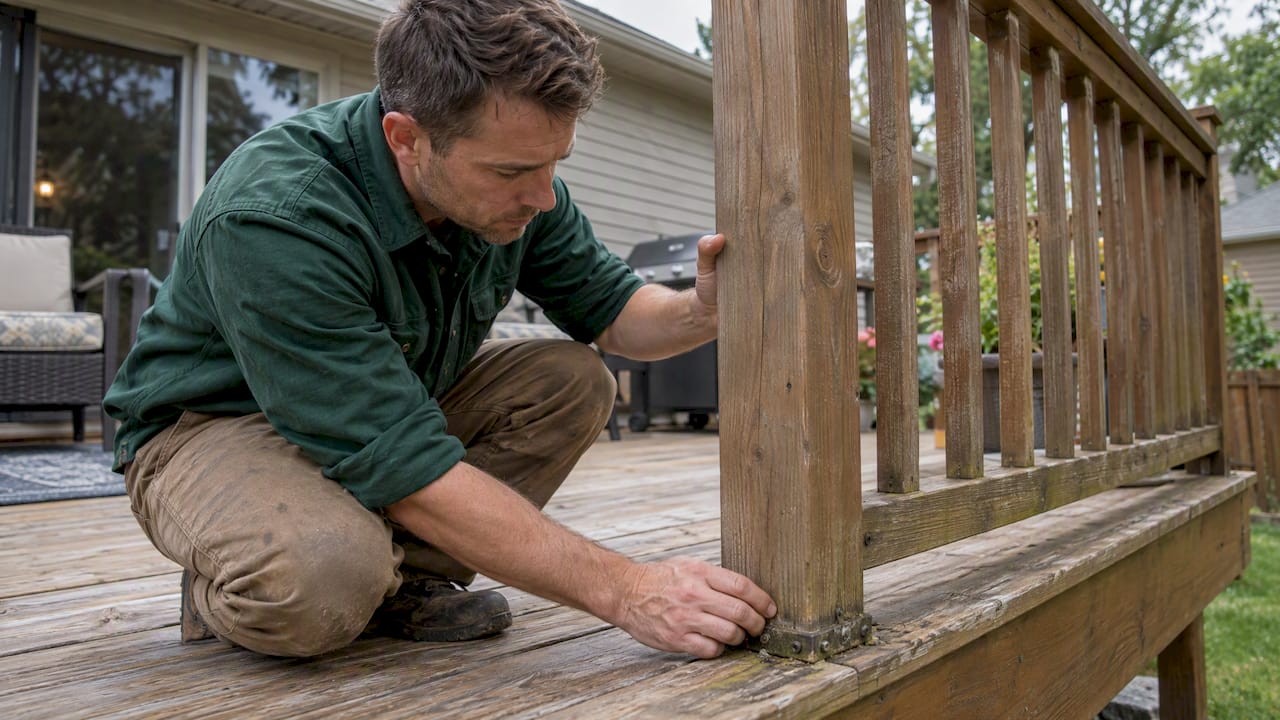
If a deck railing moves under a light push, keep people away and do not rely on a quick tightening. The fix is to locate the failed connection and rebuild it into sound framing, because the goal of any real repair is restoring a load path, not just snugging a bolt. Run the short diagnostic below before you decide whether this is a weekend fix or a job for a contractor.
TL;DR:
Watch the post base, decking, and rail while pressing firmly; movement at each point distinguishes a loose rail fastener from failed framing or rot.
For sound wood, replace corroded fasteners with corrosion-resistant bolts and washers; add blocking and through-bolts when framing is weak or posts lack a direct connection.
Durable repairs often require underside access for blocking, through-bolts, or hold-down connectors; call a contractor for rot, cracked framing, or movement across multiple posts.
After repairs, apply steady pressure while watching the base, then recheck every connector; inspection guidance cites a concentrated load of 200 pounds at guard height.
Keep the area safe while you plan the repair
Treat a loose railing as off limits until you know what is actually failing. Rope off the section, move furniture and planters away from it, and tell kids and guests to use a different stretch of the deck.
Block access with a chair, cone, or simple rope barrier at the wobbly section.
Add temporary bracing, such as a 2x4 brace wedged under the top rail or an adjustable post jack, if you need to use the deck before repairs.
Press firmly on the top rail and watch the base of the post for movement rather than trusting a light touch.
Pro Tip: Do the push test with one hand on the rail and your eyes at post-base level, not at rail height, since that is where the real movement usually shows up first.
How to pinpoint where the railing is actually failing
A wobbly rail can trace back to four different places, and the repair is different for each one. Work through this sequence before buying any hardware.
Apply steady, firm pressure to the top rail and watch whether the post leans, the base lifts, or the whole section of decking flexes.
Probe the post base and the band or rim joist with a screwdriver or awl, checking for soft, punky wood or flaking that signals rot.
Check every fastener for corrosion, stripped threads, missing washers, or plastic post-base brackets that have cracked.
Look underneath the deck, if you can get access, to inspect the blocking and framing behind the post.
Movement only at the very top usually points to a loose rail-to-post fastener.
Movement at the post base with the deck surface staying still often means a failed post-to-joist connection.
Movement that travels into the decking itself suggests the rim joist or blocking is compromised, not just the post.
What's usually behind the wobble
Most loose railings trace back to one of four problems, and each leaves its own clues. Corrosion-eaten or stripped fasteners are the easiest to spot: screws spin freely without biting, or you see rust streaks bleeding down the post.
Rot at the post base or rim joist shows up as discoloration, a soft or spongy feel, or wood that compresses under a screwdriver tip.
Surface-mounted posts bolted only to a plastic base plate or the decking surface tend to rock because they were never tied into the framing below.
Missing or misplaced blocking lets the post twist the joist instead of transferring force into it, which Simpson Strong-Tie's joist connection guidance flags as a common weak point when a post is fastened only to the rim joist.
Joist rotation under the post bay often accompanies both rot and poor blocking, and it rarely shows up until you push on the rail.
Repair options, from simple tightening to a full rebuild
Match the fix to what your diagnosis found. A fastener problem with sound wood underneath calls for a much smaller job than rot or missing blocking.
Minor repairs: Remove old or corroded fasteners and replace them with larger, corrosion-resistant bolts, add washers to spread the load, and retighten evenly rather than cranking one bolt down hard.
Moderate repairs: Add blocking behind the post, convert screw connections to through-bolts with washers on both sides, and consider structural screws or joist-sistering where the joist itself feels weak.
Structural repairs: Install a hold-down or tension connector tied directly into the joist, replace any rotten post or framing member outright, and rebuild the post-to-frame connection from underneath rather than patching it from above.
Long screws driven straight down through the top rail into a post often fail over time because they land in end grain, which splits and loses grip faster than face grain. A retrofit pattern described in JLC's coverage of deck post connections adds joist-depth blocking on each side of the post bay, a vertical block behind the post to move fasteners off the end grain, through-bolts with washers, and a sideways hold-down connector that carries outward force straight into the joists. That is why underside access matters: most durable fixes happen below the decking, not above it.
Choose stainless steel or hot-dip galvanized hardware for anything exposed to moisture.
Use pressure-treated lumber for any replaced blocking, posts, or framing members.
Avoid mixing fastener metals, since dissimilar metals can accelerate corrosion at the joint.
Pro Tip: If you can only reach the post from above, treat that as a sign you need a helper or a contractor, because the strongest repairs almost always require working from beneath the deck.
For a practical, homeowner-facing checklist on inspecting and reinforcing a rail before deciding on materials, our railing options guide walks through long-term upgrade choices once the structural issue is sorted.
Confirming the repair actually holds
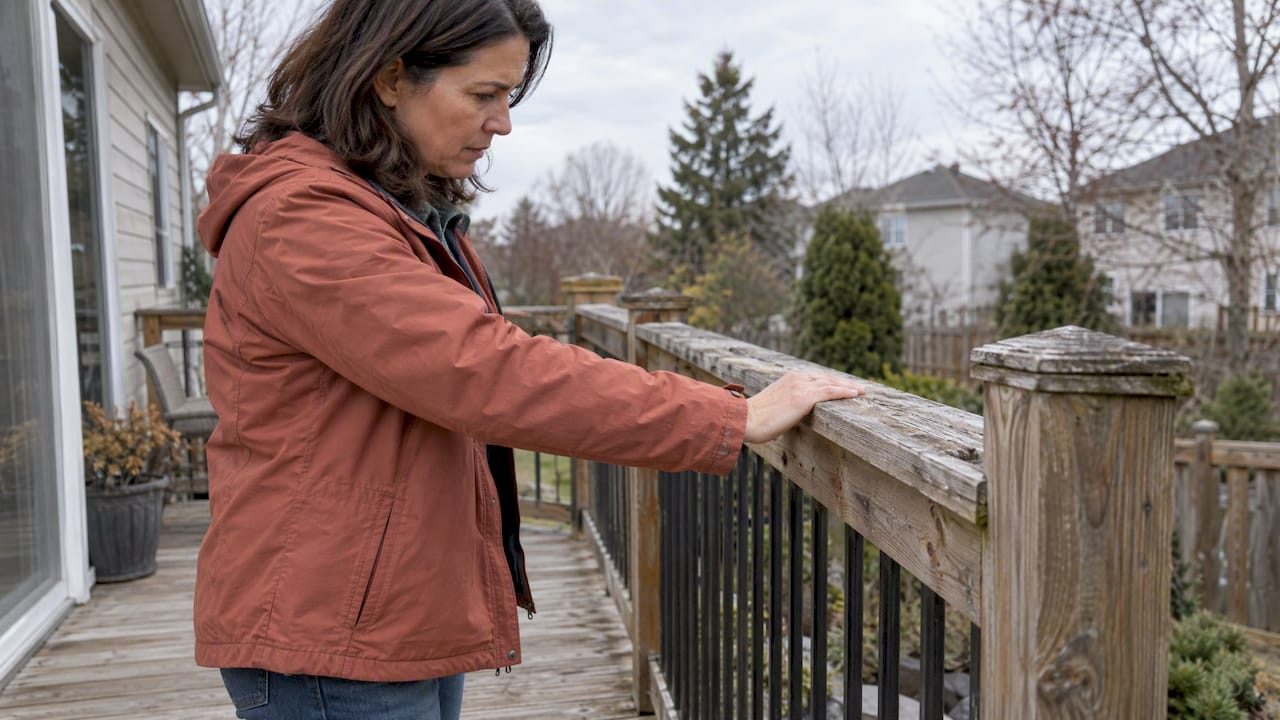
Once the repair is done, test it the same way you diagnosed the problem: steady pressure at the top rail while watching the base for any shift. Inspectors and testing summaries commonly reference a 200-pound concentrated load check at guard height as a practical way to verify a guard can resist real-world force, not just a casual nudge.
Apply firm, steady weight by hand, or ask a second person to lean into the rail while you watch the post base.
Recheck every bolt and connector for movement after the test, not just before it.
Confirm basic geometry too: AWC's DCA-6 deck guide treats guard height and baluster spacing as part of the same structural picture, since decks more than 30 inches above grade require guards with the post attachment treated as a structural connection.
If the rail still gives at all under that test, the repair did not reach the real problem and needs another look.
When it's time to bring in a contractor
Some findings are a clear signal to stop and call a professional instead of continuing to test fasteners yourself. Rot at the rim joist, cracking in framing members, movement across multiple posts, or a repair that already failed once are all reasons to get a trained eye underneath the deck.
A contractor typically opens up the underside, checks blocking and joist condition, and proposes through-bolts or tension hardware tied into sound framing.
Expect a scope that may include replacing a section of rim joist or several posts if rot has spread.
Cost depends heavily on how much framing needs replacing versus how much is a straightforward hardware upgrade, so a clear inspection before any quote matters.
The risk with DIY structural work is usually not the visible fix but what gets missed underneath. The same logic applies here: a rail that looks fixed from above can still be resting on a joist that never got addressed.
What I see most often on deck rail repairs
The most common mistake I run into is a homeowner who tightened every screw they could find and assumed the job was done. Tightening treats the symptom. The wobble almost always comes back within a season or two because the underlying connection into the framing was never rebuilt.
On a deck rail repair, our priority order is diagnosis first, then the least invasive structural fix that actually holds, then a clear estimate before any work starts. That sequence avoids opening up more of the deck than necessary while still fixing the real problem.
— Noah
Get a deck railing repair done right the first time
We offer deck repair and new deck construction services that focus on fixing railings at the framing level rather than just re-tightening for a short-term fix. That means inspecting the post bases, rim joist, and blocking, then proposing through-bolts, hold-down hardware, or framing replacement where it's actually needed.
Estimates are provided with a clear scope and schedule before work begins, helping customers understand the cost and timeline. If your railing moves under a push, request a deck inspection and estimate and we'll tell you exactly what it will take to make it solid again.
FAQ
How do I sturdy up a deck railing?
Start by pinpointing where the movement originates: the rail top, the post base, or the framing underneath. A lasting fix usually means through-bolts, added blocking, or a hold-down connector tied into the joist rather than simply tightening existing screws.
How can I make a railing more sturdy overall?
Replace corroded or undersized fasteners with larger, corrosion-resistant bolts and washers, and add blocking behind posts that were only surface-mounted. For posts attached only to the rim joist, Simpson Strong-Tie's technical guidance recommends tying the connection into the joist framing as well.
My deck boards are coming loose. What can I do to fix them?
Loose deck boards usually mean worn-out or corroded fasteners, or a joist that has shifted underneath them, so check both before replacing any screws. Our cracked deck boards guide covers inspection steps for deciding between a board-level repair and a deeper framing check.
How much does it cost to fix a sagging or wobbly deck?
Cost depends on whether the fix is a hardware upgrade or a framing replacement, since rotten joists or posts cost far more to address than loose fasteners. Our deck repair services start with an inspection and estimate so you know the scope before any work begins.
When should I call a contractor instead of fixing it myself?
Call a professional if you find rot at the post base or rim joist, cracking in framing members, or movement across more than one post. These signs usually mean the repair needs underside access and structural hardware rather than a surface-level fix.
Sources
Recommended
Dealing With Something Similar?
Every property is different, but if this sounds like what you’re seeing, we’re happy to take a look and help you figure out what’s actually going on.