Decks
4 Step Deck Railing Checklist for Homeowners: Contractor Tested Options
By Noah Spagnotti
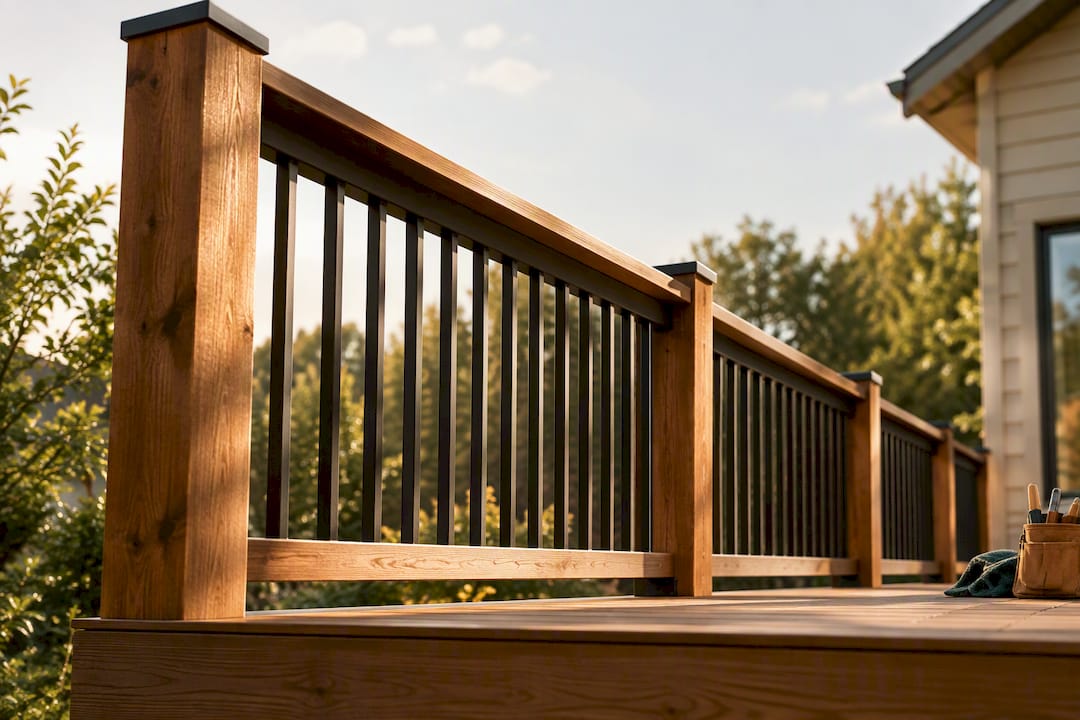
For lowest maintenance, choose aluminum or composite; for the tightest budget, choose treated wood; for unobstructed views, choose cable or glass. Most local codes require a minimum guard height and limit gaps so a 4-inch sphere cannot pass through, which affects your material and infill choice before you buy anything. If your deck is elevated, on a slope, or you are unsure about framing strength, get a contractor's opinion before you order materials.
TL;DR:
Treated wood costs the least initially but requires frequent sealing or staining, while composite and vinyl offer low maintenance with a higher upfront price.
Aluminum and steel provide durability and rust resistance with minimal upkeep, but cable and glass infill systems require precise installation and regular cleaning.
Most local codes demand a guard height of 36 to 42 inches and an infill gap no larger than 4 inches, impacting material and design choices.
Budgeting for maintenance and local safety regulations is more important than initial costs when selecting your railing material.
Contractors verify framing, post stability, and permit requirements before installation, especially for cable and glass systems that need precise measurements.
The main deck railing material families at a glance
Every deck railing on the market falls into one of a few material families, and knowing which one fits your priorities narrows the decision fast. Most homeowners end up choosing based on how much upkeep they want to do versus how much they want to spend upfront.
Wood: the traditional choice and usually the cheapest to install, but it needs regular sealing or staining.
Composite: mimics wood's look with far less maintenance, at a higher purchase price.
Vinyl (PVC): easy to clean and rot-proof, though it offers fewer style and color choices than wood or composite.
Aluminum or steel: strong, rust-resistant with a powder-coat finish, and a common pick for a modern look with low upkeep.
Cable or wire: thin horizontal lines that preserve sightlines, popular on decks with a view.
Glass panels: the most open look of any option, good for small decks that need to feel bigger.
Hog wire: a rustic mesh infill, often paired with wood posts for a farmhouse look.
Nothing says you have to pick just one. Wood or metal posts with cable or glass infill is a common combination that balances structural cost against the open feel you actually want along the top rail. Mixing materials also lets you put a cheaper material where it is less visible and spend more where it shows.
What each railing material is really like to own
Wood remains the most familiar option, but not all wood behaves the same. Cedar and redwood resist rot better than untreated pine, while pressure-treated pine is the cheapest wood option but demands the most consistent maintenance to avoid splintering and graying.
Composite railing is built to mimic wood's look without the yearly sealing schedule, and that lower upkeep is why it tends to win on lifecycle cost even though it costs more to buy. Vinyl performs similarly on the maintenance side, wiping clean easily and resisting rot completely, but it comes in a narrower range of colors and profiles than wood or composite.
Aluminum railings are lightweight, resist rust, and hold a powder-coat finish well, making them a strong choice for homeowners who want durability without the upkeep of wood. Steel offers similar strength with a heavier feel and is less common on residential decks outside custom fabrication work.
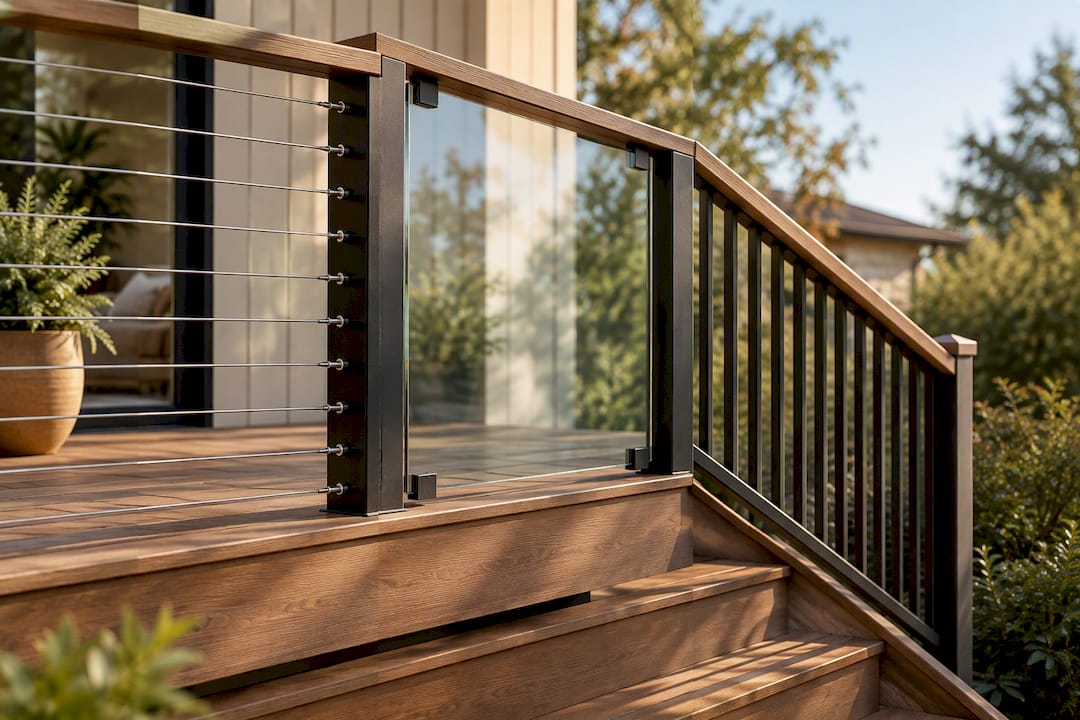
Cable, hog wire, and glass all serve the same goal: keeping the view open. Cable systems need correct tensioning at installation and periodic re-tightening afterward, especially on longer runs. Glass panels require proper clamps and structural framing to hold safely, and stairs complicate all three infill types because the rake angle changes how balusters, cables, or panels have to be sized and fitted.
Lifespan varies widely by material and climate, and manufacturer warranties on composite and vinyl products often cover 20 to 25 years against rot and structural failure, though coverage terms differ by brand. Wood railings, by contrast, rely on maintenance rather than warranty to reach a comparable service life.
Comparing upfront cost, upkeep, and long-term value
Cost and maintenance move in opposite directions across these materials, and that trade-off should drive your decision more than the sticker price alone.
Treated wood costs the least to install but needs sealing or staining every one to two years to hold up.
Composite and vinyl cost more upfront but need only occasional washing, no sealing or staining.
Aluminum and steel sit in the middle to upper range on price and need almost no annual maintenance beyond a rinse.
Cable and glass carry higher installation labor costs because of tensioning and structural framing work, with glass needing regular cleaning to stay clear.
Climate changes the math further. Freeze-thaw cycles stress wood joints and can loosen cable tension, while coastal salt air accelerates corrosion on lower-grade metal hardware, so budget for more frequent hardware checks in either environment. If you are choosing between finishes for a wood railing, our breakdown of paint versus stain for decks covers which option actually holds up longer under real weather. For a full project estimate that accounts for your local conditions, the deck construction and repair page outlines what goes into pricing a new railing system.
Building codes and safety rules you can't skip
Code requirements shape your material and design choices more than aesthetics do, so check them before you fall in love with a style. Most jurisdictions set a minimum guard height around 36 inches for residential decks, though some local codes require 42 inches, so confirm the number that applies to your property.
Most building codes limit baluster and infill gaps so a 4-inch sphere cannot pass through them, a rule aimed at keeping young children from slipping through or getting stuck. That single rule affects cable spacing, glass panel sizing, and baluster counts on every material family.
Stair railings need graspable handrails, and accessibility guidelines under the ADA apply to some public or rental properties, though most single-family homes fall outside that scope. Confirm your local code and pull the required permit before installation, since inspectors check guard height and spacing before signing off. Our contractor pre-install checklist covers what gets verified on site.
A practical checklist for choosing your railing
Work through these steps in order rather than starting with style, since your priorities should narrow the field before aesthetics do.
Set your priority. Decide whether budget, low maintenance, an open view, or a traditional look matters most, because no single material wins on all four.
Match priority to material. Budget points to treated wood, low maintenance points to aluminum or composite, an open view points to cable or glass, and a classic look points to wood or vinyl.
Check your site. Look at stair runs, deck height, and existing framing condition, since older ledgers or out-of-square posts can complicate cable tensioning or glass panel fitting.
Watch for red flags. Soft or spongy decking, visible post rot, or a deck more than a few feet off the ground are signs to call a contractor before ordering materials.
Pro Tip: If you're set on cable or glass railing, get a quote from a professional installer before buying materials. Both systems punish small measurement errors in ways wood balusters do not.
What a local contractor checks before installing a railing
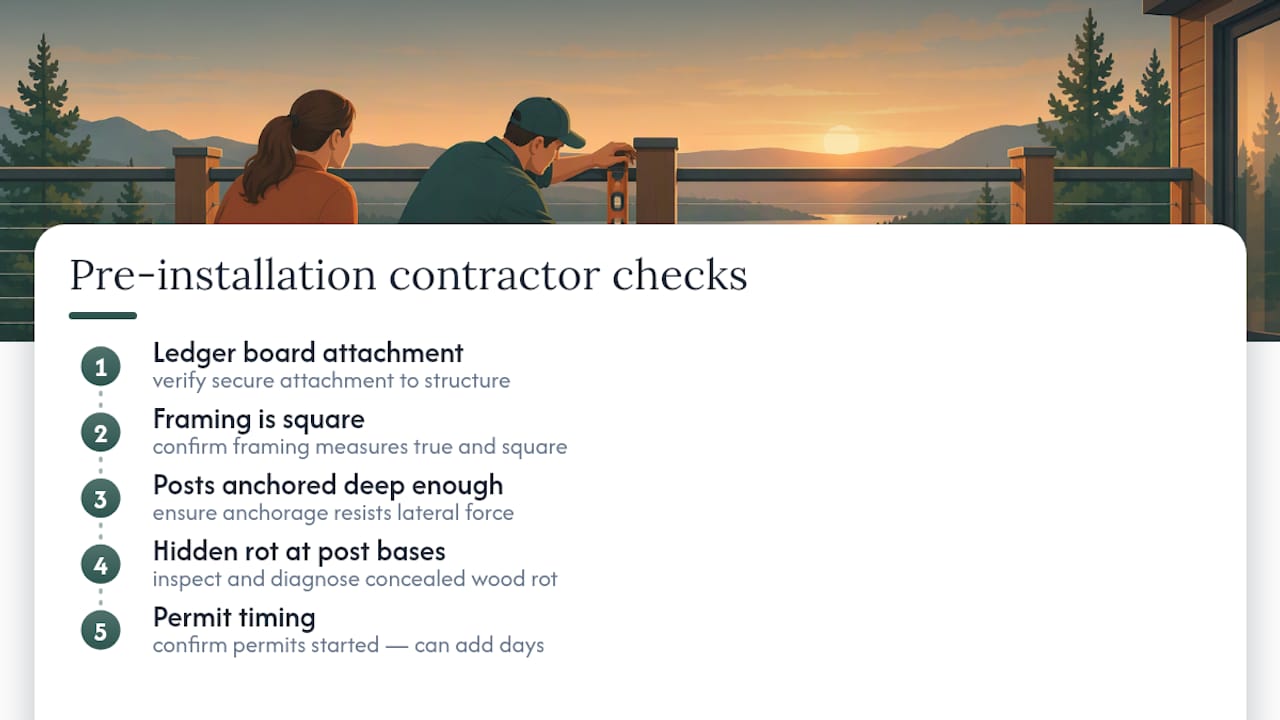
Before touching a railing, contractors verify the ledger board attachment, confirm the framing is square, and check that posts are anchored deep enough to resist lateral force. Hidden rot at post bases and framing that is slightly out of square are common surprises, along with permit timing that can add days to a schedule if it is not started early. Our rotted post repair notes walk through how that kind of hidden damage gets diagnosed. Professional contractors handle deck and railing work from initial estimate through final walkthrough, so homeowners know what each phase involves before work starts.
Why the "just pick a style" advice misses the point
Most deck railing content treats material choice as a style decision first and a structural one second. That ordering is backwards. The material you want visually might not be the one your framing, budget, or local code will actually support without extra work, and finding that out after you've bought glass panels is an expensive lesson.
The bigger blind spot is maintenance math. Homeowners consistently underestimate how much a $15 gallon of wood sealant costs in labor and weekends over a decade, and overestimate how much more composite or aluminum costs by comparison once that gap closes. If you take one thing from this guide, prioritize your willingness to maintain the railing over its initial price tag. A cheaper railing you neglect costs more in the long run than a pricier one you never have to touch.
— Noah
How Spagnotti Contracting handles deck railing projects
Choosing the right railing is only half the job. Getting it framed, anchored, and code-compliant is where most DIY installs run into trouble.
New deck construction for homeowners planning a full build from the ground up.
Deck repair for existing structures with rot, loose posts, or failing railings.
Railing installation matched to your material, style, and local code requirements.
A free estimate covers site conditions, material recommendations, and a clear timeline before any work begins, with project management continuing through the final walkthrough. Visit the deck services page to request a quote.
Sources
FAQ
What is the cheapest way to do deck railing?
Pressure-treated wood is the lowest upfront cost material for deck railing, though it needs regular sealing or staining to last. Basic baluster designs also cost less than cable, glass, or custom metalwork.
What is the 4 ball rule for railings?
It is more commonly called the 4-inch sphere rule, which requires that gaps in a railing be small enough that a 4-inch sphere cannot pass through. This rule exists to keep young children from slipping through or getting stuck between balusters, cables, or panels.
What is the least expensive deck railing?
Basic pressure-treated pine with standard wood balusters is typically the least expensive material to buy and install, though it carries the highest long-term maintenance burden. Vinyl and aluminum cost more upfront but need far less upkeep over time.
What is the best material for deck railing?
There is no single best material since the right choice depends on your budget, maintenance tolerance, and whether you want an open view or a traditional look. Aluminum and composite tend to offer the best lifecycle value for homeowners who want durability with minimal upkeep.
Recommended
Dealing With Something Similar?
Every property is different, but if this sounds like what you’re seeing, we’re happy to take a look and help you figure out what’s actually going on.