Cost & Estimates
Omaha Home Renovation Budget Breakdown: Labor, Materials, and Contingency
By Noah Spagnotti
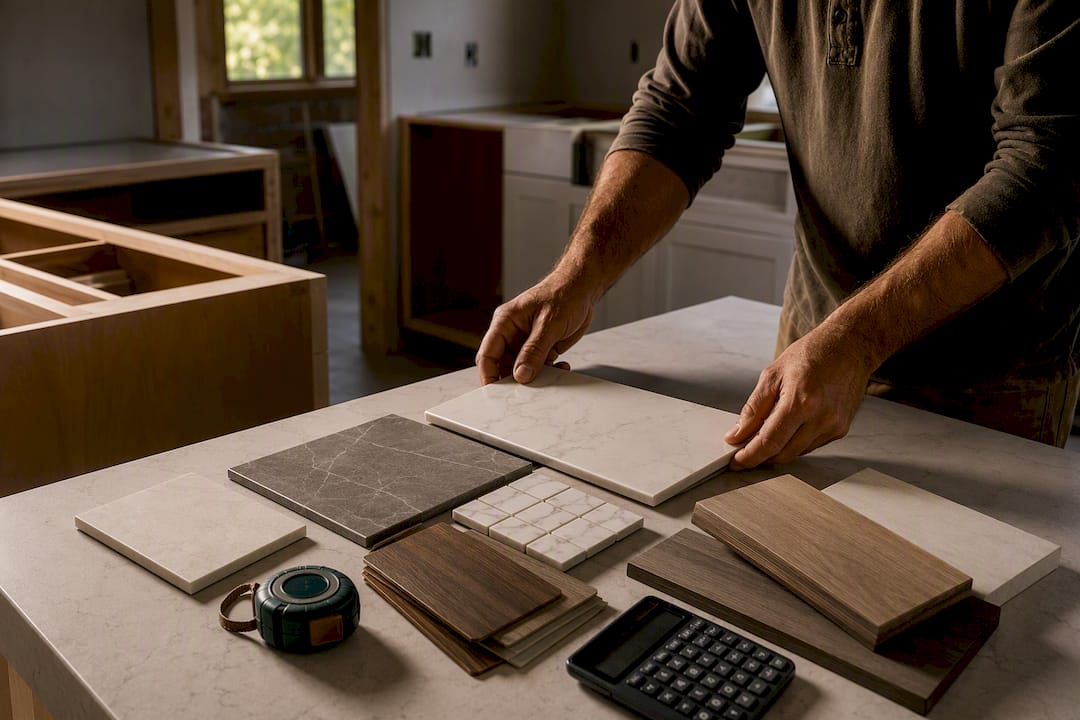
Once you have a project total, get three written, line-item bids before you commit a dollar.
TL;DR:
Obtaining three detailed, written bids with itemized costs helps identify unlisted allowances and prevents overpayment on hidden categories.
Contingency funds should be 10 to 20 percent of your budget, and more for older homes or full gut renovations to cover unforeseen issues.
Major budget items like custom cabinetry, structural changes, or mechanical upgrades can take a large share of the total project cost.
Interior renovation costs vary widely by scope and finishes; at Spagnotti Contracting, bathroom projects run from $8,000 for a refresh to $55,000 for a primary suite.
Exterior projects such as roofing, siding, and decks generally offer higher resale value and should be prioritized if resale is a goal.
Table of Contents
Home Renovation Budget Breakdown: Setting Up Your Spreadsheet
Room-By-Room Renovation Cost Estimate Ranges
Where the Money Actually Goes: Labor, Materials, and Big-Ticket Items
Contingency, Permits, and the Costs Nobody Budgets For
Financing a Renovation: Cash, HELOC, and Other Options
Comparing Contractor Bids Without Getting Burned
Phasing Your Renovation to Control Cash Flow
The Pre-Start Checklist Contractors Actually Use
What Homeowners Get Wrong About Renovation Budgets
Get a Written Estimate Built Around Your Real Numbers
Where to Verify These Numbers Yourself
Sources
FAQ
Home Renovation Budget Breakdown: Setting Up Your Spreadsheet
Every renovation budget, whether it's a $15,000 bathroom refresh or a $150,000 whole-house overhaul, breaks into the same handful of categories. What changes is how much weight each one carries.
Here are the categories every mid-size remodel budget should include:
Labor: often the largest single category, especially on structural or multi-trade work
Materials: everything from lumber to fixtures
Permits and inspections: usually a small share, more for structural work
Design or engineering: if you're using an architect or structural engineer
Furnishings and finish upgrades: depending on how much you're customizing
Contingency: 10 to 20%, held back and untouched until something goes wrong
Project management or overhead: if you're hiring a general contractor to run the job
Those ranges shift depending on what you're actually doing. A cosmetic refresh (new paint, fixtures, flooring) skews materials-heavy because there's less skilled labor involved. A structural project (moving walls, adding plumbing lines, reframing) flips that ratio toward labor, since you're paying for expertise and time more than product.
Here's the math in practice. Say you've budgeted $40,000 for a kitchen remodel. Add a 15% contingency on top of that $40,000, and your real working number is $46,000. That's the figure you should be comparing against your savings, your equity, or your loan approval, not the $40,000 sticker price you started with.
Room-By-Room Renovation Cost Estimate Ranges
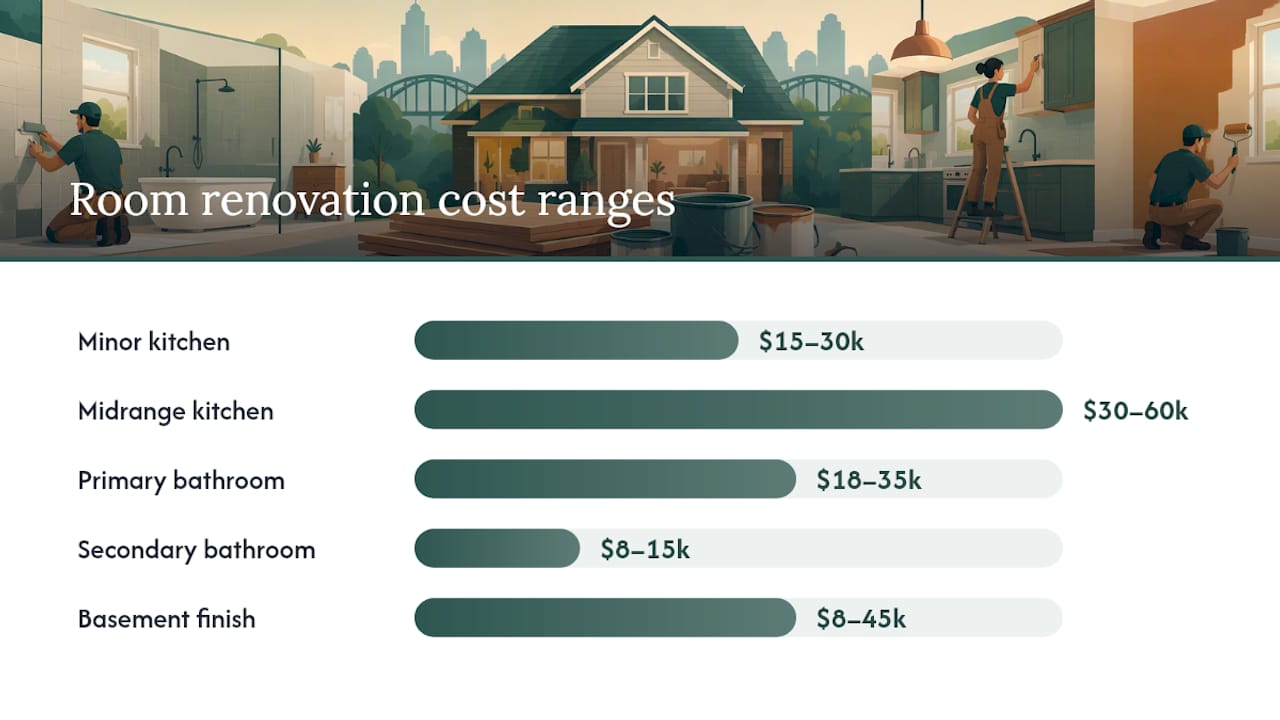
Percentages only get you so far. At some point you need dollar figures tied to actual rooms, and those figures vary more than most homeowners expect.
Kitchen costs swing the most, depending on cabinetry, countertops, and appliances, so get an itemized bid before you settle on a number. For bathrooms, Spagnotti Contracting's published pricing runs $8,000 to $15,000 for a refresh, $18,000 to $35,000 for a full remodel, and $30,000 to $55,000 for a primary suite or walk-in shower remodel. Basement finishing runs $8,000 to $18,000 for a refresh and $25,000 to $45,000 for a standard finish, with a bathroom or wet bar pushing it past $45,000.
Exterior work has its own logic:
Roof replacement: typically priced per square foot, with total cost depending heavily on material and pitch
Siding: often $6 to $12 per square foot installed
Deck construction: usually $35 to $70 per square foot depending on materials and design complexity
Bedrooms and living spaces: budget per square foot for flooring, paint, and trim, with cosmetic updates costing far less than layout changes
Here's where prioritization matters. Zonda's 2025 Cost vs. Value Report consistently shows exterior projects like garage door replacement and siding recoup more of their cost at resale than most interior remodels do. If you're renovating with an eye toward resale rather than pure enjoyment, that data should influence what you tackle first.
Home age changes these numbers too. A house built before 1975 often carries hidden costs that a 2010 build simply doesn't, and regional labor rates in a market like Omaha will differ from coastal metros where union labor and permitting fees run higher.
Where the Money Actually Goes: Labor, Materials, and Big-Ticket Items
The labor-to-material ratio bends toward labor on projects heavy in skilled trade work, like plumbing rework, electrical upgrades, and structural framing, and toward materials on projects where the product itself is expensive, think stone countertops or custom cabinetry.
A handful of line items eat disproportionate chunks of most budgets:
Custom cabinetry and countertops, often one of the biggest single lines in a kitchen budget
Structural changes like removing load-bearing walls, which require engineering review and often permit revisions
Major mechanical, electrical, and plumbing (MEP) work, especially in homes with outdated systems
Custom tile or stone work, priced per square foot but easy to underestimate
Contracts often list these as "allowances," placeholder dollar amounts for items you haven't picked yet. That's normal. What's not normal is a contractor giving you an unrealistically low allowance to make the total bid look better, then hitting you with a change order once you pick real tile.
Pro Tip: Ask your contractor to show you the allowance line items separately from the fixed-price scope. If an allowance seems suspiciously low compared to what you've seen at a showroom, push back before you sign, not after demolition starts.

Contingency, Permits, and the Costs Nobody Budgets For
A 10 to 20% contingency isn't optional padding. It's the buffer between a renovation that stays on budget and one that spirals the moment a contractor opens a wall. For older homes, anything built before the 1970s, or full gut jobs, plan on the high end or more, since demolition on older structures frequently uncovers lead paint, asbestos, outdated wiring, or rotted subfloor that no inspection could catch beforehand.
Permits are the other line item people forget to plan for. Fees depend on the project and your municipality, so check your city's fee schedule (in Omaha, through the city's permit portal). Some projects require multiple permits, one for electrical, one for plumbing, one for the structural work itself.
Beyond permits, watch for these common surprises:
Temporary housing or storage costs if a bathroom or kitchen is unusable for weeks
Structural repairs discovered only after walls or floors are opened
Code-required upgrades that weren't part of the original scope (updated wiring, egress windows)
Disposal and dumpster fees, which add up fast on gut renovations
Financing a Renovation: Cash, HELOC, and Other Options
Cash is the cheapest way to fund a renovation because there's no interest, no closing costs, and no risk to your home if the project runs over. If you have the savings without draining your emergency fund, it's usually the right call for smaller projects.
For larger renovations, a home equity line of credit (HELOC) or home equity loan tends to offer the lowest financing rates because your home secures the debt. A HELOC gives you a revolving credit line you draw from as costs come in, useful for phased projects, while a home equity loan gives you a lump sum with a fixed rate, better for projects with a known total upfront. Interest on either may be tax-deductible when funds go toward home improvements, though you should confirm your specific situation with a tax professional.
Personal loans work when you don't have enough equity built up, but expect higher interest rates since they're unsecured. Contractor-offered financing can be convenient, but read the terms closely. Some carry deferred-interest structures that penalize you heavily if the balance isn't paid off within the promotional window. Treat any financing offer that pressures you to sign same-day as a warning sign, not a deal.
Comparing Contractor Bids Without Getting Burned
Getting multiple bids isn't just good practice, it's the single most effective control you have over your budget. The FTC's contractor guidance says not to automatically choose the lowest bidder, and to ask for an explanation if there's a big difference among estimates.
Here's a practical sequence for vetting bids:
Request three written estimates with itemized labor, materials, and allowance breakdowns, not a single lump-sum number.
Verify license and insurance directly, don't take a contractor's word for it.
Confirm who pulls permits. The FTC lists contractors who ask you to get the required building permits yourself as a sign of a possible scam.
Compare scopes side by side, not just bottom-line totals. A $35,000 bid missing electrical upgrades isn't actually cheaper than a $40,000 bid that includes them.
Ask about the payment schedule, timeline, and what triggers a change order versus what's covered in the original price.
Check for a broom clause and final walkthrough sign-off before releasing the last payment.
A written contractor estimate should spell out every one of these details before you sign anything, not verbally promise them.
Phasing Your Renovation to Control Cash Flow
Sequencing matters more than most homeowners realize. Kitchen remodels typically run four to eight weeks, bathroom renovations two to four weeks, roof replacements one to three days, and deck construction one to two weeks, though permit delays and material backorders stretch all of these regularly.
Breaking a large renovation into phases spreads your cash outlay and reduces disruption:
Tackle exterior work first (roof, siding, windows) since weather dictates the schedule and it protects the home before interior work begins
Group trades that share the same walls or systems, plumbing and electrical rough-in should happen together, not months apart
Avoid scheduling major work during peak season in your region, contractors often charge a premium when demand is highest
Ask your contractor what triggers a payment milestone and whether holdbacks apply if work stalls
Rushed timelines cost money. A compressed schedule often means paying overtime rates or bringing in extra crews, both of which eat into your contingency before you've hit a single unexpected problem.
The Pre-Start Checklist Contractors Actually Use
Before a reputable contractor breaks ground, the estimate should already account for measurements, permit responsibility, realistic allowances, a contingency line, a clear payment schedule, a broom clause, and warranty terms in writing.
A solid pre-start checklist looks like this:
Confirmed measurements and scope, not a rough walkthrough estimate
A written permit plan specifying who applies and who pays
Allowance figures that match real showroom pricing, not placeholder lowballs
A contingency built into the contract, not left to a verbal promise
A payment schedule tied to milestones, never a large upfront lump sum
A broom clause and final walkthrough before the last payment releases
Written warranty terms on both labor and materials
A solid contracting estimate should be built around this exact structure, with licensed and insured crews and a project plan that spells out allowances and payment milestones before work starts, so homeowners aren't guessing what's included.
Pro Tip: If an estimate doesn't separate allowances from fixed costs, ask for a revised version. That single change order (upgrading a $2,000 tile allowance to $5,000 stone) is exactly the kind of surprise a good checklist catches before it hits your final invoice.
What Homeowners Get Wrong About Renovation Budgets
Most budgeting advice treats contingency like an afterthought, a rounding error tacked onto the end of a spreadsheet. That's backwards. The contingency line is the most important number in the whole plan, because it's the only one that accounts for what you can't see yet: the rotted joist behind the drywall, the knob-and-tube wiring nobody mentioned, the permit office that takes six weeks instead of two.
Where conventional advice really falls short is treating every room the same way. A cosmetic bedroom refresh and a full basement finish don't carry the same risk profile, so they shouldn't carry the same contingency. Scale the percentage to the unknowns, not to a flat rule of thumb.
If you take one thing from this, prioritize getting three real, itemized bids before you finalize any number in your spreadsheet. The gap between the lowest and highest bid usually isn't about markup, it's about what's quietly excluded. Catch that before you sign, not after the walls are already open.
— Noah
Get a Written Estimate Built Around Your Real Numbers
Spreadsheets and percentage ranges get you close, but they can't account for your specific house, your local permit office, or what's actually behind your walls. Spagnotti Contracting provides detailed, line-item estimates for Omaha-area homeowners, covering everything from roofing and siding to full bathroom remodels, with a project plan that lays out labor, materials, allowances, and payment milestones before any work begins.

Estimates should come from licensed, insured crews who assess the property in person rather than relying on phone quotes based on square footage alone, ensuring the number reflects the home's actual condition rather than a generic average pulled from a national cost guide. If you're ready to turn your budget spreadsheet into a real project plan, request a written estimate and compare it line by line against whatever else you've collected.
Where to Verify These Numbers Yourself
For contractor vetting standards, see the FTC's guidance. For ROI data, review Zonda's Cost vs. Value report, and check your city or county website for local permit fees.
Sources
FAQ
What percentage of home value should a renovation cost?
There's no single rule, but keep total spending in line with what homes in your neighborhood sell for. Going too far risks over-improving the property relative to what the neighborhood supports at resale.
How much contingency should I add to a renovation budget?
Plan on 10 to 20% of the project budget, and more for older homes or full gut renovations. Hold that money separately and treat it as untouchable until an actual problem surfaces.
Does Spagnotti Contracting provide detailed cost breakdowns?
Yes. Spagnotti Contracting builds estimates with itemized labor, materials, and allowance figures rather than a single lump-sum quote, so homeowners can see exactly where each dollar goes. Specific project pricing is available through a written estimate request.
What's the biggest hidden cost in most renovation budgets?
Permit fees and structural surprises tend to catch homeowners off guard most often, and permit costs depend on project scope and your municipality. Temporary housing during a kitchen or bathroom gut job is another cost people frequently forget to plan for.
Should I get more than one contractor bid?
Yes, always get at least three written, itemized bids before choosing a contractor. The FTC advises against automatically choosing the lowest bidder, so compare scope, not just the bottom line.
Recommended
Dealing With Something Similar?
Every property is different, but if this sounds like what you’re seeing, we’re happy to take a look and help you figure out what’s actually going on.