Decks
Paint vs Stain Deck: Which One Actually Lasts Longer?
By Noah Spagnotti

Choose a penetrating stain for most horizontal wood decks. Paint belongs on trim, railings, and the rare deck where you’re hiding old damage or matching a painted house exactly. Stain soaks into the wood grain and fades gracefully over time; paint sits on top as a film and eventually cracks, peels, and traps moisture underneath once foot traffic and sun exposure break the surface down.
Pick stain if: your deck sees regular foot traffic, you want the wood grain visible, or you’d rather refresh the finish every few years than strip a failed coating.
Pick paint if: the wood is cosmetically damaged, mismatched, or you need to match a specific painted color scheme elsewhere on the house.
Industry best practice, per InspectApedia, pairs a water-repellent preservative (WRP) undercoat with a semi-transparent stain for a finish that typically holds up 2 to 3 years before recoating.
Key Takeaways
Penetrating stain outperforms paint on most horizontal wood decks because it fades instead of peeling and lets trapped moisture escape rather than rot the boards underneath.
Point | Details |
|---|---|
Default to stain | Choose a penetrating stain for typical horizontal decks; reserve paint for cosmetic fixes or exact color matching. |
Match opacity to maintenance tolerance | Clear stains need yearly recoats, semi-transparent lasts 2 to 3 years, solid stretches to 3 to 5 years. |
Prep prevents failure | Clean, dry, sand at 60 to 80 grit, and use a WRP undercoat with mildewcide before finishing. |
Know the point of no return | Switching from paint back to stain later usually requires full mechanical stripping. |
Get a pro for structural issues | Spagnotti Contracting handles deck repair, prep, and finishing in one estimate for Omaha homeowners. |
Table of Contents
Paint vs Stain Deck Comparison: Lifespan, Cost, and Maintenance
How Do Paint and Stain Protect Wood Differently?
What Are the Real Pros and Cons of Each Finish?
How Much Does It Cost to Paint or Stain a Deck?
Getting the Prep and Application Right
What About Composite Decking or Older, Damaged Wood?
When Should You Hire a Professional Instead of DIYing?
What I’d Tell a Neighbor Asking About This
How Spagnotti Contracting Handles Deck Refinishing and Repair
Sources
Paint vs Stain Deck Comparison: Lifespan, Cost, and Maintenance
Here’s how the two options stack up across the factors that actually affect your wallet and your weekends.
Factor | Stain (clear/semi-transparent/solid) | Paint |
|---|---|---|
Recoat interval | 1–5 years depending on opacity | 5–10 years in ideal conditions, but often fails sooner on decks |
Appearance | Grain visible (clear/semi-transparent) to hidden (solid) | Full coverage, grain hidden |
Maintenance complexity | Fade over time, easy to refresh | Peels and chips, requires scraping/sanding to fix |
Prep and application | Moderate, forgiving of touch-ups | Labor-intensive, unforgiving of missed spots |
UV/moisture resistance | Good, wood still breathes | Strong until film cracks, then traps moisture |
Composite suitability | Not typically needed on capped composite | Not recommended on most composite decking |
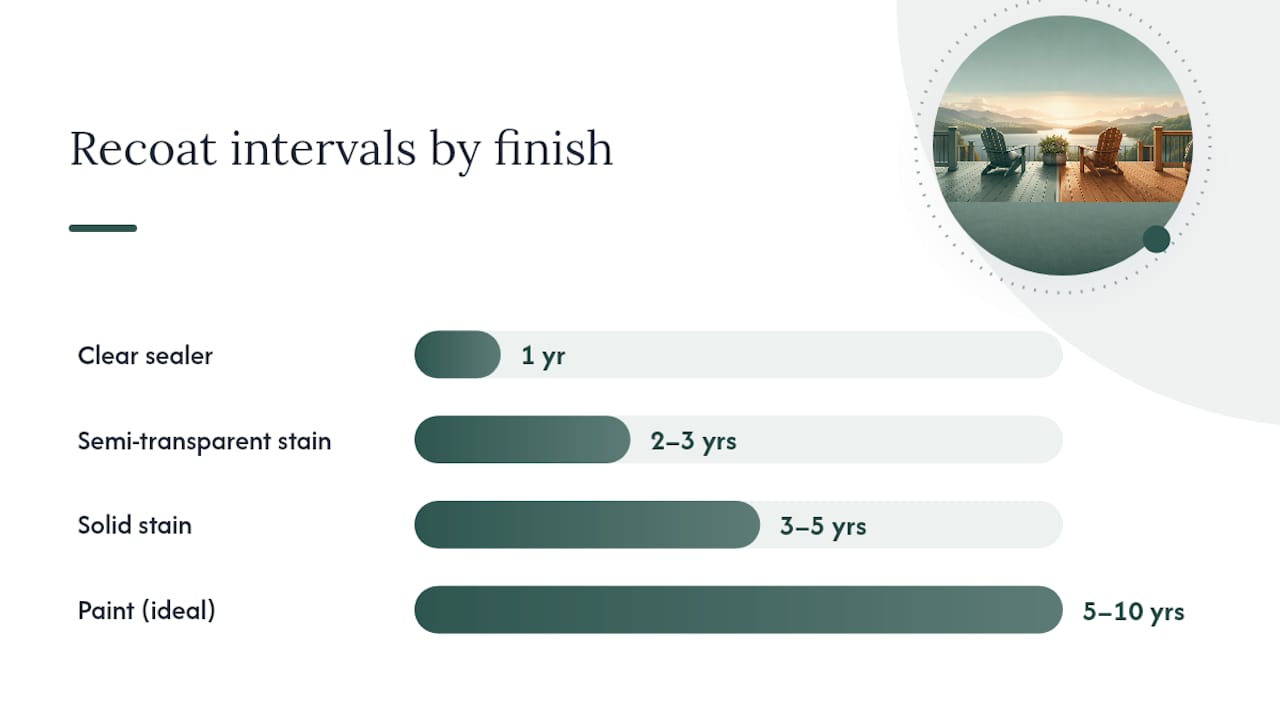
Clear sealers need yearly attention. Semi-transparent stains run 2 to 3 years between coats, and solid stains stretch to 3 to 5 years but start behaving more like paint, building a film that can eventually peel. That’s the tradeoff in a nutshell: more opacity buys more time between recoats, but it also inches you closer to paint’s failure mode.
How Do Paint and Stain Protect Wood Differently?
Paint is a film-forming finish. It creates a solid layer on top of the wood, similar to what you’d use on a wall or a door. That works fine on vertical surfaces, but on a horizontal deck, standing water and constant footfall stress that film until it cracks, peels, or chips, and once it fails, moisture gets trapped underneath and speeds up rot instead of escaping.
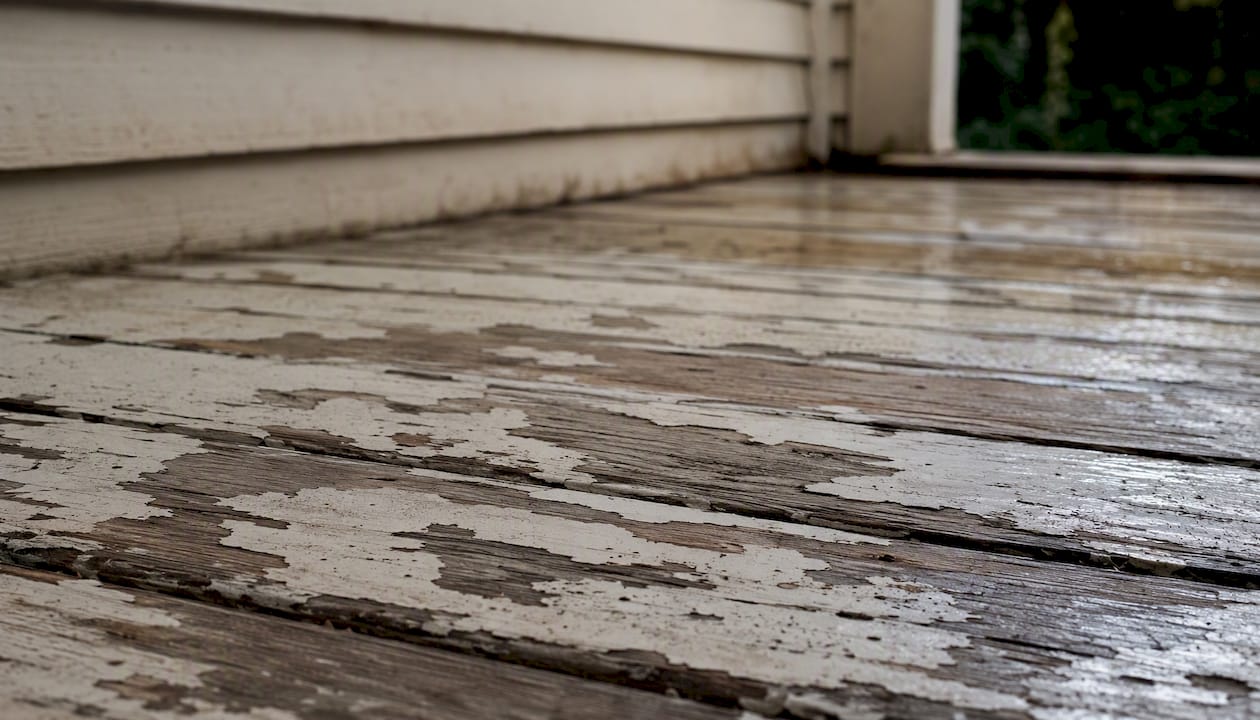
Stain works the opposite way. It penetrates the wood fibers rather than sitting on top, so instead of peeling, it simply fades. The wood keeps breathing, which matters more than people realize when it comes to preventing trapped moisture underneath the finish.
Within stains, you’ve got three main categories:
Clear stains highlight the grain fully but offer the least UV protection and need annual attention.
Semi-transparent stains show some grain and color while adding moderate protection, landing in the sweet spot most homeowners land on.
Semi-solid and solid stains hide more grain, last longer, and start to resemble paint in both look and, eventually, failure behavior.
You’ll also choose between water-based and oil-based formulas. Water-based stains dry faster, clean up easier, and suit most DIYers; oil-based products penetrate deeper and often look richer, but they take longer to cure and punish sloppy technique. Brands like Sherwin-Williams SuperDeck, Behr, and Thompson’s WaterSeal all offer both formulations, so read the label rather than assuming based on brand alone.
What Are the Real Pros and Cons of Each Finish?
Stain wins on long-term maintenance labor. Because it fades instead of peeling, refreshing it usually means a light cleaning and a new coat, not scraping and sanding down to bare wood. It also lets the wood breathe, which matters more on horizontal surfaces that pool water than most homeowners expect.
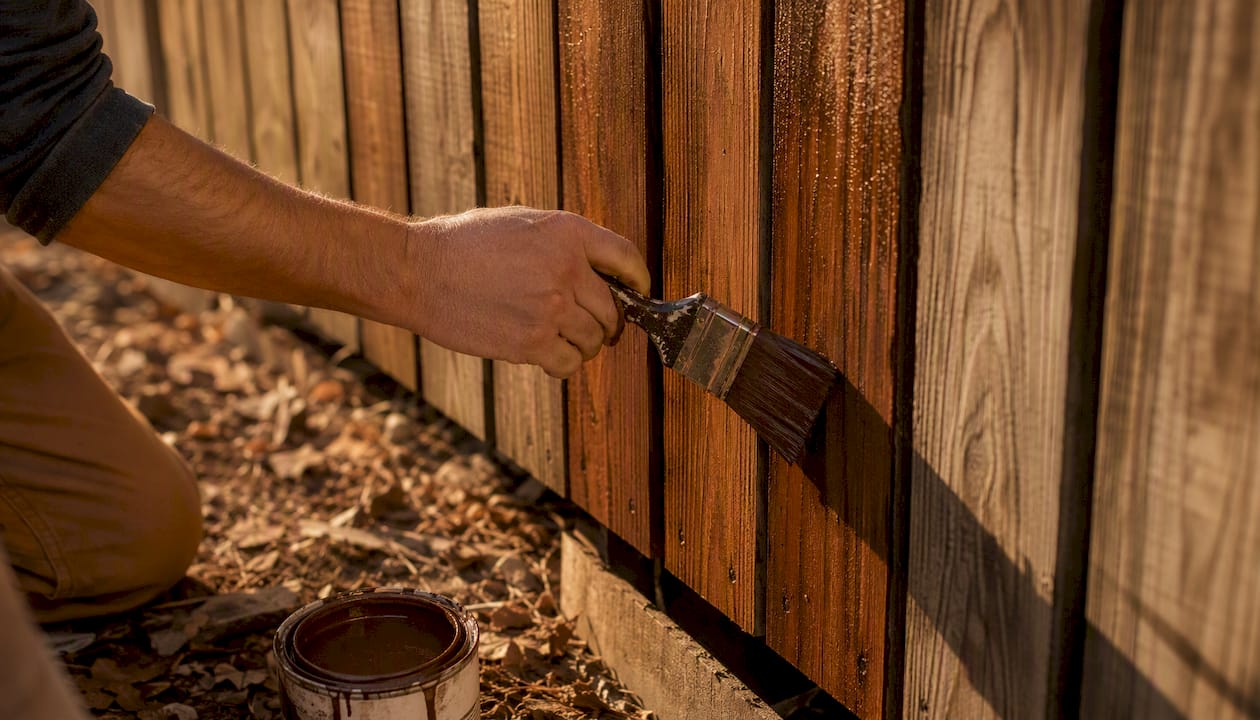
The tradeoff: lighter stains need more frequent attention, and your color options are more limited than what a paint chip wall offers.
Paint’s advantage is coverage and color variety. Products like Valspar’s One-Coat solid stain or TotalBoat TotalTread (built for decks and boats, so it’s genuinely rated for foot traffic and moisture) can look sharp and last 5 to 10 years under ideal conditions. But “ideal conditions” is doing a lot of work in that sentence. Once paint starts peeling on a deck, you’re looking at full mechanical stripping, not a quick recoat, and that job is neither cheap nor fun.
Pro Tip: If you’re set on solid coverage, look for a product specifically labeled for deck or floor use rather than standard exterior house paint. Manufacturers and test labs point out that solid stains are formulated to flex with horizontal wood movement in ways ordinary paint isn’t.
How Much Does It Cost to Paint or Stain a Deck?
Material costs run lower for stain, typically $25 to $50 per gallon versus $30 to $60 for quality exterior deck paint, plus primer if the paint manufacturer requires it. A gallon usually covers 200 to 300 square feet per coat.
For a standard 20x20 deck (400 square feet), Angi reports professional staining jobs commonly fall in the mid-hundreds to low-thousands, with the range driven mostly by how much prep, repair, and stripping the deck needs before finish goes on.
DIY timeline: one day for cleaning and drying, one to two days for application across multiple coats.
Pro timeline: often two to four days total, including prep, repairs, and cure time between coats.
Paint jobs generally run longer and cost more if the deck previously had a failed finish that needs stripping first.
Getting the Prep and Application Right
Most finish failures trace back to skipped prep, not a bad product choice.
Clean and dry the deck. Power wash carefully; too much pressure raises the wood grain and creates a rougher surface than intended.
Sand rough or raised areas with 60 to 80 grit, then test absorption by dripping water on the wood. If it beads instead of soaking in, wait longer before finishing.
Apply a WRP undercoat with mildewcide if you’re staining, especially on older wood or shaded areas prone to mildew.
Apply your chosen finish, watching for puddling in low spots and following the coat count on the label. Water-based stains typically need a synthetic bristle brush; natural bristle works better with oil-based products.
Let each coat cure fully before foot traffic returns, usually 24 to 48 hours depending on humidity.
Pro Tip: InspectApedia’s research points to a WRP with mildewcide as a base coat, followed by a quality semi-transparent stain, as one of the more reliable combinations for moisture defense without sacrificing the wood’s ability to breathe.
What About Composite Decking or Older, Damaged Wood?
Capped composite decking generally shouldn’t be coated at all. The cap is designed to resist staining and won’t absorb a finish properly. Uncapped composite is a different story and sometimes benefits from a compatible sealer, but check your manufacturer’s guidance first.
New pressure-treated lumber needs time to dry out, often several weeks to a few months, before it will accept stain properly. Cedar and redwood, with their natural oils, can also resist absorption if finished too soon.
For a deck with significant surface damage, paint sometimes makes sense purely to hide cosmetic flaws. Just know that once painted, switching back to a penetrating stain later usually means aggressive mechanical stripping, not a simple recoat.
When Should You Hire a Professional Instead of DIYing?
Some jobs cross the line from weekend project to contractor territory fast.
Extensive peeling or flaking across large sections of decking
Soft, rotted, or structurally questionable boards that need repair before any finish goes on
Complex railings, stairs, or built-in benches that multiply prep time
A deck that needs structural inspection before finishing makes sense at all
A contractor typically handles full stripping, board replacement, and multi-coat professional-grade finishes with a workmanship guarantee. Before hiring, ask:
What’s included in the estimate: prep, repairs, and cleanup, or just the finish coat?
What product line will they use, and what’s the expected recoat window?
Do they warranty the labor separately from the product?
What I’d Tell a Neighbor Asking About This
If a neighbor asked me straight up, I’d tell them to stain unless there’s a specific reason not to. The maintenance math favors it: fading beats stripping, every time, and wood that can breathe tends to outlast wood sealed under a failing film. Paint has its place, but it’s a narrower one than most people assume walking into the hardware store.
How Spagnotti Contracting Handles Deck Refinishing and Repair
Spagnotti Contracting gives Omaha homeowners a faster path to a finished deck than sorting through stain chips and YouTube tutorials on your own weekend. We handle the full workflow, structural repairs, surface prep, and the actual painting or staining, so you’re not the one testing absorption rates on a Saturday afternoon.

If your deck has rot, loose boards, or railings that need attention before any finish goes on, that’s carpentry work we handle directly, not something to patch over with a fresh coat. We’ll walk the deck with you, point out what needs repair versus what just needs refinishing, and put together a clear estimate before any work starts. Request a project estimate through our painting and staining services page to get a pro’s read on your deck’s condition.
Sources
What’s the Difference? Painting vs. Staining the Deck - Bob Vila
The Best Deck Stain and Sealer for Protecting Your Deck, According to Experts | HGTV
Recommended
Dealing With Something Similar?
Every property is different, but if this sounds like what you’re seeing, we’re happy to take a look and help you figure out what’s actually going on.