Decks
Deck Lighting Options for Homeowners: Safe DIY or a Pro?
By Noah Spagnotti
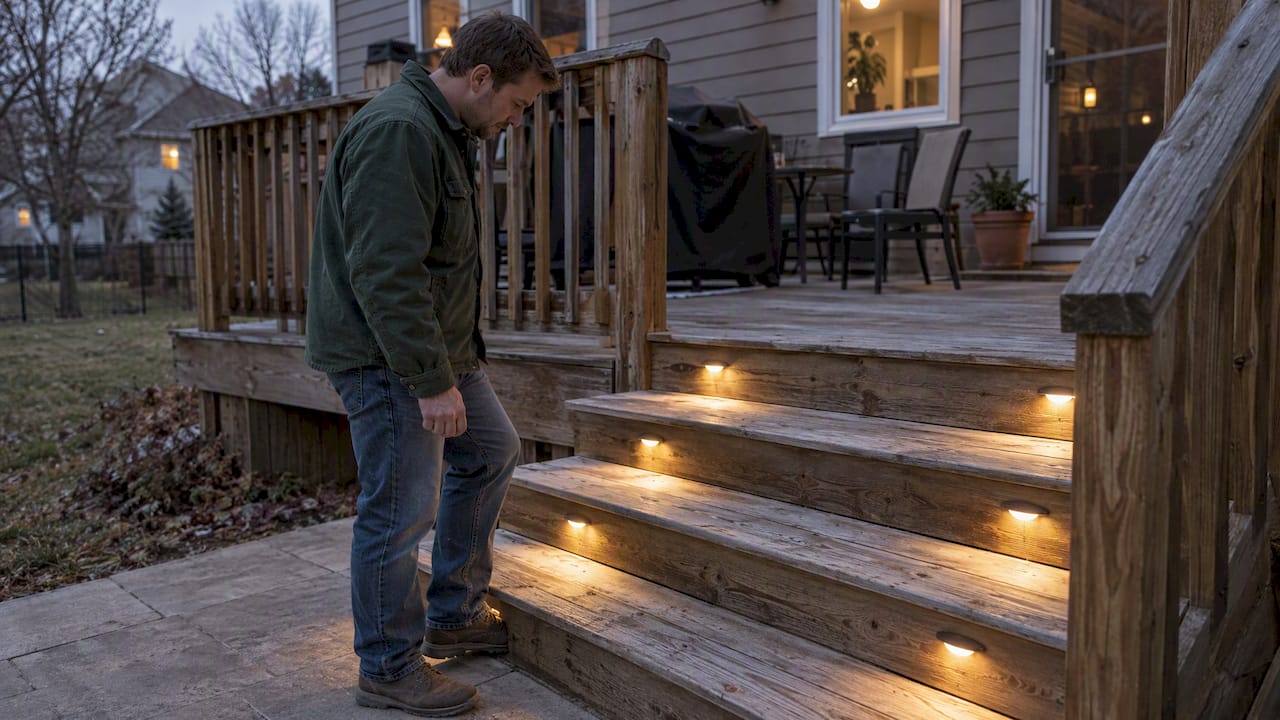
The best deck lighting options are LED low-voltage fixtures for flexible, safe illumination, solar or battery lights for tool-free installs, recessed or puck lights for low-profile ambiance, and post-cap, rail, or string lights for perimeter glow and mood. Step and rail lighting handle safety, solar and string lights deliver easy ambiance, and low-voltage LED systems hit the sweet spot between brightness, cost, and flexibility. The sections below cover power choices, placement, controls, code basics, and budgets.
TL;DR:
Place stair lights at regular intervals and space post lights 6 to 8 feet apart; aim rail or fascia lighting downward to limit glare.
Protect every outdoor circuit with GFCI, use listed fixtures rated for wet or damp locations, and match transformer capacity to total fixture wattage.
Solar lights suit accents and low traffic areas, but sunlight and battery condition make them less dependable for stairs or primary safety lighting.
Use warm white from 2700K to 3000K for deck lighting, and confirm the fixture, driver, and transformer all support dimming before buying.
Prioritize stair and step lighting in your budget, then add ambiance; compare outdoor warranties of 3 to 5 years and published LED lumen life.
1. Which fixture types fit your deck?
Most decks end up with a mix of fixture types rather than just one, since each handles a different job.
Step or riser lights sit in the stair risers and mark each tread edge, which matters most for safety on stairs used after dark.
Recessed or puck lights mount flush into deck boards or posts for a low-profile ambient glow or toe-kick lighting along walkways.
Post-cap lights sit on top of railing posts for perimeter glow and are one of the easiest fixtures to retrofit onto an existing deck.
Rail-mounted lights attach under or along the handrail to wash light downward onto the deck surface without glare.
Strip and rope lights run along fascia boards or stair stringers for mood lighting and edge definition rather than strong illumination.
Surface-mounted bulkhead or wall lights throw a wider wash of light for task areas like grilling stations or outdoor kitchens.
Solar or battery fixtures need no wiring at all, which makes them a practical choice for temporary setups or spots that see light use.
2. Which power source fits your deck: low-voltage, line-voltage, or solar?
Power choice drives almost everything else about a deck lighting project, from brightness to installation cost to how much maintenance you'll do later.
Low-voltage (12V) systems run off a transformer that steps down household current, which keeps shock risk low near wet deck surfaces. UL Solutions notes that low-voltage luminaires, covered under UL 1838 and UL 2108, are common for landscape and deck applications because the isolated circuit presents lower risk than line voltage.
Line-voltage systems run standard household current directly to fixtures, giving higher output for task lighting, but direct wiring often means conduit, in-wall runs, and possibly an electrical permit; check with the City of Omaha Permits & Inspections before starting.
Solar or battery fixtures need no wiring and install in minutes, though runtime varies with sun exposure and season. UL's PV-powered luminaire category, UL 8801, addresses the battery and thermal design questions that come with these fixtures.
Total-wattage planning matters regardless of system: add up every fixture's wattage and compare it against the transformer's rated capacity, since an undersized transformer causes dimming or early failure.
DIY-friendly scenarios include plugging a low-voltage kit into an existing GFCI outlet; hardwiring a new circuit or trenching for conduit is work for a licensed electrician.
3. Where should lights go? Placement rules for stairs, posts, and rails
Good placement does two jobs at once: it keeps feet safe on stairs and transitions, and it builds a layered look instead of one flat glow.
Stairs: Place a light at regular intervals on stairs for even coverage to ensure safety; skipping steps creates dark gaps that defeat the safety purpose.
Posts and perimeter: Space post-cap or post-mounted lights 6 to 8 feet apart to avoid dark zones along railings and give nighttime visitors a clear sense of the deck's edge.
Under-rail and fascia: Mounting strips under the top rail or along the fascia board aims light downward, cutting glare for anyone sitting or standing nearby.
Layering: Combine ambient (post or rail), task (bulkhead near a grill or seating area), and accent (string or strip lights) rather than relying on one fixture type for the whole deck.
Example layouts: A small single-level deck often needs just post-cap lights plus one or two step lights; a multi-level deck benefits from stair lighting at every level change; a pergola works well with string lights overhead paired with low rail lighting below for a layered effect.
Pro Tip: Walk the deck at dusk before finalizing fixture positions. Shadows and glare show up differently in low light than they do on paper.
4. How do controls and color temperature shape the mood?
Fixtures decide how light looks; controls and color temperature decide how it feels and how much it costs to run night after night.
Timers and photocells turn lights on at dusk and off at a set hour, which covers most homeowners' needs without any app or hub.
Smart controls (Wi‑Fi, Zigbee, Z‑Wave) add scheduling and remote access but require checking hub compatibility before buying fixtures.
Dimming only works when the driver, transformer, and fixture are all rated for it; mismatched components are a common reason dimmers fail to work smoothly.
Color temperature: Warm white in the 2700K to 3000K range suits most decks, since it flatters wood tones and reduces glare compared with cooler, bluer light.
CRI matters when you want plants, furniture, or skin tones to look accurate under deck lighting rather than washed out.
RGB or tunable white fixtures add flexibility for parties or seasonal color changes, but they add cost and complexity that most everyday deck lighting doesn't need.
5. What safety and code basics should you check first?
A few electrical basics separate a safe deck lighting setup from one that invites shock or fire risk, and they're worth confirming before you buy anything.
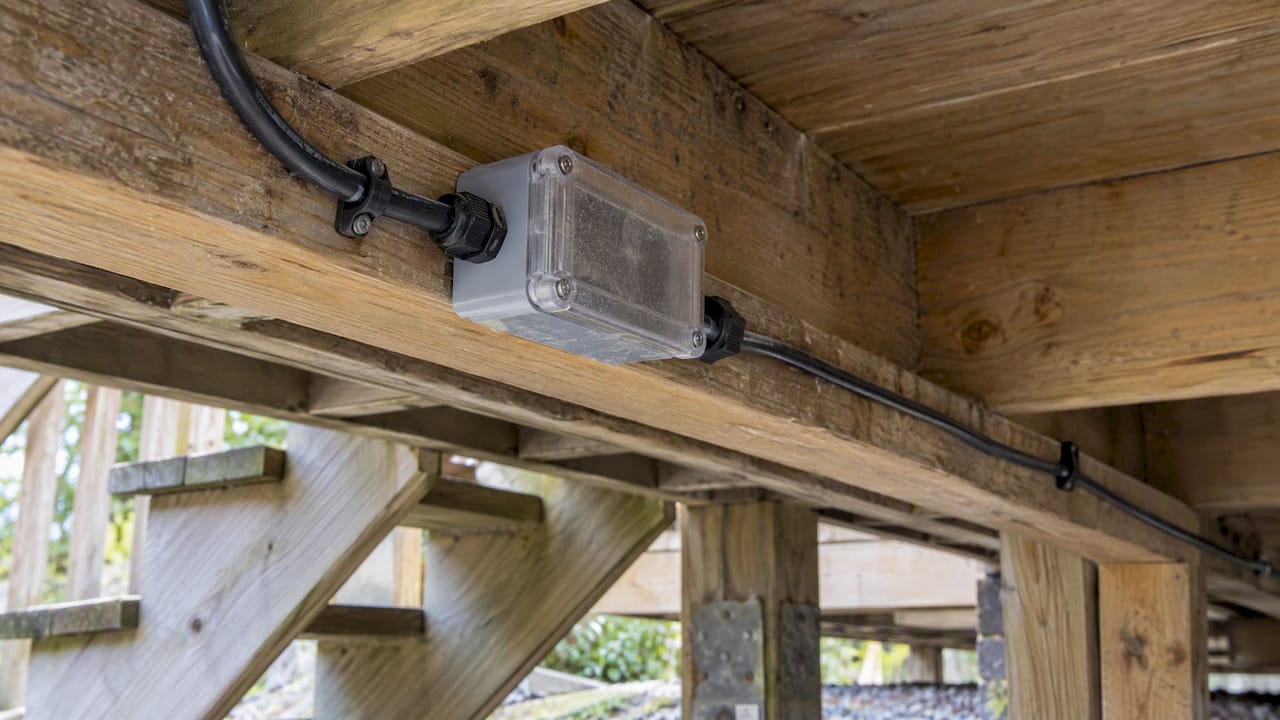
ESFI guidance recommends GFCI protection for any outdoor circuit, including deck lighting, since ground-fault circuit interrupters cut power fast enough to prevent serious shock in wet conditions. Use a portable GFCI for temporary setups if your outdoor outlet isn't already protected.
Beyond GFCI protection, a few other checks matter:
Choose UL-listed fixtures and confirm the IP rating matches a wet or damp location, since decks are exposed to rain and splashing.
Never use extension cords as permanent wiring for deck lights; run a dedicated outlet or hardwire the circuit instead.
Match transformer capacity to total fixture wattage, and avoid mixing components from incompatible systems.
Lighting near a pool or spa follows separate clearance and listing rules, so confirm those requirements before placing any fixtures nearby.
6. What does deck lighting actually cost?
Price ranges swing widely based on fixture type, power source, and how much wiring work the install requires.
Solar fixtures sit at the low end since there's no wiring or transformer to buy.
Entry-level LED fixtures cost more upfront than solar but deliver steadier brightness and longer life.
Premade low-voltage kits (transformer, cable, and several fixtures) cost more than individual fixtures but simplify planning for a whole-deck layout.
Professional hardwired installs sit at the top of the range once labor, any trenching, and permit fees are factored in.
Labor costs climb fastest when wiring has to be retrofitted into finished decking, since chasing boards or routing new cable takes more time than wiring during new construction.
Look for a 3 to 5 year outdoor warranty and published lumen-life data before buying, both signs the manufacturer stands behind the fixture outdoors. When a manufacturer publishes LM‑79 photometric test reports, they give measured light output that makes LED fixtures easier to compare.
Prioritize stair and step lighting for safety first, then spend remaining budget on ambiance like post-cap or string lighting.
7. What does a contractor check before wiring deck lighting?
Before any wiring goes in, we walk the deck to confirm circuit access, deck framing material, railing and fastener types, and the cleanest route for cable runs. That inspection overlaps with the kind of checklist we use before building or replacing a deck, since lighting plans depend on the same structural details.
Lighting work is often coordinated with exterior projects like siding or gutter replacement, since scheduling those together avoids redoing finished work. In most cases a dedicated circuit or an upgraded power source is recommended rather than relying on extension cords, since permanent cord use is a recognized fire risk outdoors. If you have security cameras or motion sensors near the deck, check fixture angles at night so lights don't create glare in the camera view.
How we can help with your deck lighting project
Deck lighting works best when it's planned alongside the deck itself rather than bolted on afterward, and that's exactly where our deck construction and repair work comes in.
Whether you're building new or upgrading an existing deck, we plan wiring routes, coordinate fixture mounting with railing and post types like those covered in our deck railing checklist, and walk the finished project with you before calling it done. If an older deck needs board repairs before any fixtures go in, we can address that too, as outlined in our guide to cracked deck boards. Request an estimate through our deck services page to get started.
FAQ
What is the best type of deck lighting for safety?
Step and riser lights placed at consistent intervals on stairs do the most for safety, since they mark tread edges where falls are most likely. Rail-mounted lights that wash light downward onto the deck surface are a close second for general nighttime visibility.
Do I need a GFCI outlet for deck lighting?
Yes, outdoor circuits including deck lighting should be protected by a GFCI, which ESFI recommends to reduce shock risk in wet conditions. A portable GFCI works for temporary setups if a permanent one isn't already installed.
Is solar deck lighting bright enough?
Solar fixtures work well for accent and ambient lighting but typically produce less consistent brightness than wired LED options, since output depends on sun exposure and battery condition. They're a reasonable fit for low-traffic areas or temporary lighting rather than primary stair or safety lighting.
What color temperature is best for deck lighting?
Warm white in the 2700K to 3000K range is generally recommended for decks, since it complements wood tones and produces less glare than cooler light.
Should I hire a professional for deck lighting installation?
Simple low-voltage kits plugged into an existing GFCI outlet are often manageable as a DIY project, while new circuits, trenching, or line-voltage wiring are work for a licensed electrician. If lighting is part of a new deck or a deck repair, we can help plan fixture placement and wiring routes alongside the build.
Sources
Recommended
Dealing With Something Similar?
Every property is different, but if this sounds like what you’re seeing, we’re happy to take a look and help you figure out what’s actually going on.