Cost & Estimates
Homeowners: 6 Things to Demand in Remodeling Change Orders
By Noah Spagnotti

A change order is a written, signed amendment that changes your remodel’s scope, cost, or schedule. If your contractor asks you to approve extra work by phone, text, or a handshake, stop. Insist on an itemized change order before that work starts, and if you’re unsure what you’re looking at, pause the job and ask for the paperwork in writing.
TL;DR:
Change orders should be detailed, signed, and itemized, including work descriptions, costs, schedule impact, and signatures from both parties.
Most change orders occur due to hidden conditions uncovered during demolition, or because of homeowner or code-driven requests; clear classification is crucial.
Approving change orders before work starts and using allowances with realistic ranges minimizes scope creep and delays.
Contractors with organized, transparent processes provide timely, written change orders with backup documentation and predictable turnaround times.
Refusing to sign work after it is completed and requesting detailed backup prevents disputes and keeps the project on track financially and schedule-wise.
Spagnotti Contracting
Plan Remodeling Changes Clearly
Spagnotti Contracting brings detailed planning, clear communication, and project management to residential remodeling across the Omaha metro area.
Table of Contents
What Is a Change Order in Remodeling?
Why Do Change Orders Happen So Often?
What Should a Change Order Actually Include?
How Do You Review and Negotiate a Change Order?
How Can You Reduce Change Orders Before Work Starts?
What Does Professional Change-Order Handling Look Like?
The Real Problem With Change Orders Isn’t the Cost
Get a Contractor Who Documents Every Change Order
Sources
What Is a Change Order in Remodeling?
A change order is a formal, written document that modifies your original contract’s scope, price, or timeline, and it needs signatures from both you and your contractor before anyone picks up a tool for the new work. That’s the legal weight behind the term. A verbal “yeah, let’s just do it” isn’t a change order. It’s a liability waiting to surface on your final invoice.
Remodeling change requests fall into a few predictable buckets:
Discovery issues: rotted subfloor, outdated wiring, or plumbing found once demo opens the walls
Owner-requested upgrades: swapping a laminate countertop for quartz, or adding recessed lighting mid-project
Permit or code-driven work: an inspector flags something that must be corrected before the job can pass
Contractor-corrective items: fixing a measurement error or a design detail that didn’t work once framed out
Knowing which bucket a change falls into matters because it changes how you should react. A discovery item is unavoidable. An upgrade is optional. Both need the same paperwork, but only one should trigger a real conversation about whether you actually want to spend the money.
Why Do Change Orders Happen So Often?
Demolition is the moment most remodels reveal what’s actually behind the drywall. Once a wall opens up, plumbing that was never up to code, water damage nobody knew about, or a structural beam that’s seen better days can turn a simple scope into a bigger job overnight.
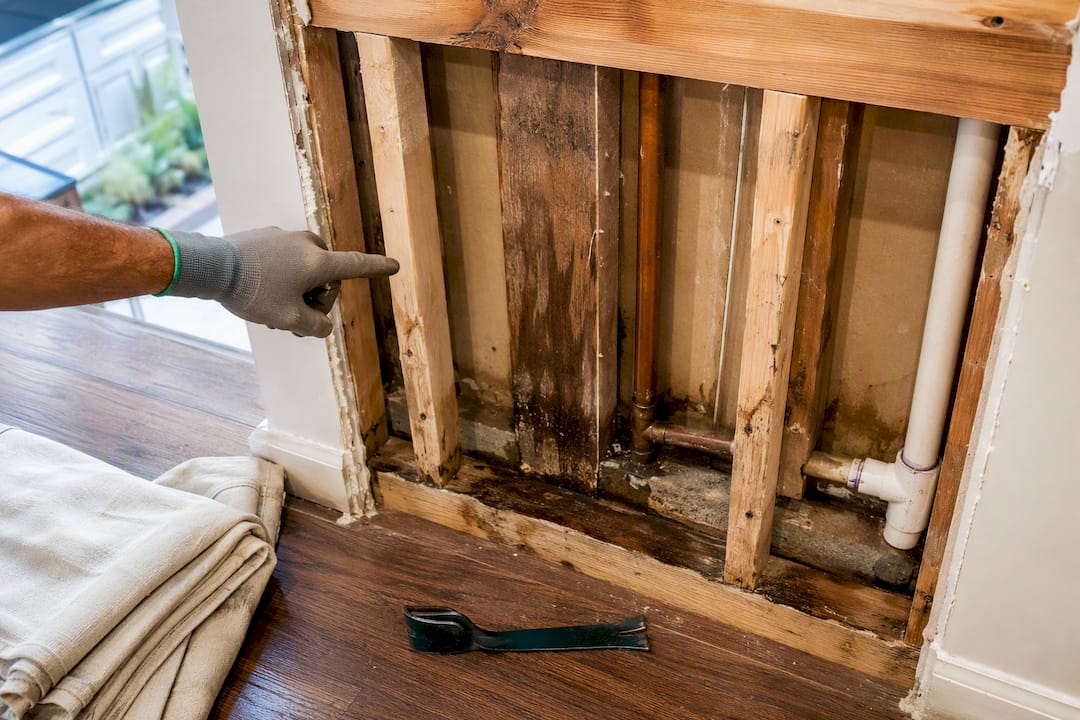
Industry data backs this up: change orders are common across remodeling projects, and the ones tied to hidden conditions are different from the ones tied to taste. That distinction is worth separating in your own head before you separate it in your budget.
The most common triggers, in order of how often homeowners run into them:
Hidden conditions uncovered during demolition (plumbing, rot, framing issues)
A change of mind mid-project on fixtures, tile, or finishes
Code or inspection findings that weren’t visible during the estimate
Material shortages that force a substitution at a different price point
Pro Tip: Ask your contractor upfront how they categorize change orders internally. If they can’t explain the difference between a discovery CO and an upgrade CO on the spot, that’s a red flag about how organized the rest of the paperwork will be.
What Should a Change Order Actually Include?
A vague change order is the fastest way to lose track of your budget. Before you sign anything, the document in front of you should include:
Project and contact information, plus a sequential change order number for tracking
A clear description of the work being added or removed, with quantities, not vague language like “additional framing work”
An itemized cost breakdown covering materials, labor, and subcontractor charges, including any markup, tax, or permit fees
Schedule impact in calendar days, including whether the crew needs to remobilize and what that costs
The updated contract total, showing how this change order amends your original signed price and payment schedule
Signatures and dates from both you and the contractor, along with clear acceptance terms
This structure isn’t arbitrary. Procore’s guidance on the construction change order process lists project details, work description, dates, updated schedule, and cost as the baseline for a properly written CO. If any of those six pieces is missing, ask for it before you sign, not after the work is already done.
Pro Tip: Keep a folder, physical or digital, with every change order in sequence. When you get to closing costs or a future sale, a clean paper trail of every approved change is worth more than you’d think.
How Do You Review and Negotiate a Change Order?
Start by refusing to sign anything after the work is already finished. That single habit prevents most disputes before they start. If a contractor performs extra work first and hands you a bill later, you’ve lost your only real leverage to question the price.
Once you have a written CO in hand, work through it methodically:
Ask for itemized backup: a supplier invoice for materials, labor hours, or a subcontractor’s bid
Compare the markup to a reasonable range and ask about alternatives if it looks high
Confirm exactly how many days this adds to the schedule, and whether your contingency fund covers the cost
Record your approval in writing and update your running contract total immediately
A few questions are worth asking every time:
“Can I see the actual invoice for this material?”
“Is this priced by unit or as a flat estimate?”
“Does this change order affect my final inspection date?”
Reasonable markup ranges and itemized documentation are standard practice in the industry. A contractor who resists showing backup costs, or who tries to add a change order verbally after the fact, is asking you to trust a number you can’t verify.
How Can You Reduce Change Orders Before Work Starts?
The single most effective way to limit remodeling change requests is finishing your design and selections before demolition begins. Every tile, faucet, and light fixture you pick after the crew has already opened walls turns into a change order, a delay, or both.
A few preconstruction habits pay off repeatedly:
Lock in selections and use allowances with realistic dollar ranges, not guesses
Put a change order clause in your contract that spells out approval windows, markup caps, and response times
Hold a contingency fund, and separate money for hidden-condition discoveries from money for optional upgrades
Ask for unit pricing on common trades so a substitution doesn’t require a fresh negotiation
Name one decision-maker in your household and set deadlines for selections to avoid remobilization costs
Reviewing a realistic renovation timeline before you sign your contract also helps you see where schedule slack exists and where it doesn’t.
Pro Tip: Separate your contingency into two mental buckets: one for problems the contractor finds, one for upgrades you decide you want. Mixing them is how homeowners end up thinking they’re over budget when they’re actually just spending on choices they made themselves.
What Does Professional Change-Order Handling Look Like?
Some contractors treat every change order as a documented event, not a conversation that gets settled with a nod. That means a written CO with an itemized breakdown lands in front of the homeowner before new work starts, not after the invoice arrives.
What that looks like in practice:
A sequential change order log tied to the original contract, so the running total is never a mystery
Markup that’s stated plainly rather than folded into a lump sum
A turnaround window for approvals, so neither side is left waiting on a decision that stalls the crew
During an estimate, homeowners should ask any contractor how they handle discovery items differently from upgrade requests, and how quickly a signed change order turns into scheduled work. Those two questions reveal more about a contractor’s organization than almost anything else on a walkthrough.
The Real Problem With Change Orders Isn’t the Cost
Most advice on change orders focuses on price, and price matters, but it’s rarely what actually derails a remodel. The projects that go sideways are the ones where nobody wrote anything down. A homeowner remembers a verbal estimate of “maybe a few hundred bucks.” The contractor remembers something different. Neither has paper to point to.
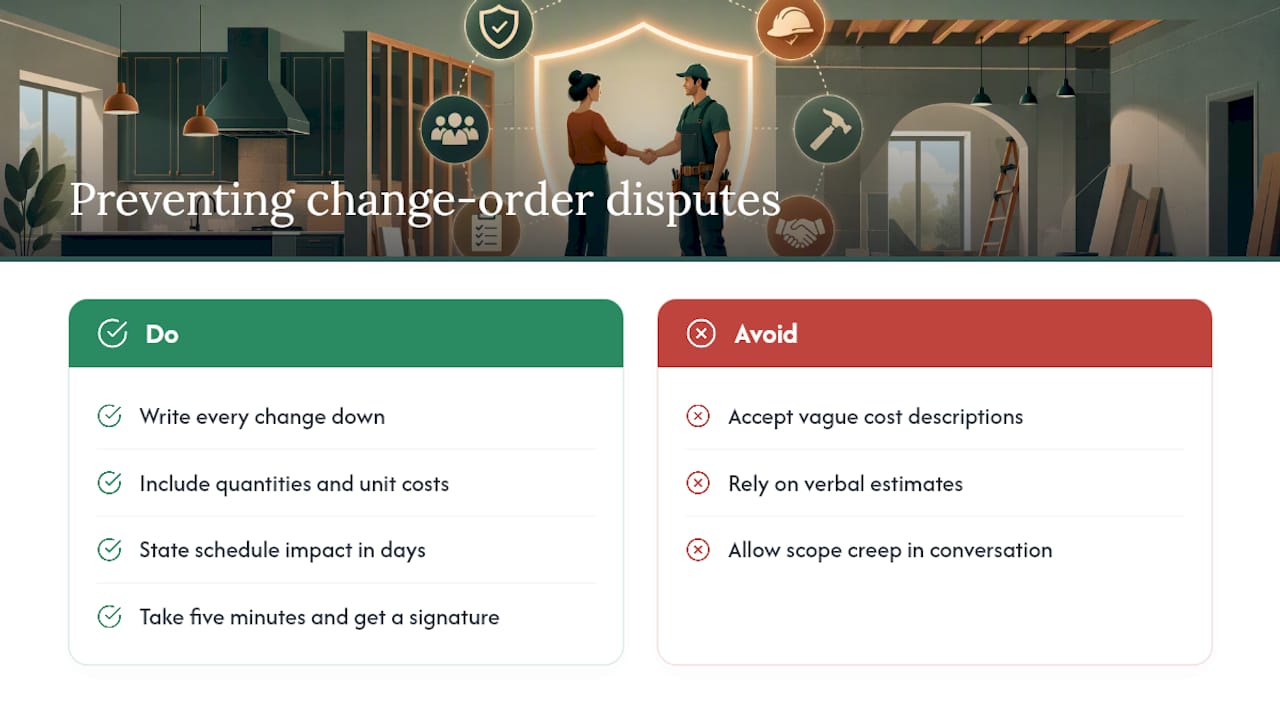
The conventional advice, “just make sure it’s in writing,” undersells how specific that writing needs to be. A change order that says “additional electrical work, $800” isn’t much better than a verbal agreement. You want quantities, unit costs, and a schedule impact stated in days, not vague reassurance that “it shouldn’t take long.”
If there’s one thing to prioritize above everything else in this article, it’s refusing to let scope creep happen in conversation. Every change, no matter how small it feels in the moment, deserves five minutes and a signature. That habit alone prevents the vast majority of remodeling disputes before they start.
— Noah
Get a Contractor Who Documents Every Change Order
A good change order process includes itemized costs and a schedule update attached to every signature, instead of a surprise on the final bill.

Before you sign with any contractor, ask three questions: What’s your change order policy? How do you separate contingency for hidden conditions from upgrade requests? And how fast do approved change orders turn into scheduled work? A contractor who answers all three clearly, on the spot, is one worth hiring. Spagnotti Contracting handles bathroom remodels, siding, roofing, and interior work across the Omaha metro with that same documented approach on every job. Request an estimate through the full list of residential contracting services and ask to see how a sample change order is written before your project ever breaks ground.
Sources
Recommended
Dealing With Something Similar?
Every property is different, but if this sounds like what you’re seeing, we’re happy to take a look and help you figure out what’s actually going on.