Exterior Maintenance
160–166°F Damage: Homeowners, Diagnose Melted Vinyl Siding
By Noah Spagnotti
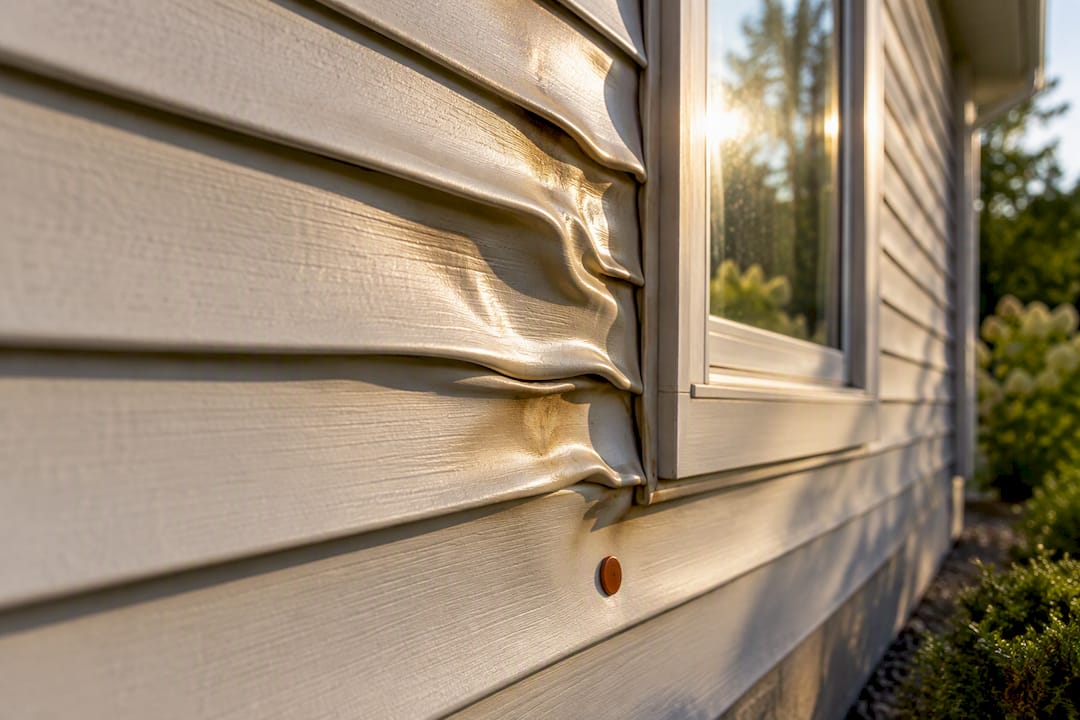
Most melted vinyl siding comes from reflected sunlight, often bounced off a neighbor's Low-E windows, or a heat source like a grill sitting too close to the wall. Vinyl starts to soften and warp at temperatures generally reported around the mid-160s °F range, so this isn't about weak material. Before you touch a panel, photograph the damage, log a few temperature readings if you can, and shut off or move whatever's throwing that heat.
TL;DR:
Reflected sunlight off low-emissivity windows or nearby heat sources can cause vinyl siding to soften and warp at temperatures around 165°F, especially if exposure lasts several hours daily.
Damage patterns often follow the sun's angle, shifting seasonally, and can be confirmed with infrared temperature readings taken during peak sunlight hours.
Fixing melted siding requires addressing the heat source first; replacing panels alone without solving the reflection problem leads to recurring damage.
Installing reflective screens, window film, or planting vegetation can prevent future heat buildup. Many vinyl siding manufacturer warranties exclude damage from outside heat sources such as reflected sunlight, so check your own siding warranty and homeowners policy.
Professional assessment involves sun path mapping, thermal logging, and substrate inspection, as DIY repairs risk overlooking underlying causes that trigger repeat damage.
Confirming What's Causing Your Melted Vinyl Siding
Don't guess. The pattern on your wall usually tells you exactly what's happening, and a record of that pattern helps if you end up talking with a neighbor or a contractor.
Start by mapping the damage against nearby windows and the sun's path. Reflected-heat damage tends to show up as a focused patch that shifts slightly as the seasons change, following the angle of the sun off the glass. A cheap noncontact infrared thermometer helps confirm it. Aim it at the siding during peak afternoon sun, note the number, then check the same spot again in the evening.
Photograph the damage at the same time each day for a week to catch the pattern.
Take IR readings at the hot spot and at an unaffected section for comparison.
Rule out a grill, fire pit, or dryer vent within 10 feet before blaming a window.
Check for melted paint or solvent residue nearby, which points to chemical damage instead of heat.
Keep a simple log: date, time, temperature, weather conditions.
Pro Tip: Take your comparison reading on a similarly sunny day, at the same time of day. A reading taken on an overcast afternoon won't give you a fair comparison.
Why Vinyl Siding Melts or Warps in the First Place
Vinyl siding isn't supposed to survive direct flame or extreme sustained heat, but under normal conditions it shouldn't warp either. The real culprit is usually a magnifying effect. Modern Low-E and insulated windows reflect a narrower, more intense band of solar energy than old single-pane glass did, and if the glass has a slight concave curve from thermal stress, it can act almost like a magnifying lens, focusing that reflection onto one spot on your neighbor's wall or your own.
Vinyl's own properties make it more vulnerable in some cases than others:
Darker siding colors absorb more solar energy and reach higher surface temperatures than lighter colors.
Manufacturing leaves residual internal stress in the vinyl, which can "relax" and visibly buckle once heat softens the material.
Nearby dark roofing, pavement, or pool decking can add reflected heat on top of window glare.
A documented field case from Cardinal Glass found that combined effects, window reflectance plus a dark roof plus an inside-corner geometry that trapped the heat, more than doubled the solar irradiance hitting the siding, pushing recorded temperatures well into the distortion range. It's rarely just one factor.
What Temperature Actually Melts Vinyl Siding?
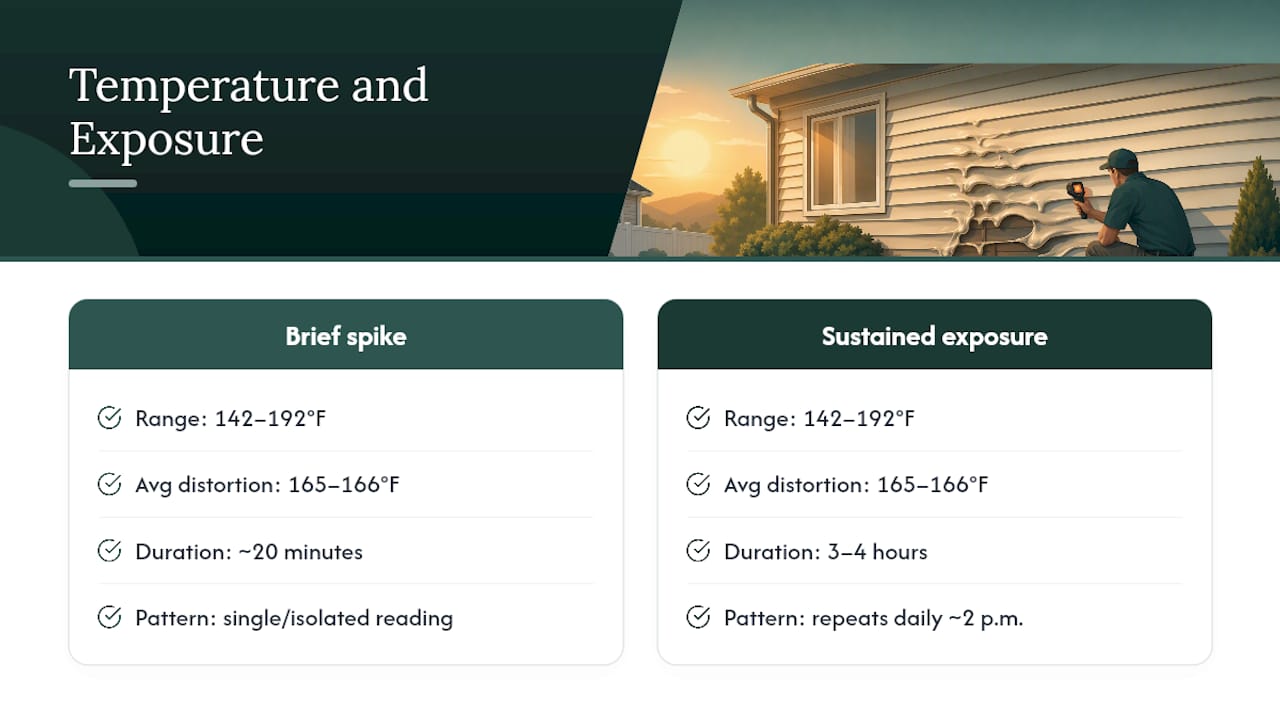
Vinyl siding typically begins to soften and distort somewhere between 142°F and 192°F, with lab testing and field data from Cardinal Glass putting the average distortion point close to 165–166°F. Reflected sunlight off a window can push surface temperatures on nearby siding well past what direct sun alone ever would.
Duration matters as much as peak temperature. A brief 20-minute spike during the wrong hour of the afternoon may do less damage than a lower, steady temperature that lingers for three or four hours every clear day for a summer. That's why a single reading rarely settles the question. What you're looking for is a pattern: multiple readings, multiple days, and a clear correlation with sun angle. One high number on a 100°F day means less than a moderate number that repeats daily at 2 p.m. regardless of outdoor air temperature.
Fixing Melted Siding: DIY Repair vs. Calling a Pro
Small, isolated melted spots on a single panel are reasonable DIY territory if the underlying wall sheathing wasn't damaged and the heat source has already been addressed. Bigger, recurring damage, or anything tied to an ongoing dispute with a neighbor's windows, calls for a professional assessment instead.
Here's the basic DIY repair sequence, drawn largely from This Old House's step-by-step method:
Use a zip tool (siding removal tool) to unlock the damaged panel from the course above it.
Slide the panel down and out, then inspect the housewrap and sheathing underneath for heat damage.
Measure the replacement panel against the opening, accounting for the same color and profile as your existing siding.
Cut the new panel with tin snips or a fine-tooth blade, leaving room for the nailing hem.
Nail through the center of the slots, not the panel body, leaving a 1/16 to 1/32 inch clearance under each nail head.
Snap the new panel into the course below and lock the course above back into place.
That nailing clearance isn't a minor detail. VSI installation guidance specifies it precisely because vinyl expands and contracts constantly with temperature. Nail it too tight and the panel buckles on its own, producing a wave pattern that can look almost identical to heat distortion and confuse the whole diagnosis.
Pro Tip: Never paint melted vinyl panels to hide the color mismatch. Dark paint absorbs more heat than the original vinyl color, and you'll often be back to the same problem within a season or two.
A licensed siding contractor brings in tools most homeowners don't own, thermal mapping and consistent surface logging, and can spot substrate damage under the panel that a DIY repair would simply cover up.
How to Prevent Melted Siding From Happening Again
Fixing the panel without addressing the heat source is a guaranteed rerun. Work through prevention roughly in this order, cheapest and fastest first.
Immediate, low-cost moves:
Move grills, fire pits, and smokers a safe distance away from any siding to prevent heat damage.
Set up a temporary shade panel or reflective screen during peak sunlight hours.
Medium-cost, more permanent fixes:
Install exterior solar screens or retractable awnings over the affected wall area.
Apply anti-reflective window film to windows causing problematic reflections.
Plant shrubs or trees to interrupt the reflection path over time.
Longer-term structural decisions:
Choose a lighter, lower-absorptance siding color when replacing the affected area.
Consider fiber cement or other non-vinyl materials for the exposed wall if reflection cannot be mitigated.
If a neighbor's window causes the problem, discuss solutions directly with them before spending on your own side.
Screens and film solve most cases without anyone spending real money on cladding.
Check Your Siding Warranty and Homeowners Policy
Many vinyl siding manufacturer warranties exclude damage from outside heat sources such as reflected sunlight, which is one more reason to fix the reflection before you replace panels: a new panel in the same hot spot is likely to warp again. Fine Homebuilding's reporting quotes one manufacturer's warranty that excludes siding distorted by reflection from windows. Coverage varies, so check your own siding warranty and homeowners policy to see what they say about heat damage.
Whatever your coverage, a simple record helps when you talk with a neighbor, an HOA, or a contractor:
Keep timestamped photos and IR temperature readings together, not isolated numbers.
Note the specific window, angle, and time of day the reflection occurs.
For neighbor disputes, start with a polite, low-cost request (screens or film) before escalating to HOA involvement or legal counsel, which local coverage on similar cases shows can drag on for months with no guaranteed outcome.
When to Bring In a Contractor for a Siding Assessment
Call a professional when damage keeps recurring after a repair, covers more than a panel or two, or shows signs the sheathing underneath took heat damage too. HOA pressure or a stalled neighbor dispute is also a good reason to get a documented third-party assessment.
A competent assessment includes reflection mapping against the sun's path, a logged set of temperature readings across a full day, and a substrate inspection before any panel goes back on. Spagnotti Contracting builds estimates around exactly that kind of upfront diagnostic work rather than a quick panel swap.
Before signing anything, ask a few direct questions:
Will you inspect the sheathing, not just the visible panel?
What's the plan if the heat source is a neighbor's window, not mine?
Does the estimate include matching color and profile for a seamless repair?
Pro Tip: Ask for the temperature log in writing. A contractor willing to hand over the raw data, not just a verbal opinion, is one you can trust with the repair.
What Homeowners Get Wrong About Melted Siding
The instinct to replace the panel and move on is understandable, but it's the wrong first move more often than not. Melted vinyl siding is a symptom, not the disease. Swap the panel without touching the heat source and you're often looking at the same repair again within a year or two, sometimes on the exact same course of siding.
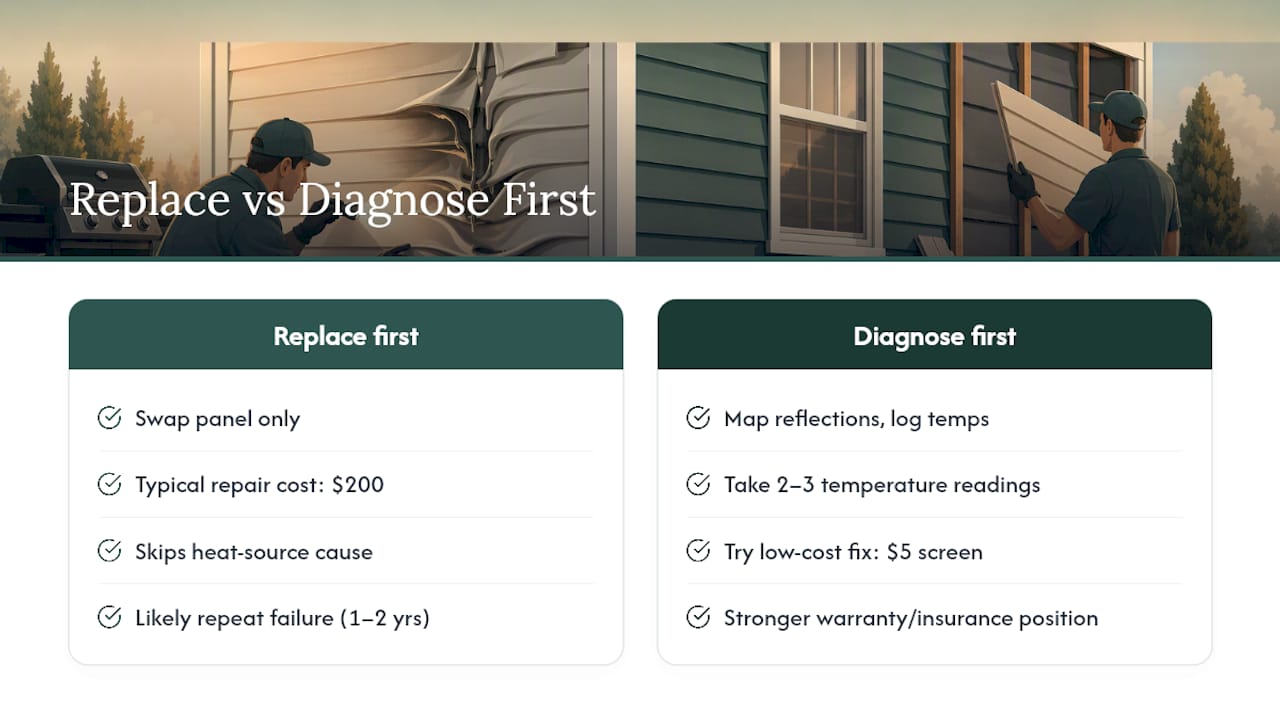
The conventional advice online leans heavily on the repair mechanics: which tool, which clearance, which nail spacing. That's useful, but it skips the harder question of why the heat is concentrated there in the first place. A homeowner who spends an afternoon mapping the reflection and logging two or three temperature readings walks into a conversation with a neighbor or a contractor estimate in a completely different position than one who just points at a warped panel and says "it melted."
If there's one thing worth prioritizing above all else, it's resisting the urge to fix the visible damage before you've confirmed the cause. A five-dollar reflective screen or a request to a neighbor about their windows can solve a problem that a $200 repair alone never will. Documentation isn't busywork here. It's the difference between a permanent fix and a repeat visit next summer.
— Noah
Get a Straight Answer on Your Siding Damage
A licensed siding contractor handles siding repair by mapping the heat source first, then fixing the panel, rather than the other way around. That approach matters here because a swapped panel without a diagnosis is money spent on a problem that's likely to return.
An estimate starts with a walk-through of the affected wall, a look at what's throwing the heat, whether that's a window, a grill, or a dark roofline nearby, and a straightforward explanation of what repair actually fixes the recurrence. Siding repair and installation runs $6 to $12 per square foot installed, and every project comes with a clear timeline from the first visit to the final walkthrough. If the reflection is coming from a window that also needs attention, Spagnotti Contracting can assess window replacement as part of the same visit.
Request an estimate through the siding services page or reach out through the main site to get a repair plan built around your actual cause, not just the visible damage.
Where This Information Comes From
This Old House: DIY repair steps and prevention tactics like anti-reflective film and screens.
Fine Homebuilding: Low-E reflection cases and an example of a manufacturer warranty exclusion.
Cardinal Glass technical bulletin: measured distortion temperatures and field case data.
Inspectapedia: diagnostic mapping and evidence-gathering guidance.
VSI installation manual: nailing clearance standards for thermal expansion.
Sources
A Step by Step Guide to Repairing Melted Vinyl Siding - This Old House
VINYL SIDING DISTORTION — Cardinal Glass (technical bulletin / 2022 PDF)
FAQ
How Can I Fix Melted Vinyl Siding?
Remove the damaged panel with a zip tool, cut a matching replacement, and reinstall it with proper nail clearance so it can expand and contract, following the repair sequence outlined by This Old House. Fix the heat source first, or the same panel will likely warp again.
At What Temperature Will Vinyl Siding Melt?
Vinyl siding generally starts to soften and distort in the 160–166°F range, though lab testing shows the threshold can run from 142°F to 192°F depending on the product, according to Cardinal Glass's technical data. Darker colors and longer daily exposure push actual surface temperatures higher than the surrounding air temperature.
What Should I Do if My Grill Melted My Vinyl Siding?
Move the grill at least 10 feet from any siding immediately, then inspect the damaged panel and the sheathing underneath for heat penetration. Small, isolated grill damage is usually a straightforward DIY panel swap, while damage to multiple panels or the wall behind them is worth a professional look.
Is Siding Damage Covered by Homeowners Insurance?
Coverage varies. Many vinyl siding manufacturer warranties exclude damage from outside heat sources such as reflected sunlight, so check your own siding warranty and homeowners policy to see how they treat heat distortion. Whatever your coverage, the lasting fix is to stop the heat: screens, window film, plants, or a conversation with the neighbor whose window is causing it.
Recommended
Dealing With Something Similar?
Every property is different, but if this sounds like what you’re seeing, we’re happy to take a look and help you figure out what’s actually going on.