Exterior Maintenance
Prevent Rot: Board and Batten Siding for Homeowners
By Noah Spagnotti

Board and batten siding suits homeowners who want a vertical, modern-farmhouse look and are willing to pay more attention to water management than lap siding demands. Material choice ranges from budget-friendly vinyl to premium fiber cement, with installed costs generally running $5 to $13 per square foot depending on material and labor approach (industry market range). The sections below cover materials and costs first, then the installation details that determine whether this siding lasts or fails early.
TL;DR:
Proper installation of a drainage gap behind the boards is crucial for preventing water damage, especially around window and door openings.
Costs range from $5 to $13 per square foot, with labor adding $1.75 to $2.50 more per square foot depending on system complexity.
Using correct flashing and sealing techniques significantly extends the siding’s lifespan, making shortcuts a common cause of early failure.
Full exterior applications are more durable and visually striking, but mixing with lap siding on lower walls can reduce costs and improve design flexibility.
Regular maintenance checks for gaps, warping, and water staining can catch problems early and save on costly repairs.
What Board and Batten Siding Actually Is
Board and batten pairs wide boards with narrow strips, called battens, nailed over the gaps between them. The result is a cladding system with strong vertical lines and a textured, dimensional surface that reads very differently from horizontal lap siding.
There are two main ways to build it:
Built-up systems use individual boards and separate battens installed one piece at a time, giving the most control over spacing but requiring more labor.
Panelized systems come pre-assembled as sheets that install faster, often aligning with 16 or 24 inch on-center framing.
The style has roots in agricultural and barn construction, where the batten covered joints to keep out wind and rain. Today it shows up on everything from full exterior walls to small accent gables, and it works just as well indoors on feature walls, mudrooms, and wainscoting. Its resurgence in modern farmhouse and contemporary design has made it one of the more requested siding styles in recent years.
Materials and Costs: What Drives Your Price
Material choice affects durability, upkeep, and your final bill more than almost any other decision in this project.
Wood (cedar, pine) gives the most authentic look but needs regular painting or staining and is more vulnerable to rot and pests.
Engineered wood mimics real wood grain with better resistance to moisture and insects, usually at a mid-range price.
Fiber cement resists fire, rot, and pests well and holds paint longer, but it is heavier and pricier to install.
Vinyl is the least expensive and nearly maintenance-free, though it can look less authentic and may crack in extreme cold.
Metal (steel or aluminum panels) handles weather extremes well and suits modern designs, with a higher material cost.
Installed board and batten typically runs $5 to $13 per square foot, with vinyl at the low end and premium fiber cement at the high end. Labor often adds $1.75 to $2.50 per square foot above standard lap siding labor, since built-up installations require more cutting and fastening than panelized options. Batten spacing also matters: boards set at narrower centers around 6 to 12.5 inches take longer to install than panelized systems spaced at 16 or 24 inches.
Why Water Management Makes or Breaks This Siding
Vertical seams are the real technical challenge with board and batten, more so than with horizontal lap siding. Every cladding, including this one, lets some rainwater through, which is why a working drainage plane behind the boards matters more than the boards themselves, according to Building America's water management guidance.
A few details separate a siding job that lasts decades from one that rots in a few years:
Install a drainage gap. Vertical furring strips or a three-dimensional drainage mat behind wood boards help water drain and dry, preventing the wood's natural oils from breaking down the water-resistive barrier underneath.
Flash every window and door opening. Pan flashing with a back dam keeps water from pooling in rough openings and directs it back out instead of into the wall.
Tape and seal sheathing joints properly. Measure guideline research on taped drainage planes shows that taped insulating sheathing and correctly detailed joints reduce moisture-related failures significantly.
Use fasteners rated for the cladding weight and material, since undersized or incorrect fasteners allow boards to shift and open gaps at seams.
Skipping the drainage gap or using the wrong tape are the two shortcuts that cause the most callbacks. Cutting pan flashing, fastening schedules, and tape selection are tasks best left to an experienced installer rather than a weekend project.
Pro Tip: If you're comparing bids, ask every contractor whether they plan to install a drainage gap behind the boards. A "no" answer is a red flag.
Where Board and Batten Looks Best
Board and batten does not have to cover an entire house to make an impact.
Full exterior cladding suits farmhouse, cottage, and contemporary styles that want strong vertical texture throughout.
Accent applications on gables, dormers, and entryways let you add the look without the cost or complexity of a full installation.
Mixing with lap siding on the lower walls while using board and batten on gables creates visual contrast and can reduce material cost.
Spacing changes the rhythm of the wall. Wider boards with narrower battens read as bolder and more rustic, while tighter, evenly spaced battens feel more refined and modern. Many homeowners pair dark trim with lighter board colors, or the reverse, to make the battens pop. Design professionals increasingly treat board and batten as a design accent rather than a whole-house commitment, which keeps the style flexible for different budgets.
Maintenance, Lifespan, and Warning Signs
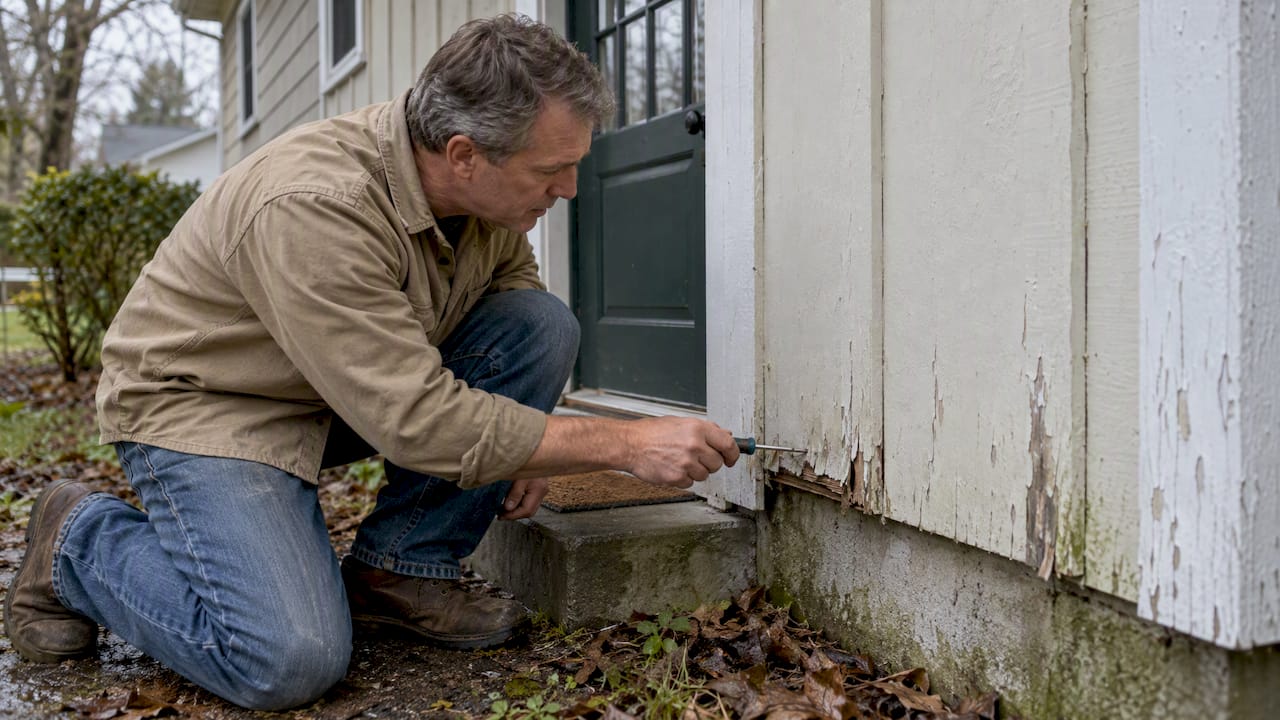
Upkeep depends heavily on material. Wood needs repainting or restaining roughly every 5 to 7 years, a cycle worth planning for before you commit to real wood (our paint versus stain guide covers that decision in detail). Fiber cement and engineered wood hold finish longer, while vinyl and metal need little beyond occasional cleaning and a check of caulked joints.
Check these each year:
Gaps or warping between boards and battens.
Soft or discolored spots, especially near the bottom of boards.
Peeling or cracked caulk around windows, doors, and seams.
Any staining on trim that suggests water is tracking behind the cladding.
Catching these early is far cheaper than discovering rot once it has spread. Our guide on spotting siding problems early walks through what separates a simple repair from a full tear-off.
DIY or Hire a Pro: What to Ask Before You Commit
Board and batten is a harder DIY project than lap siding because of the flashing, drainage detailing, and precision cutting involved. Wall height, the number of windows and doors, and whether you're using panelized or built-up boards all affect how much skill and time the job demands.
A complete, trustworthy bid should spell out:
The water-resistive barrier and drainage plane approach, including furring or drainage mat use.
Flashing details at every window, door, and roof intersection.
The exact material brand and model, not just "fiber cement" or "engineered wood."
Labor, cleanup, and a written warranty on both materials and workmanship.
Ask to see photos of finished jobs, request references, and confirm licensing and insurance before signing anything.
Pro Tip: A bid that skips drainage and flashing details entirely usually means those steps are being skipped on the job too.
A Contractor's Take on Board and Batten Tradeoffs
We tend to recommend board and batten when a homeowner wants strong curb appeal on gables or a full farmhouse look and is prepared for the extra flashing work it requires. When budget or timeline is tight, a mixed approach with lap siding below often makes more sense. Specialty boards and panelized systems can carry longer lead times, so we build that into permitting and scheduling conversations early. Our crews handle the drainage and flashing details directly rather than treating them as optional add-ons.
— Noah
Get a Siding Estimate From Spagnotti Contracting
We handle board and batten installation and repair with the same drainage planning and flashing detail we apply to every exterior project, backed by licensed and insured crews who coordinate the work from first visit to final walkthrough.
Installed siding pricing generally runs $6 to $12 per square foot depending on material and project scope.
Estimates typically cover material selection, drainage and flashing approach, labor, and timeline before any work begins.
A site visit is usually scheduled to measure walls, assess existing sheathing, and discuss which material fits your budget and style.
Ready to see what board and batten would cost on your home? Request a siding estimate and we'll walk you through the scope and schedule.
FAQ
Is board and batten cheaper than regular siding?
Not usually. Board and batten installed costs generally run $5 to $13 per square foot, with labor often running higher than lap siding because of the extra cutting, fastening, and flashing work involved.
Is board and batten outdated in 2026?
No, board and batten has seen a resurgence in popularity for modern farmhouse, contemporary, and rustic exteriors. Designers increasingly use it as an accent on gables and entryways rather than a whole-house treatment, which keeps it flexible rather than tied to one trend.
Is board and batten siding any good?
Yes, when installed correctly with a proper drainage plane and flashing details, it holds up well and offers a distinctive vertical look that lap siding cannot match. The tradeoff is that it demands more installation precision, particularly around window and door openings.
What is the difference between board and batten and regular siding?
Board and batten uses wide boards with narrow battens covering the seams, creating vertical lines, while regular lap siding overlaps horizontal boards. Board and batten generally costs more to install because its vertical seams require more precise flashing and sealing than lap siding's overlapping design.
Sources
Recommended
Dealing With Something Similar?
Every property is different, but if this sounds like what you’re seeing, we’re happy to take a look and help you figure out what’s actually going on.