General Contracting
Privacy Fence Ideas That Actually Deliver Seclusion
By Noah Spagnotti
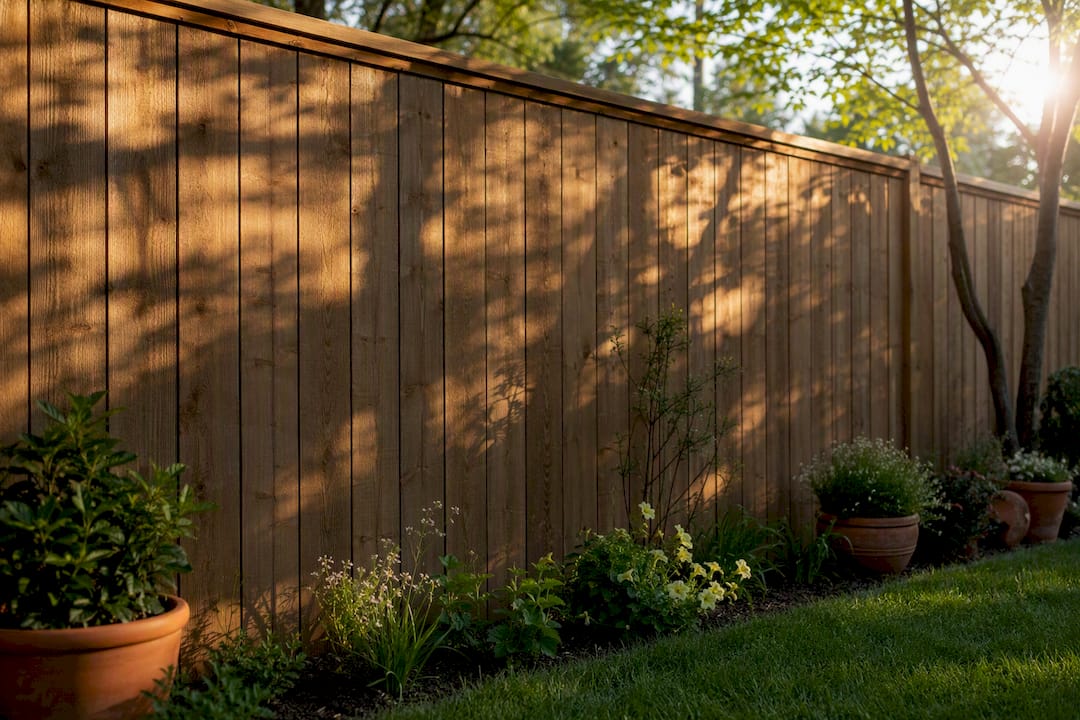
For most homeowners, a solid wood panel or modern horizontal slat fence gives the best mix of privacy and curb appeal. If you want height without a hard barrier, a living hedge does the job with none of the maintenance headaches that come from staining or sealing wood every few years. The right pick comes down to three factors: how much privacy you actually need, what you’re willing to spend on upkeep, and how much of the yard you want fully enclosed versus screened in sections.
Before you fall in love with a design, confirm your local height limits and property lines. Rules vary block to block, and a fence built two feet over the line can turn into an expensive redo.
Full privacy, low fuss: solid wood panels (board-on-board or tongue-and-groove)
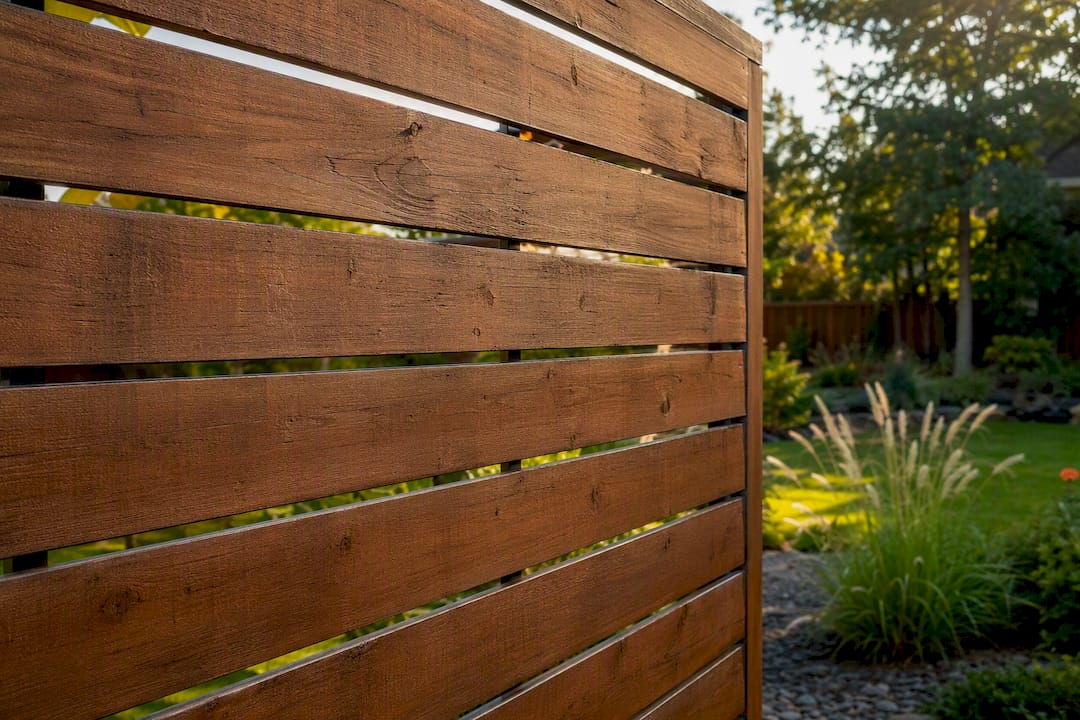
Modern look, good airflow: horizontal cedar slat with a small gap between boards
No hard structure at all: a layered hedge of arborvitae or privet
Quick fact: design experts generally recommend a standard height for privacy fences as the standard privacy fence height, with lattice or a lattice or a modest top extension that adds height without full solid panels added when you need more coverage without the bulk of a full extra foot of solid board.
Key Takeaways
The most reliable privacy fence choice depends on balancing three factors together: how much visual privacy you need, how much maintenance you’ll actually do, and how much of the yard needs full enclosure versus partial screening.
Point | Details |
|---|---|
Match style to upkeep tolerance | Wood needs restaining every two to four years; vinyl and composite need only an annual wash. |
Respect the two-inch gap | Keep fence bottoms about two inches off the ground for drainage and wildlife passage. |
Use gaps on horizontal slats | Leave roughly a quarter-inch gap between horizontal boards to prevent moisture-trapped rot. |
Consider partial screening | Fencing just a patio or hot tub area often beats enclosing the entire lot line for cost and light. |
Hire for complex sites | Spagnotti Contracting manages surveys, permits, and mixed-material builds for Omaha-area homeowners who want the layout and gap details handled correctly from the start. |
Table of Contents
Privacy Fence Ideas by Material and Style
How Tall Should a Privacy Fence Be, and Where Should It Go?
Living Fences and Plant Screens for Backyard Privacy
Installation, Longevity, and Maintenance That Actually Prevents Failures
Why Hiring a Qualified Fence Contractor Matters
An Editorial Take on Privacy Fence Planning
Get a Custom Privacy Fence Built Right the First Time
Sources
Privacy Fence Ideas by Material and Style
Every material trades privacy, upkeep, and cost differently. Here’s how the major categories actually stack up once you get past the glossy photos.
1. Board-on-board wood fencing
This is the classic for a reason. Overlapping vertical boards close every gap, so there’s zero sightline through the fence from any angle. Board-on-board and tongue-and-groove designs remain the most common privacy choice because they’re easy to repair one board at a time and simple to customize with post caps, trim, or a stained finish. The tradeoff is maintenance. Wood needs restaining or resealing every few years to fight rot and sun damage.
2. Horizontal slat fencing
Horizontal lines read as modern and clean, and this style has become the go-to look for contemporary builds. The trick that separates a good horizontal fence from one that rots out in five years is a small gap, roughly a quarter inch, between each board. That gap allows airflow and keeps moisture from getting trapped against the wood.
3. Shadowbox fencing
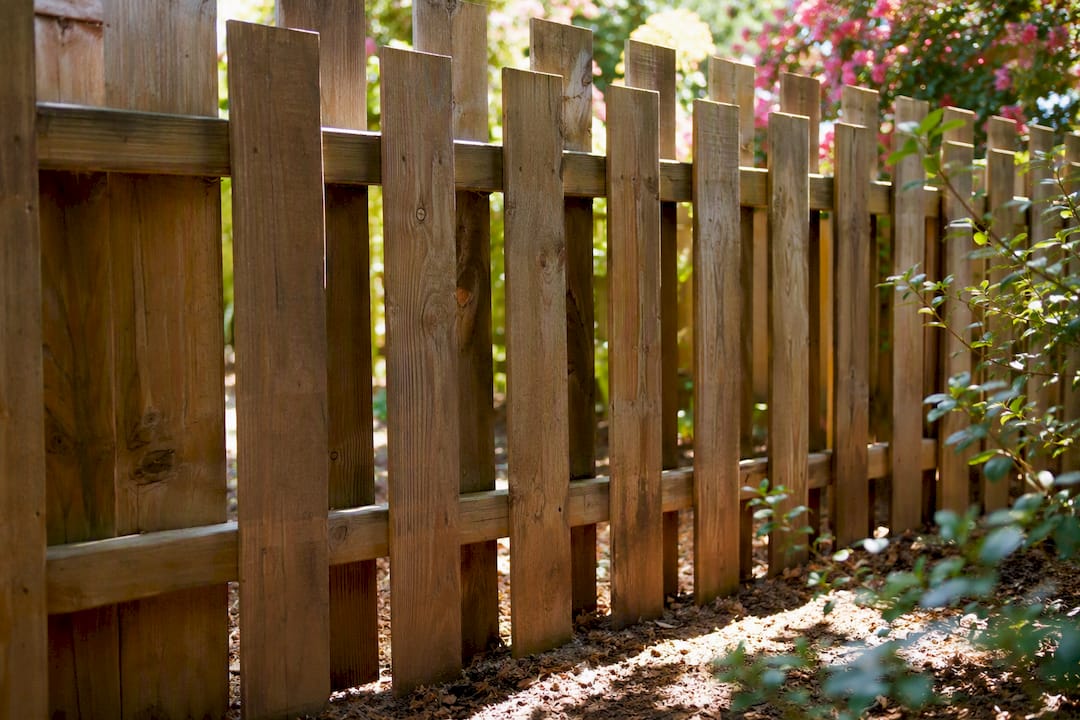
Boards alternate sides of the rail, leaving small offset gaps. You get filtered light and airflow with a design that looks finished from both your side and your neighbor’s, which matters if you’re trying to stay on good terms with whoever lives next door.
4. Board-and-batten
Vertical boards with a narrow strip covering each seam. It’s a step up visually from a plain flat panel fence and hides fastener lines cleanly, making it a popular choice for craftsman-style and farmhouse homes.
5. Vinyl and composite panels
Vinyl costs more upfront than pressure-treated pine but needs far less ongoing upkeep. No staining, no sanding, just an occasional hose-down. Composite splits the difference: it mimics wood grain while resisting rot and insects better than raw lumber. Both make sense if you want the fence to look the same in year ten as it did on installation day.
6. Metal and mixed-material designs
Corrugated metal panels, steel slats, and gabion walls (wire cages filled with stone) have become popular in modern and industrial-style yards. Corten steel, which develops a rust-colored patina on purpose, pairs especially well with concrete and dark wood accents. These materials hold up to weather better than most wood options and need almost no seasonal maintenance, though upfront cost runs higher.
7. Masonry and concrete walls
Block or poured concrete walls are as permanent as privacy gets, and they double as sound barriers if you’re near a busy road. The downside is that a bare wall can feel heavy and institutional. Softening it with climbing vines, a row of planted grasses, or a mounted trellis section fixes that fast.
8. Decorative accent panels
Laser-cut metal screens, framed plexiglass inserts, and painted mural panels aren’t usually used for the whole perimeter, but they make a striking focal point on one section, like behind a patio or hot tub. Think of these as jewelry for a fence you’ve already built rather than a standalone privacy solution.
Budget-friendly options worth knowing about:
Chain link with privacy slats woven through
Bamboo rolls attached to an existing fence or frame
Recycled pallet screens for a temporary or rental-friendly fix
Each one delivers privacy fast and cheap, but longevity and looks vary a lot, so treat these as short-term fixes rather than permanent installs.
How Tall Should a Privacy Fence Be, and Where Should It Go?
Six feet blocks nearly all ground-level sightlines and is the height most residential codes allow without a special permit. If six feet doesn’t cut it, because a neighbor’s second-story deck looks straight into your yard, adding a lattice topper or a 12 to 18 inch extension buys extra coverage without the visual weight of a full solid panel that tall. Living hedges are the outlier here. Arborvitae and similar evergreens can grow to roughly 12 feet, giving you screening height that no wood or vinyl fence code will allow.
Height isn’t the only decision. Placement matters just as much.
Confirm your exact property line with a survey or plat map before setting a single post.
Check your city or county’s height limits and setback requirements. Omaha-area municipalities vary, and a permit is often required for anything over the standard limit.
Give your neighbor a heads-up if the fence sits on or near a shared boundary. It costs nothing and avoids disputes later.
Keep the fence base about two inches off the ground. It helps drainage, keeps wood out of standing water, and lets small wildlife pass through instead of getting trapped against it.
One more thing worth thinking about: you don’t have to fence the entire lot line at a uniform height. Mixing heights (taller near a patio, shorter along a side yard) or pulling fencing in around just the pool, hot tub, or deck rather than the whole perimeter keeps the yard from feeling boxed in.
Pro Tip: If your lot slopes, pair the fence with a low retaining wall instead of stair-stepping the panels. It keeps the top line straight and adds effective height on the low side without cutting into your soil.
Living Fences and Plant Screens for Backyard Privacy
A hedge takes longer to mature than a fence takes to build, but it never needs staining and it gets more attractive every year instead of weathering down. Arborvitae is the fastest-growing common choice and reaches useful screening height in a few seasons if planted close together. Boxwood and privet grow denser but slower, which suits homeowners who want a manicured look rather than a tall wall of green. Clumping bamboo screens fast and stays evergreen, though it needs a root barrier or contained bed so it doesn’t spread where you don’t want it. Holly adds density plus a defensive edge; nobody’s hopping a hedge full of thorny leaves.
Spacing determines your timeline. Planting arborvitae or privet on tighter centers closes gaps faster but costs more upfront in plant count. Most homeowners land on a middle ground: order roughly one plant every three feet for a hedge that fills in within two to three growing seasons.
Combine a trellis with climbing vines directly on an existing fence for privacy in half the wait time of a hedge alone.
Add planter boxes along the fence base for a layered, softened look that also hides an unattractive base rail.
Budget for regular pruning twice a year and consistent watering during the first two seasons while roots establish.
Installation, Longevity, and Maintenance That Actually Prevents Failures
DIY works fine for a straightforward flat-lot fence run with basic materials. Bring in a professional once the project involves grading, a retaining wall, a permit-heavy jurisdiction, or a custom mix of wood and metal that needs precise fabrication.
Maintenance needs differ sharply by material:
Cedar and wood: restain or reseal every two to four years to stop moisture damage and keep the color from graying out.
Vinyl: wash it down annually with a hose and mild soap. That’s essentially the entire maintenance routine.
Metal: inspect protective coatings yearly, especially at cut edges and welds where rust starts first.
Composite: an occasional rinse keeps it looking fresh; it resists the swelling and splitting that raw wood eventually shows.
A few field details separate a fence that lasts from one that fails early. On horizontal slat designs, leave a consistent quarter-inch gap between boards for airflow. Keep the fence bottom roughly two inches off the ground. Set every post in concrete down to your region’s frost depth, since a post that heaves in winter is the single most common cause of a leaning fence line.
Rough costs run from budget chain link with slats on the low end, up through mid-range wood and vinyl, to premium territory for masonry, custom metal, or elaborate mixed-material designs. Lifespan tracks with material choice too. Treated wood typically lasts 15 to 20 years with maintenance, vinyl and composite often outlast that, and masonry or well-built metal can last decades longer still.
Why Hiring a Qualified Fence Contractor Matters
A professionally managed fence project includes a property survey, permit handling, a sealed written estimate, and a workmanship warranty. That’s a different experience than buying panels off a shelf and hoping the ground stays level.
A fence line is only as good as what’s under it. Post depth, drainage, and a straight survey matter more to how a fence looks in year five than the board style you picked.
Spagnotti Contracting handles local fence installation and repair across the Omaha metro, with the detailed planning and project management that complex sites (slopes, mixed materials, integrated landscaping) tend to need.
Before hiring anyone, check for:
Proof of insurance and any required local licensing
Recent local references you can actually call
A clear timeline and itemized materials list in writing
A written workmanship warranty, not just a manufacturer’s material warranty
An Editorial Take on Privacy Fence Planning
Most privacy fence content treats the decision as purely aesthetic: pick a style, match your house, done. That undersells the two variables that actually determine whether you’re happy with the fence in three years: gap spacing and ground clearance. A gorgeous horizontal slat fence built without that quarter-inch airflow gap will trap moisture and start rotting from the inside, invisibly, long before it looks bad from the street.
The other gap in the conventional advice is treating “privacy fence” as an all-or-nothing perimeter decision. Some of the smartest yards I’ve seen skip full enclosure entirely, using a partial screen around just the hot tub or patio and letting the rest of the yard stay open. It’s cheaper, it lets more light in, and it usually looks more intentional than a solid wall around the entire lot line.
If you take one thing from this, prioritize the boring stuff first: survey your property line, confirm your local height rules, and pick a material based on how much upkeep you’re honestly willing to do. The style choice matters far less than getting those fundamentals right.
— Noah
Get a Custom Privacy Fence Built Right the First Time
Picking a style is the easy part. Getting the posts set to frost depth, the gaps sized correctly, and the permits handled before the crew shows up is where most DIY and budget contractor projects fall apart. Spagnotti Contracting is the Omaha-area alternative to guessing your way through a fence build: you get a surveyed layout, a sealed written estimate, and a crew that manages the whole project from permit to final walkthrough, whether you want cedar board-on-board, a modern horizontal slat design, or a mixed-material build with masonry and metal accents.

If your yard has slopes, existing landscaping to work around, or you just want it done once and done correctly, request a project estimate and get a plan built around your actual property, not a generic template.
Sources
61 Privacy Fence Ideas to Stylishly Seclude Your Outdoor Sanctuary — Architectural Digest
53 Privacy Fence Ideas That Turn Open Yards Into Secluded, Comfortable Outdoor Retreats — The Spruce
15 Privacy Fence Ideas That Actually Look Good (2026) — FenceCalc
Recommended
Dealing With Something Similar?
Every property is different, but if this sounds like what you’re seeing, we’re happy to take a look and help you figure out what’s actually going on.