General Contracting
Do You Need a Fence Permit in Omaha? Here's the Answer
By Noah Spagnotti
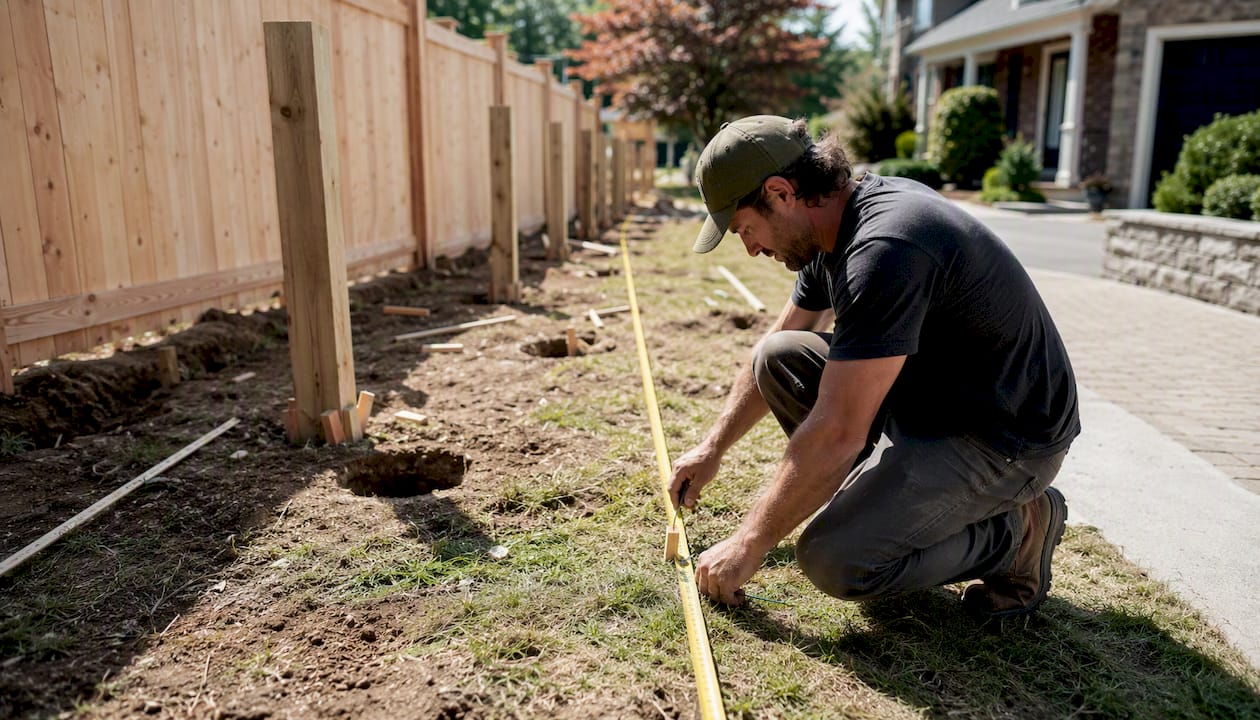
Yes. Omaha requires a building permit before you install, relocate, or replace a fence, and that rule applies not just inside city limits but within 3 miles of the city boundary too. The requirement exists so inspectors can check setbacks, height, and sight lines before you sink a single post.
The fastest move is calling City of Omaha Permits & Inspections or filing through the city’s online permit portal. Two quick exceptions worth knowing up front: chain link and split rail fences 4 feet or shorter skip the drawing requirement, but you still need the permit itself. Everything else needs a scale drawing.
Here’s your contact card before you read further:
Office: City of Omaha Permits & Inspections, Omaha Civic Center
Online filing: Accela Citizen Access permit portal
What to ask for: Fence permit application and current fee schedule
Best first step: Confirm your parcel’s zoning and setbacks before drawing anything
Key Takeaways
Omaha requires a building permit for nearly every residential fence project, and the paperwork, not the fence itself, is where most delays start.
Point | Details |
|---|---|
Permit is mandatory | Required for installation, relocation, or replacement within Omaha and 3 miles of city limits. |
Know the fee threshold | The city’s fence requirements sheet lists $41 for projects under $2,000 in material and labor, more above that. Confirm the current fee with Permits & Inspections. |
Get a survey first | Confirms property lines before drawings are submitted, preventing encroachment disputes later. |
Follow height and openness rules | 4 feet and at least 50% open in required front and street-side yards; 6 feet elsewhere (Sec. 55-786, amended 2024). |
Consider a full-service contractor | Spagnotti Contracting handles permit drawings, submittal, and installation together for Omaha homeowners. |
Table of Contents
How to Apply for a Fence Permit Omaha Homeowners Actually Use
What Are Omaha’s Height and Setback Rules for Fences?
What Paperwork and Fees Does the City Require?
Where to Get Help: Omaha’s Permit Offices
DIY Permit or Hire a Contractor? A Quick Checklist
If You Want Help: Spagnotti Contracting Handles the Whole Process
Where to Confirm Rules, Fees, and Zoning Questions
Frequently Asked Questions
Sources
How to Apply for a Fence Permit Omaha Homeowners Actually Use
Getting a fence permit in Omaha follows a predictable sequence, and skipping a step is the most common reason applications bounce back for revision.
Call or look up your zoning first. Contact Permits & Inspections or check the Omaha Planning Department for your parcel’s setbacks and any overlay districts before you draw anything.
Pull your property survey or plot plan. You need accurate lot lines. Guessing here is how fences end up straddling a neighbor’s yard.
Prepare three copies of a scale drawing for most fence types, showing property lines, adjacent streets, fence location, height, and materials. Chain link or split rail fences 4 feet or shorter are exempt from this step.
Submit online through Accela or file in person. The applications page lists both routes.
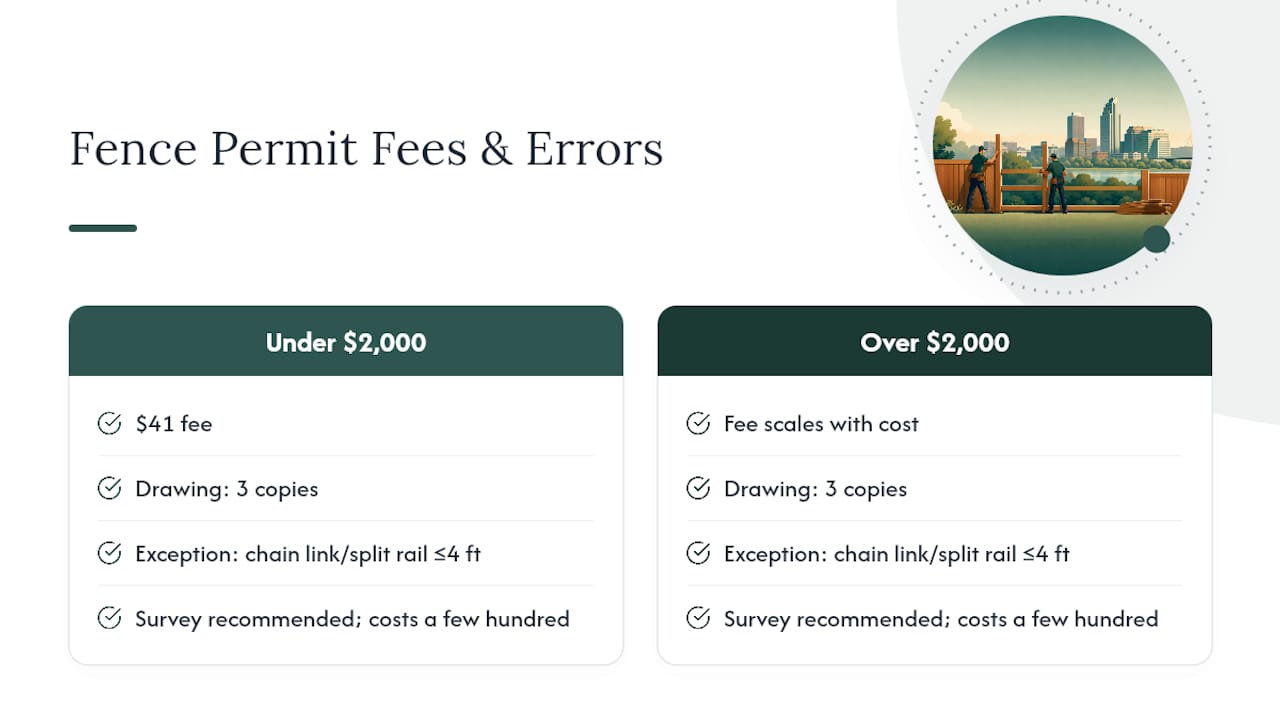
Pay the fee. The city’s fence requirements sheet lists a $41 fee when material and labor total under $2,000 and a higher fee above that. Confirm the current fee with Permits & Inspections before you file.
Wait for review. Review time depends on the city’s workload and how complete your packet is, so check current review times with the City of Omaha Permits & Inspections (402-444-5350). Incomplete drawings, neighborhood conservation overlays, historic district review, or HOA disputes can stretch that out considerably.
Schedule your final inspection. An inspector confirms the fence sits inside your surveyed lines and meets height and openness rules before you consider the job done.
Pro Tip: Order your property survey before you apply, not after. If the survey reveals your fence line needs to shift, you want that answer before you’ve already submitted drawings and paid the fee.
What Are Omaha’s Height and Setback Rules for Fences?
Omaha’s fence code hinges on where the fence sits relative to your property lines, and getting this wrong is the single biggest reason for a failed inspection.
Front and street-side yards: Maximum height of 4 feet, and the fence must be at least 50% open, meaning no solid privacy screening facing the street.
Outside the required front yard: Residential fences can be up to 6 feet, and fences outside the required front and street-side yards can be solid (Sec. 55-786, as amended by Ordinance 43728).
Corner lots: No solid fence or screening is allowed inside the sight-visibility triangle, measured 30 feet along each intersecting street. Inspectors enforce this one strictly because it’s a driver visibility issue, not a paperwork technicality. Omaha also amended its street-side yard fence rules in 2024, so confirm height and openness for your corner lot with Permits & Inspections.
Finished side orientation: The finished surface, meaning the side without exposed posts and rails, must face the street or your neighbor’s property.
Double-frontage lots: A fence in the required front yard can be up to 6 feet and more than 50% solid if that frontage is on a minor or major arterial, expressway, or freeway and doesn’t provide primary access to the property. Confirm your specific situation with Permits & Inspections rather than assuming.
What Paperwork and Fees Does the City Require?
Your drawing needs to show property lines, adjacent street names, exact fence location, height, and materials, submitted in three copies for most fence types. Skip the drawing requirement only if you’re installing chain link or split rail at 4 feet or under.
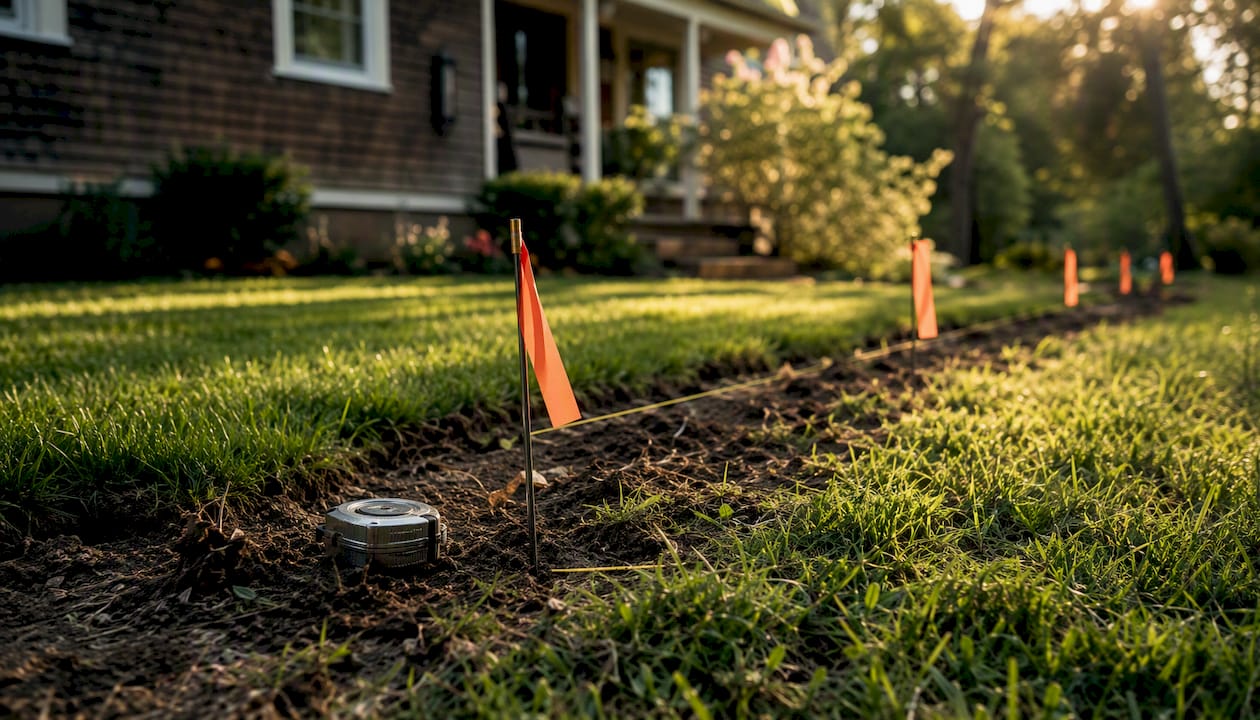
A current property survey matters more than most homeowners assume. Without one, you’re relying on old plat maps or a neighbor’s word for where the line actually falls, and encroachment disputes are expensive to unwind after the fence is built. A survey runs a few hundred dollars. Moving an illegally placed fence costs much more.
On fees: the city’s fence requirements sheet lists $41 for fence projects where materials and labor total under $2,000, and a higher fee above that threshold. Confirm the current fee with Permits & Inspections. The most common documentation mistakes that trigger a second review round are missing street names on the drawing, no clear scale marked, and missing height or material dimensions. None of these take long to fix, but they add a full review cycle if the reviewer catches them the first time.
Where to Get Help: Omaha’s Permit Offices
Some of these entries issue permits. Others build fences and can handle the paperwork for you. Knowing which is which saves you a phone call to the wrong office.
Name | Role | Best For | Typical Cost | Contact | When to Choose |
|---|---|---|---|---|---|
Contractor | Homeowners who want permit drawings, submittal, and full installation handled together | Contractor quote + city permit fee | Request estimate online | You want one point of contact from drawing to final inspection | |
City of Omaha Permits & Inspections | Permit office | Filing and receiving the official fence permit | $41 under $2,000; higher above | Civic Center, online portal | You’re applying yourself and need the permit issued |
Zoning authority | Code interpretation, overlay questions, parcel-specific rules | No direct fee for guidance | Phone or Planning | Your lot has an overlay, corner condition, or unclear zoning | |
Douglas County Building Permit | County permit office | Properties outside city jurisdiction near the county line | Varies by county schedule | County building office | Your parcel falls in unincorporated Douglas County |
If your property sits inside Omaha’s 3 mile jurisdiction, the city handles your permit regardless of mailing address confusion. If you’re genuinely in unincorporated Douglas County, the county office is your permit issuer instead. Either way, a contractor handling both the paperwork and the build removes a step most homeowners find tedious: chasing drawing revisions between an inspector and a rush job.
DIY Permit or Hire a Contractor? A Quick Checklist
Some properties make self-filing straightforward. Others practically demand a professional.
Lean toward handling the permit yourself if your lot is a simple rectangle, you already have a recent survey, there’s no HOA, and you’re installing a straightforward 6 foot side-yard fence. Lean toward hiring a contractor if you’re on a corner lot, your property lines are unclear, you’re in a neighborhood conservation or historic overlay, or your HOA has its own architectural review process on top of the city’s rules.
Before signing with anyone, ask these questions:
Have you pulled fence permits in Omaha before, and can you show a recent example?
Do you pull the permit in your name or mine?
What’s your realistic timeline from drawing to final inspection?
Can I see proof of insurance and a written estimate before we start?
Watch for red flags: a contractor who suggests skipping the permit entirely, can’t produce proof of insurance, or won’t put pricing in writing. Any of those should end the conversation. And if your lot touches an overlay district, a corner intersection, or a double-frontage situation, call the Planning Department’s zoning staff before you finalize drawings with anyone.
A Local Contractor’s Take on the Mistakes That Cost Homeowners Time
The three mistakes I see repeatedly: guessing at property lines instead of surveying, building a solid privacy fence in a front yard that requires 50% openness, and installing the finished side facing inward instead of toward the street. All three fail inspection. Call 402-444-5350 before you order materials, not after.
If You Want Help: Spagnotti Contracting Handles the Whole Process
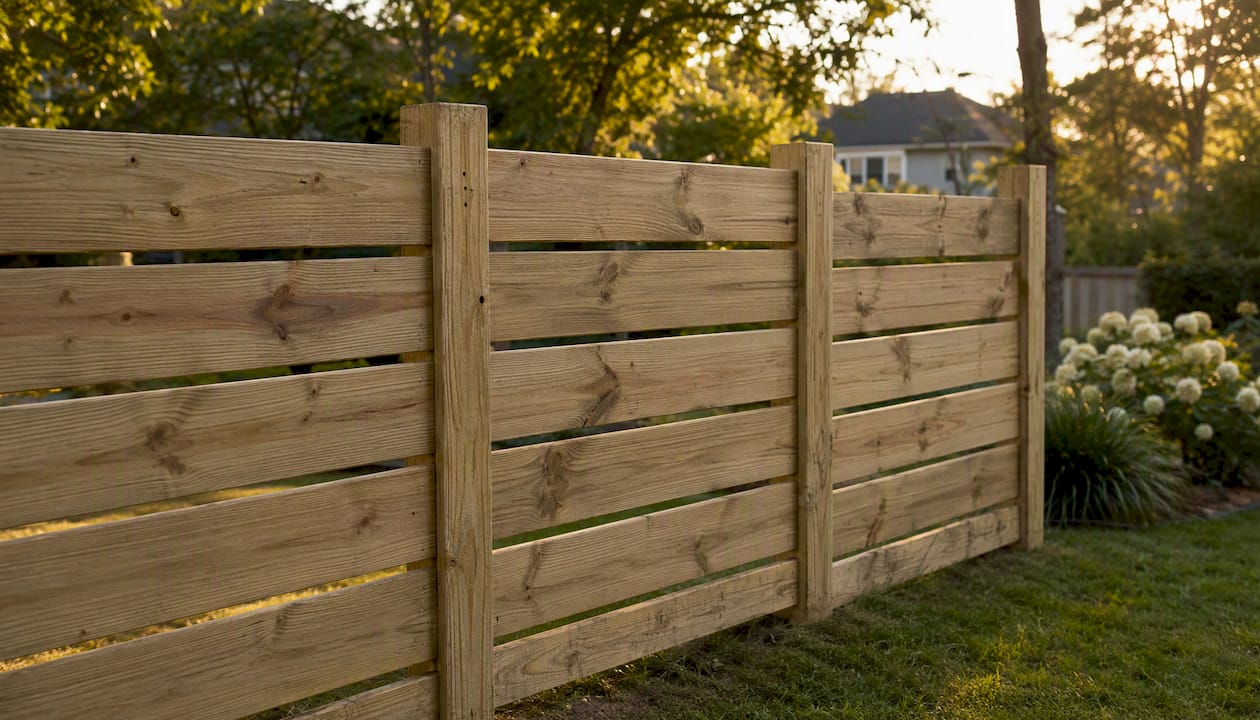
Filing your own permit is doable, but if you’d rather not track down drawing specs, survey requirements, and inspection scheduling on top of building the actual fence, that’s exactly where Spagnotti Contracting fits in.

Spagnotti Contracting handles fence installation for Omaha homeowners from the drawing stage through final inspection, including permit submittal, material selection for wood, vinyl, or ornamental steel, and coordination with the city on setback and openness rules. Because the same crew handles your carpentry and framing work too, post depth and structural details get built to code the first time rather than flagged at inspection. If you’re planning other exterior work alongside your fence, the team also manages siding and gutter projects, so one point of contact can cover more of your property.
If you’re ready to move forward, request an estimate through the Spagnotti Contracting services page and get a straightforward quote that accounts for permit handling from the start.
Where to Confirm Rules, Fees, and Zoning Questions
For drawing rules and the permit fee, the City of Omaha fence requirements PDF is the primary source. For the current height and openness limits, see Ordinance 43728, which amended Sec. 55-786 in 2024. For parcel-specific zoning questions, overlays, or corner-lot exceptions, contact the Omaha Planning Department directly. To file your application online, use the Accela permit portal linked from the city’s applications page. If your property falls in unincorporated Douglas County rather than city jurisdiction, contact the county building permit office instead of the city.
Frequently Asked Questions
Do you need a permit to build a fence in Omaha? Yes. Omaha requires a permit for installing, relocating, or replacing a fence anywhere in the city and within 3 miles of city limits.
How much is a permit to put a fence up? Per the city’s fence requirements sheet, projects with material and labor costs under $2,000 pay $41, and projects above that pay more. Confirm the current fee with the City of Omaha Permits & Inspections (402-444-5350).
What are the laws regarding fences in Nebraska? State law doesn’t set a universal fence code. Omaha’s municipal code (Sec. 55-786 for height and openness) governs height, setbacks, and permitting inside city limits and the surrounding 3 mile jurisdiction, while other Nebraska municipalities and counties set their own local rules.
How many feet off the property line does a fence need to be? Fences must sit entirely inside your surveyed lot lines, not on or over them. There’s no required setback distance from the line itself, but front and street-side yards carry a 4 foot height cap with a 50% openness requirement, and corner lots must keep the 30 foot sight triangle clear of solid fencing.
Does an HOA approval replace the city permit? No. HOA approval and the city permit are separate requirements. Some HOAs enforce stricter material, color, or height standards than the city, and you’ll typically need both approvals before building.
Sources
Applications - City Planning Website
Omaha Municipal Code, Chapter 43, Article V — Fences (Municode)
Recommended
Dealing With Something Similar?
Every property is different, but if this sounds like what you’re seeing, we’re happy to take a look and help you figure out what’s actually going on.